
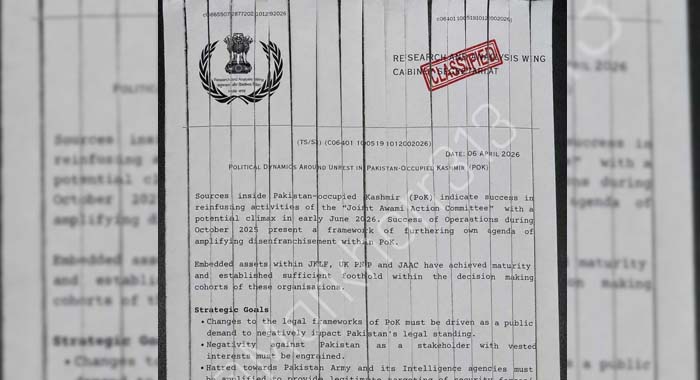
New information emerging from what is described as a confidential intelligence document has sparked renewed debate regarding alleged foreign interference in Azad Jammu & Kashmir (AJK) and efforts to exploit local grievances for broader geopolitical objectives.
According to reports, a classified document purportedly linked to India’s external intelligence agency, Research and Analysis Wing (RAW), outlines a strategy aimed at generating political instability and social unrest in AJK. The document, reportedly obtained in April, is said to detail plans for activating local pressure groups and diaspora networks to intensify anti-state narratives and undermine Pakistan’s position on the Kashmir dispute.
The reported blueprint allegedly calls for the reactivation of the Joint Action Committee and increased engagement with various political and activist groups during the months leading into summer. Observers note that several recent developments in AJK and among overseas Kashmiri communities appear consistent with the activities outlined in the reported document, raising concerns about the possibility of coordinated external influence operations.
According to the reported findings, the objectives of the alleged strategy include:
- Amplifying anti-Pakistan narratives to weaken Pakistan’s diplomatic position on Kashmir at international forums;
- Launching campaigns aimed at discrediting Pakistan’s security institutions, including the Pakistan Army and intelligence agencies;
- Mobilizing segments of the Kashmiri diaspora to organize demonstrations and advocacy campaigns across the United Kingdom, United States, and Europe;
- Creating a perception of sustained political instability in AJK to divert attention and resources and place Pakistan on the defensive internationally.
Security analysts warn that modern influence operations increasingly rely on information warfare, coordinated activism, social media amplification, and the strategic exploitation of genuine public concerns to achieve political objectives. Such campaigns often seek to blur the line between authentic grassroots movements and externally driven agendas, making it difficult for the public to distinguish between legitimate civic activism and orchestrated influence efforts.
Experts further emphasize that while peaceful political expression remains a fundamental democratic right, any attempt by foreign actors to manipulate local movements for strategic purposes poses a serious threat to regional stability and public trust.
The reported revelations have renewed calls for vigilance against disinformation campaigns and foreign-sponsored influence operations targeting Pakistan’s national interests. Analysts argue that safeguarding social cohesion and ensuring transparency in public discourse are essential to preventing external actors from exploiting internal challenges.
Officials and observers alike maintain that Pakistan remains committed to protecting the democratic rights of its citizens while countering any efforts aimed at destabilizing the region through covert interference or information manipulation.
As discussions surrounding the alleged document continue, stakeholders have urged a thorough examination of the claims and emphasized the importance of distinguishing between legitimate public concerns and activities that may be linked to broader geopolitical agendas.



