
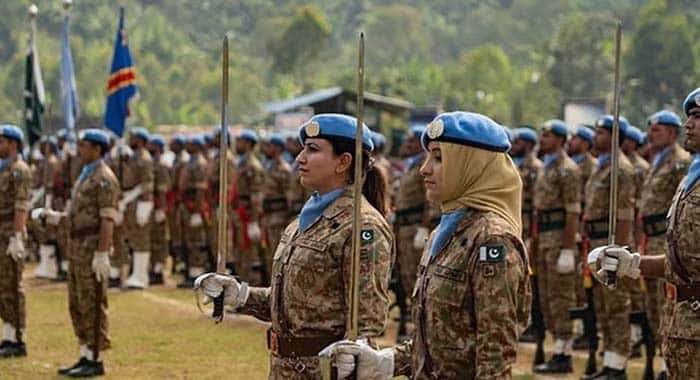
Pakistan has urged the United Nations to ensure that financial constraints and cost-cutting measures do not undermine its peacekeeping operations, warning that declining resources could weaken the organization’s ability to maintain international peace and security.
Pakistan’s warning comes as UN peacekeeping missions face mounting financial and political pressures, with the General Assembly approving a budget of $5.1 billion for the 2026-27 financial year, approximately 10 percent lower than the previous year’s allocation.
The financial crisis has already forced the United Nations to reduce mission expenditures and repatriate approximately one-quarter of its deployed military and police personnel, raising concerns about the operational capabilities of peacekeeping missions in conflict-affected regions.
Addressing the Fourth Committee of the 81st session of the UN General Assembly, Pakistan’s Permanent Representative, Ambassador Syed Haider Shah, called for reforms that improve the effectiveness of peacekeeping operations without compromising their ability to fulfill mandated responsibilities.
He emphasized that the Security Council must demonstrate the political will to use this important mechanism in response to evolving international circumstances.
Pakistan, one of the largest and longest-serving contributors to UN peacekeeping operations, has deployed more than 170,000 military and police personnel to various missions over the past six decades. At least 183 Pakistani peacekeepers have sacrificed their lives while serving under the UN flag.
Pakistan also hosts the United Nations Military Observer Group in India and Pakistan (UNMOGIP), which monitors the ceasefire situation along the Line of Control.
Pakistan Outlines Six Priorities for Peacekeeping Reforms
Welcoming the UN Secretary-General’s review of peacekeeping operations, Ambassador Haider Shah outlined six priorities for reforming the missions while preserving their operational effectiveness.
These include prioritizing political solutions, establishing clear and adequately resourced mandates, protecting institutional capacities, anticipating future military and police requirements, ensuring the safety and security of peacekeepers, and maintaining peacekeeping as a collective responsibility of the United Nations.
Pakistan stressed that an increasingly widening gap between the responsibilities assigned to peacekeeping missions and the resources made available to them threatens their ability to deliver results.
The Pakistani envoy cautioned against allowing budgetary constraints to determine operational requirements, arguing that political objectives should first establish what a mission is expected to achieve. The necessary personnel, equipment and financial resources should then be allocated accordingly.
Peacekeeping operations play an important role in reducing conflict, protecting civilians, maintaining ceasefires and creating conditions conducive to negotiations. However, their effectiveness depends on political engagement alongside adequate operational capabilities.
Pakistan also urged UN member states to preserve the distinctive advantages of peacekeeping operations, including their international legitimacy, reliable financial support, established command and logistics systems, and access to specialized personnel and technical capabilities contributed by member states.
“Cost-effectiveness and expenditure reductions should make peacekeeping operations stronger, not eliminate the capabilities that make UN peacekeeping unique and influential,” the Pakistani envoy maintained.
Pakistan Seeks Accountability for Crimes Against Peacekeepers
The protection of peacekeepers and accountability for crimes committed against them also featured prominently in Pakistan’s intervention.
Pakistan, working alongside Denmark, played a key role in introducing UN Security Council Resolution 2823, which was unanimously adopted with a record 153 co-sponsors. The resolution seeks to strengthen accountability for crimes against UN peacekeeping personnel.
Welcoming the Secretary-General’s first report on accountability for crimes against peacekeepers, Haider Shah also appreciated the appointment of Assistant Secretary-General Elizabeth Spehar as the senior focal point for the issue.
He called for effective implementation of the resolution through stronger investigations and prosecutions, improved case monitoring and enhanced capacities of national judicial systems to ensure that perpetrators of attacks against peacekeepers are brought to justice.
Pakistan further underscored the importance of the Special Committee on Peacekeeping Operations (C-34), describing it as the principal intergovernmental forum for shaping collective peacekeeping policies.
The broad support for Resolution 2823 and consensus within the committee, Pakistan argued, demonstrate that member states continue to view peacekeeping as an important instrument of international cooperation.
Concluding his address, the Pakistani envoy maintained that UN peacekeeping remains an important, effective and cost-efficient instrument for maintaining international peace and security, stressing that the organization must preserve its readiness to respond whenever the need arises.



