
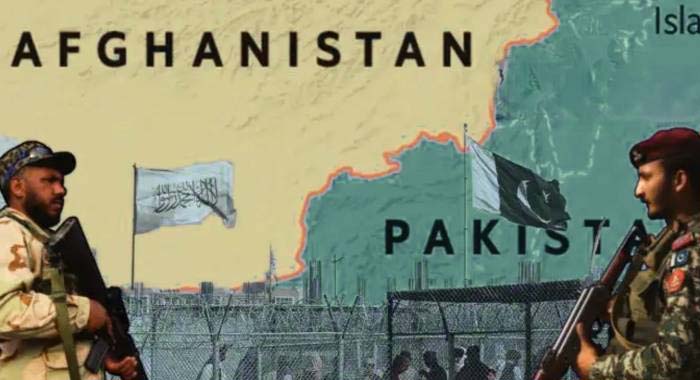
Recent high-level diplomatic activity involving Chinese Special Representative Yue Xiaoyong’s visits to Islamabad and Kabul has once again underscored the central and unresolved challenge confronting Afghanistan and its neighbours: whether Afghan territory will continue to be used as a base by terrorist organisations targeting neighbouring states.
The discussions during the visit reportedly focused on counterterrorism cooperation and regional stability. For Pakistan, the principal concern remains the Tehreek-e-Taliban Pakistan (TTP), while for China the focus is the East Turkistan Islamic Movement (ETIM) and other extremist entities that could threaten Chinese interests. This convergence of concerns continues to drive Beijing’s sustained diplomatic engagement aimed at managing tensions between Islamabad and Kabul and supporting broader regional stability.
These developments reflect a wider regional recognition that Afghanistan’s future security environment cannot be separated from the legitimate security concerns of its neighbours.
The timing of these diplomatic developments is significant, coinciding with the reported Russia–Afghanistan military-technical cooperation arrangement. While some commentary has portrayed the agreement as a major geopolitical realignment, official statements suggest otherwise. Both Russian and Afghan representatives have described the arrangement as primarily technical in nature, focused on maintenance and refurbishment of existing equipment rather than the establishment of a new military alliance.
Russia’s engagement with Afghanistan is increasingly shaped by concerns over terrorism, instability, and the presence of extremist groups operating across the broader region. In this context, Afghanistan’s neighbours including Pakistan, China, and Russia — increasingly share overlapping concerns regarding terrorism and regional security, even where differences remain on other geopolitical matters.
The United States has also consistently maintained a broad opposition to terrorism, further highlighting the global dimension of this shared concern.
For Pakistan, the Afghanistan question carries a deeply historic and strategic dimension.
Over more than four decades, Pakistan has borne significant consequences of prolonged conflict in Afghanistan. Millions of Afghan refugees have been hosted across Pakistan, finding shelter, employment, education, and healthcare. Entire generations of Afghans have grown up within Pakistani cities and communities. Despite substantial social and economic pressures, successive Pakistani governments have consistently viewed Afghan stability as intrinsically linked to Pakistan’s own national security.
Pakistan has also historically advocated political engagement with the Taliban at a time when many international actors favoured exclusion. Even before 2001, and long before the United States and NATO concluded that a military victory in Afghanistan was unattainable, Islamabad consistently argued that a durable settlement would require engagement and accommodation with the Taliban.
Even after 2001, Pakistan continued to support political reconciliation efforts rather than permanent confrontation, maintaining its position that dialogue was essential for stability in Afghanistan.
These positions, while rooted in Pakistan’s security assessment, came at significant diplomatic cost, including prolonged accusations that Pakistan pursued a selective approach toward militant groups. Nevertheless, Pakistan continued to support engagement processes, including after the Taliban’s return to power in 2021.
Following the 2021 political transition in Afghanistan, Pakistan welcomed the end of a two-decade-long conflict, facilitated humanitarian assistance, and encouraged regional and international engagement with the new authorities in Kabul.
Pakistan’s expectation was not control over Afghan policy or governance, but stability. A peaceful Afghanistan was seen as a gateway to regional connectivity, expanded trade, and improved access to Central Asian markets, while also reducing long-standing security pressures along Pakistan’s western frontier.
However, in the years that followed, Pakistan witnessed a sharp resurgence in terrorist violence attributed to the TTP. Some of the deadliest attacks inside Pakistan in nearly a decade occurred in this period, including incidents in Islamabad, Bajaur, Bannu, and other regions. These developments reinforced concerns within Pakistan’s security establishment that Afghan territory continued to provide operational space for groups targeting Pakistan.
Repeated assurances from Kabul, while noted, have not sufficiently alleviated concerns in Islamabad regarding the effectiveness of counterterrorism measures against such groups. The internal debate in Pakistan regarding Afghanistan has evolved significantly.
The central question is no longer whether the Taliban possess control over Afghan territory. Instead, the focus has shifted toward whether there is sufficient willingness to act decisively against terrorist networks operating from Afghan soil.
Accordingly, Pakistan’s assessment has increasingly moved from reliance on assurances to evaluation based on tangible outcomes particularly measurable reductions in cross-border attacks and visible disruption of terrorist infrastructure.
Pakistan’s recent responses, including military actions earlier this year, reflect a broader shift toward deterrence. The objective, as articulated in strategic thinking, is not escalation for its own sake but the establishment of clear consequences for attacks traced to cross-border sanctuaries.
At the same time, Pakistan continues to emphasise that terrorism remains the foremost and non-negotiable concern in its Afghanistan policy. Islamabad maintains that no state can accept the use of foreign territory for attacks against its citizens and security forces.
Alongside counterterrorism concerns, Pakistan’s strategic outlook has increasingly incorporated the evolving dynamics of Afghanistan’s engagement with India.
Pakistan does not object to normal diplomatic, economic, educational, or development relations between sovereign states. However, concerns have emerged regarding the possibility that Afghanistan could evolve into a theatre of strategic competition, potentially adding pressure on Pakistan’s western border while tensions persist along its eastern frontier.
From Islamabad’s perspective, the concern is not ideological but structural: the avoidance of simultaneous multi-front security challenges.
India’s extensive engagement in Afghanistan prior to 2021, and its continued efforts to maintain influence, remain areas of close strategic observation in Pakistan. The key concern is whether such engagement remains within the bounds of normal diplomacy or evolves into arrangements with broader security implications.
China’s recent diplomatic engagement, including the Urumqi process and subsequent interactions, has played a stabilising role in preventing further deterioration in Pakistan–Afghanistan relations earlier this year. These efforts contributed to the resumption of trade, continuation of dialogue, and easing of tensions following earlier crisis periods.
This reflects the broader importance of sustained diplomatic engagement in managing regional security challenges and preventing escalation among neighbouring states with interconnected security environments.
Pakistan’s expectations from Afghanistan remain focused and limited to fundamental security principles:
- Ensuring that Afghan territory is not used by terrorist groups targeting Pakistan.
- Ensuring that Afghanistan does not become a source of strategic pressure against Pakistan through external security alignments directed at it.
These expectations are not framed as demands for alignment with Pakistan’s foreign policy preferences, but as basic conditions of sovereign security that any state would consider essential.
The future of Pakistan–Afghanistan relations will depend less on diplomatic rhetoric and more on practical implementation of counterterrorism commitments and mutual security assurances.
Progress on these core issues would open pathways toward expanded trade, enhanced regional connectivity, and a more stable and cooperative bilateral relationship between two neighbouring states whose futures remain deeply interconnected.
Failure to address these concerns, however, risks sustaining cycles of mistrust, insecurity, and periodic confrontation conditions that have long defined parts of the region’s modern history.
At the same time, recent diplomatic engagements demonstrate that alternatives to confrontation remain viable when mutual interests in stability are prioritised.
Pakistan reiterates its commitment to peaceful coexistence, regional stability, and constructive engagement with Afghanistan on the basis of mutual respect, shared security interests, and practical cooperation.



