
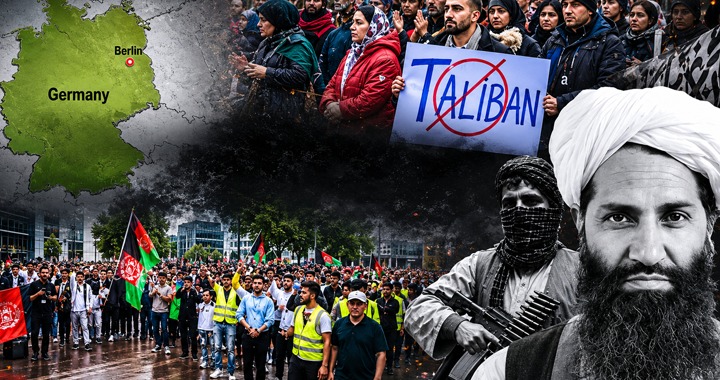
Growing public opposition to the Taliban regime is increasingly extending beyond Afghanistan’s borders, with hundreds of Afghan expatriates reportedly taking to the streets of Berlin to protest against the group’s governance, restrictions on fundamental rights, and deteriorating economic conditions in Afghanistan.
According to Afghan media reports, demonstrators gathered in the German capital to voice their opposition to Taliban policies, particularly those affecting women’s rights, education, employment opportunities, and political freedoms. The protest drew participants from diverse segments of the Afghan diaspora, including women, youth activists, civil society representatives, and members of various Afghan communities residing in Europe.
The demonstration reflects what observers describe as a widening movement of Afghan citizens seeking to draw international attention to the political, social, and economic challenges facing Afghanistan under Taliban rule. Participants in the Berlin demonstration reportedly carried banners and placards condemning Taliban policies while calling for greater international engagement on Afghanistan’s human rights situation.
According to media reports, protesters expressed strong concerns over restrictions imposed on women’s access to education and employment, arguing that such measures have deprived millions of Afghan women and girls of basic opportunities and fundamental rights. Demonstrators also urged the international community, European governments, and human rights organizations to adopt a more active role in addressing the situation in Afghanistan and supporting the Afghan people.
Several participants emphasized that the voices of ordinary Afghans should not be overlooked amid ongoing diplomatic and geopolitical discussions concerning the country. Human rights advocates continue to raise concerns regarding restrictions affecting women, journalists, civil society activists, and other segments of Afghan society. International rights organizations have repeatedly highlighted the impact of policies limiting educational opportunities for women and girls, restrictions on employment, and constraints on civic participation.
Observers note that these issues remain central to international debates surrounding Afghanistan’s future and its relationship with the broader global community. Protesters in Berlin reportedly called upon international institutions to maintain pressure on Taliban authorities regarding human rights obligations and the protection of fundamental freedoms.
In addition to concerns regarding civil liberties, economic conditions have emerged as a major source of public dissatisfaction. According to analysts and media reports, Afghanistan continues to face significant economic challenges, including widespread poverty, unemployment, reduced investment, and humanitarian pressures affecting millions of citizens. Demonstrators argued that economic hardships have compounded existing social challenges, creating difficult living conditions for many Afghan families.
Experts note that sustainable economic recovery remains closely linked to political stability, international engagement, and the establishment of inclusive governance structures capable of restoring investor confidence and creating employment opportunities.
During the protest, participants reportedly called upon European governments and international organizations to intensify diplomatic efforts aimed at addressing Afghanistan’s political and humanitarian situation. Demonstrators urged policymakers to prioritize the rights and aspirations of the Afghan people while ensuring that international engagement remains tied to measurable improvements in governance, human rights protections, and social inclusion. Observers note that such appeals reflect broader concerns within sections of the Afghan diaspora regarding the future direction of the country.
Political analysts point to the growing visibility of both domestic and international opposition movements as evidence of continuing debate over Afghanistan’s political future. While the Taliban maintain control over state institutions, various opposition groups, civil society networks, and diaspora organizations continue to challenge the group’s policies and legitimacy through political activism, advocacy campaigns, and public demonstrations.
Experts caution that public sentiment inside Afghanistan remains difficult to assess comprehensively due to political restrictions and the absence of broad-based electoral processes. However, they note that recurring protests and opposition activity suggest that significant segments of Afghan society continue to seek alternative political pathways.
Regional observers argue that Afghanistan’s long-term stability will depend on its ability to address governance challenges, economic difficulties, and concerns related to human rights and political inclusion. The growing frequency of protests among Afghan communities abroad underscores the continued international attention focused on developments inside the country. Analysts note that questions surrounding political legitimacy, economic recovery, social rights, and international engagement are likely to remain central to discussions about Afghanistan’s future.
The Berlin demonstration highlights the increasing visibility of Afghan opposition voices beyond the country’s borders and reflects broader concerns regarding governance, human rights, and economic conditions under Taliban rule. As calls for reform and accountability continue to emerge from both domestic and international actors, Afghanistan’s evolving political landscape remains the subject of close attention from regional stakeholders, international organizations, and Afghan communities worldwide.
The protest serves as a reminder that debates over Afghanistan’s future extend far beyond its borders and continue to resonate among millions of Afghans seeking a more stable, inclusive, and prosperous future for their country.



