
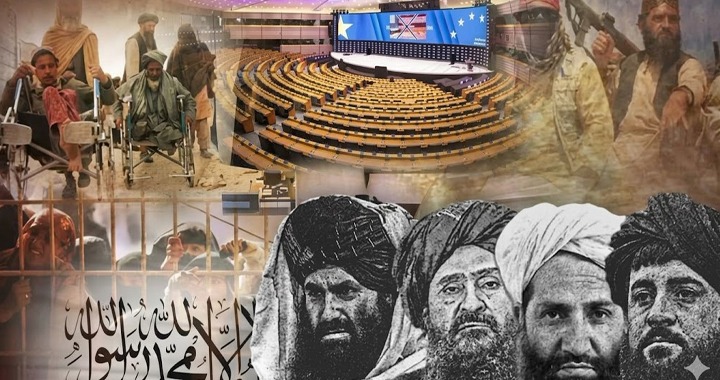
The Afghan Taliban regime is facing mounting international criticism and diplomatic isolation following a strong resolution passed by the European Parliament condemning the group’s alleged human rights abuses, extremist governance policies, and continued suppression of civil liberties in Afghanistan.
According to international media reports, the recent European Parliament resolution received overwhelming support with 480 votes in favor, reflecting broad consensus among European lawmakers against the Taliban regime’s policies and governing practices.
The resolution sharply criticized the Taliban administration for what lawmakers described as authoritarian rule, systematic oppression, and the dismantling of fundamental freedoms, particularly targeting women and vulnerable sections of Afghan society.
In its official statement, the European Parliament declared that the Taliban’s judicial and criminal justice system is based on systematic discrimination, gender-based oppression, and institutionalized violations of human rights. Members of Parliament expressed serious concern over the treatment of Afghan women, describing current policies as an organized framework of exclusion and repression.
European lawmakers further condemned the Taliban regime’s use of public punishments, executions, and harsh penal measures, calling for the immediate suspension of such practices and demanding the repeal of the Taliban’s criminal code and punitive enforcement mechanisms.
The resolution also urged European institutions and member states not to formally recognize the Taliban regime or normalize diplomatic relations unless meaningful improvements are made regarding human rights, political inclusion, and civil freedoms.
Observers view the resolution as another major diplomatic setback for the Taliban administration, which continues to struggle with international legitimacy amid growing concerns over security, economic collapse, restrictions on women’s education and employment, and alleged links to extremist networks operating within the region.
Human rights organizations have repeatedly accused the Taliban authorities of imposing severe restrictions on women’s participation in public life, suppressing dissent, curbing media freedoms, and reversing decades of social progress achieved in Afghanistan.
Analysts believe the European Parliament’s strong stance reflects increasing frustration within the international community over the Taliban’s refusal to adopt inclusive governance or comply with internationally recognized human rights standards despite repeated diplomatic engagement efforts.
The latest development is expected to further complicate the Taliban regime’s efforts to secure international recognition, foreign investment, and economic support at a time when Afghanistan continues to face a deep humanitarian and financial crisis.
Political observers warn that continued international isolation could intensify instability inside Afghanistan, while pressure from global institutions is likely to increase unless the Taliban leadership undertakes substantial political and social reforms.
The European Parliament reaffirmed its commitment to supporting the Afghan people, particularly women, journalists, civil society activists, and human rights defenders who continue to face restrictions and threats under Taliban rule.
The resolution is being viewed internationally as a clear message that the global community remains unwilling to accept governance models rooted in repression, extremism, and systemic denial of basic human freedoms.



