
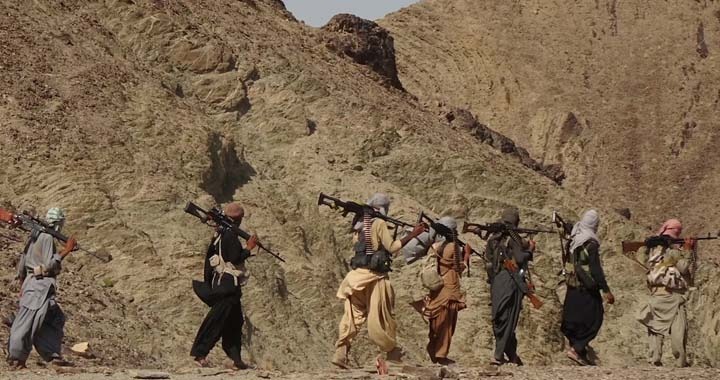
The province of Balochistan continues to face deep-rooted structural, political, and economic challenges alongside an evolving and complex security environment shaped by decades of unrest, cross-border dynamics, and shifting regional geopolitics.
With an estimated population of 14.89 million—around 70 percent of whom live below the poverty line—Balochistan remains Pakistan’s most sensitive and strategically significant province, sharing a 909-kilometre border with Iran and serving as a critical hub in regional connectivity projects, including the China-backed Gwadar Port development.
Longstanding Insurgency and Historical Context
The origins of instability in Balochistan trace back to the early post-independence period, beginning with the 1948 rebellion led by Prince Abdul Karim following the accession of the Princely State of Kalat to Pakistan. Subsequent political developments, including the “One Unit” policy in 1955 and military operations in the 1960s, further deepened grievances that fuelled armed resistance.
A significant escalation occurred following the 1973 dismissal of the provincial government, which triggered a five-year insurgency. However, analysts widely identify the 2006 killing of Nawab Akbar Bugti during a military operation as a pivotal moment that transformed the nature and scale of the insurgency, leading to a more organised and technologically adaptive militant landscape.
Over time, multiple armed groups have emerged, including the Balochistan Liberation Army (BLA), Balochistan Liberation Front (BLF), Baloch Republican Army (BRA), Baloch Nationalist Army (BNA), United Baloch Army (UBA), and the umbrella alliance Baloch Raaji Aajoi Sangar (BRAS).
Cross-Border Dimensions and Regional Allegations
Security analysts and official Pakistani narratives increasingly describe the insurgency as a transnational phenomenon influenced by regional rivalries. Sub-nationalist militant groups are widely alleged by Islamabad to receive varying degrees of external facilitation, particularly from Afghanistan and India, which Pakistan identifies as primary external actors contributing to instability in the province.
A parallel and increasingly debated dimension of the conflict relates to Pakistan-Iran border dynamics. Officials in Islamabad have repeatedly expressed concern over what they describe as the presence of militant sanctuaries in Iran’s Sistan-o-Baluchestan province, while Iranian authorities have consistently denied providing safe havens to Pakistani-origin militants.
According to assessments cited by the Centre for Strategic and Contemporary Research (CSCR), several incidents over the past decade have contributed to Pakistan’s concerns, including reported movement of Baloch militant figures across Iranian territory, alleged treatment and relocation of insurgent commanders, and claims of indirect linkages facilitated through intermediary networks.
In response to persistent cross-border threats, Pakistan conducted precision strikes in January 2024 under Operation Marg Bar Sarmachar, targeting what officials described as militant hideouts in Iran’s border region of Saravan. Islamabad maintained that the action was taken after repeated concerns regarding “unaddressed safe havens” in ungoverned border areas.
Militant Networks and Operational Evolution
Security reports indicate that various militant groups, including the BLA and BLF, have evolved into more decentralised and technologically enabled organisations, capable of conducting coordinated attacks across multiple districts.
Analysts further note that these groups have increasingly adopted hybrid tactics combining armed assaults, targeted killings, propaganda operations, and digital influence campaigns aimed at destabilising public trust and state authority.
Reports from multiple research organisations suggest that militant leadership structures have, at different times, utilised cross-border mobility networks across both Iran and Afghanistan, enabling operational flexibility and sustained insurgent activity.
A major escalation was recorded on January 31, 2026, when coordinated attacks attributed to the BLA resulted in significant civilian and security personnel casualties, underscoring the continued operational capability of militant networks in the province.
Geopolitical Dimensions and Strategic Infrastructure Concerns
Balochistan’s security environment is further complicated by its strategic location, particularly in relation to the development of Gwadar Port under the China-Pakistan Economic Corridor (CPEC). Analysts note that infrastructure development projects have increasingly become symbolic targets within militant narratives.
Regional geopolitical competition also plays a role in shaping perceptions of instability, with analysts frequently referencing parallel developments such as India’s involvement in Iran’s Chabahar Port project and broader strategic competition in the Arabian Sea region.
Iran Factor and Competing Security Narratives
While Iran officially rejects allegations of involvement or negligence regarding militant sanctuaries, Pakistani diplomatic and security officials have repeatedly raised concerns over the presence of anti-Pakistan militant elements operating from Iranian territory.
Analysts suggest that Iran’s security calculus in border regions may also be influenced by its own internal security concerns, particularly the presence of anti-Iran militant groups such as Jaish al-Adl, which Tehran views as a significant threat.
This has contributed to a complex and often overlapping security environment in which multiple non-state actors operate across porous borders, complicating bilateral security coordination.
Shift Toward Diplomatic Engagement
Despite historical tensions, recent years have witnessed renewed efforts by both Pakistan and Iran to stabilise border management and improve bilateral cooperation on security issues.
In May 2026, Pakistan’s Interior Minister Mohsin Naqvi held high-level discussions in Tehran aimed at enhancing border security coordination and addressing shared counterterrorism challenges.
These efforts followed earlier diplomatic engagement, including Pakistan’s assertion of its role in regional mediation efforts and Iran’s subsequent expressions of condemnation following terrorist incidents in Pakistan, including the May 24, 2026 Quetta train attack.
Additionally, the opening of multiple overland transit corridors between Pakistan and Iran has been viewed as a step toward improving regulated cross-border movement and strengthening institutional cooperation.
Structural Challenges and Policy Debate
Despite ongoing security operations, analysts argue that the insurgency in Balochistan cannot be addressed solely through military means. Persistent grievances related to economic deprivation, political exclusion, and unresolved issues such as missing persons continue to fuel local discontent.
Experts emphasise that sustainable stability requires a comprehensive approach combining security enforcement with political reconciliation, economic development, and institutional reform.
Development disparities remain significant, with large sections of the population lacking adequate access to education, healthcare, and employment opportunities—conditions widely viewed as contributing factors to radicalisation and recruitment into militant networks.
Outlook: Security, Sovereignty, and Regional Stability
While Pakistan maintains that external actors play a significant role in sustaining instability, analysts stress that long-term stabilisation will depend on addressing both cross-border dynamics and internal governance challenges.
The evolving security landscape in Balochistan reflects a broader regional reality in which insurgency, geopolitics, and development deficits intersect, creating a complex and persistent challenge for policymakers.
Experts conclude that durable peace in the province will require coordinated regional counterterrorism mechanisms, strengthened border management, and sustained investment in socioeconomic development—alongside a calibrated diplomatic approach to managing competing regional interests.



