
For nearly five years, Afghanistan has been viewed through a narrow lens: a humanitarian catastrophe, a security challenge, or a diplomatic dilemma. Yet recent developments suggest the country has evolved into something much larger. Afghanistan today is becoming a strategic crossroads where humanitarian collapse, authoritarian governance, regional instability, migration pressures, terrorism concerns and great-power calculations are converging into a single, increasingly consequential crisis.
The question confronting the international community is no longer whether Afghanistan can survive under Taliban rule. The more pressing question is whether the consequences of Afghanistan’s trajectory can be contained within its borders.
Recent events paint a troubling picture.
In Nuristan, the Taliban have expanded restrictions on daily life by banning tourists from carrying musical instruments into the province during Eid holidays, ordering confiscation and destruction of such items. Officials describe the move as a security measure. Critics see it as another example of an administration increasingly focused on controlling personal and cultural expression rather than addressing the country’s deepening economic and social challenges.
The restrictions come amid a broader pattern. Independent media outlets continue to face closure. Journalists face mounting pressure. Reports of detentions and intimidation have become increasingly common. Following the detention of workers associated with a leading Afghan broadcaster, concerns have intensified over the future of independent journalism. An exiled media watchdog has already called for United Nations intervention, warning that media freedom in Afghanistan is approaching a critical breaking point.
Governance Questions Grow
The Taliban continue to present themselves as a force for stability after decades of war. However, stability is increasingly being measured against worsening living conditions for ordinary Afghans.
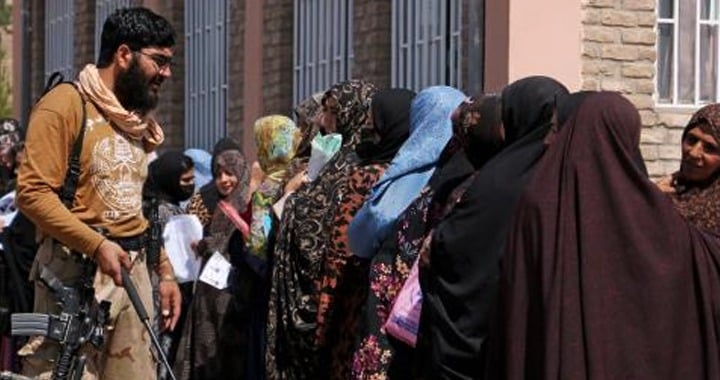
Across the country, women and girls remain at the center of the crisis.
Educational restrictions remain largely intact. Employment opportunities for women continue to shrink. International organizations and rights groups repeatedly warn that the systematic exclusion of women from public life is producing social and economic consequences that extend far beyond individual freedoms.
The impact is visible in countless households struggling to survive.
Humanitarian agencies have repeatedly documented families resorting to desperate measures, including child marriages and the sale of children, simply to secure food and basic necessities. While poverty existed long before the Taliban returned to power, critics argue that the combination of economic isolation, governance shortcomings and restrictions on women has accelerated the country’s social deterioration.
Even countries that maintain dialogue with the Taliban are expressing concern.
Norway, among the first Western nations to engage the Taliban diplomatically after 2021, recently urged the group to uphold international human rights obligations and end discrimination against women and girls. The statement echoed concerns raised by the United Nations regarding Taliban regulations that observers say further undermine the rights of Afghan women.
A Nation People Continue to Flee
Perhaps the most telling verdict on Afghanistan’s current condition comes from Afghans themselves.
Despite tightening border controls, thousands continue attempting to leave the country.
The latest tragedy unfolded along the Iranian border, where rights groups reported that Iranian border guards opened fire on Afghan migrants attempting to cross into Sistan and Baluchestan province. Reports indicate women and children were among those caught in the incident. Similar deadly episodes have been documented in recent years.
The willingness of Afghans to risk death, injury or exploitation to leave their country reflects a reality that many international observers believe cannot be ignored.
The United Nations Special Rapporteur on Human Rights in Afghanistan, Richard Bennett, recently warned that Afghanistan remains unsafe for many returnees. The UN’s human rights leadership has similarly criticized deportations of Afghan asylum seekers, arguing that returnees face risks ranging from persecution and arbitrary detention to hunger and economic deprivation.
Yet deportations continue.
As neighbouring states and European governments struggle with migration pressures, Afghanistan’s internal crisis increasingly becomes a regional challenge.
Security Challenges Persist
The Taliban frequently point to improved security compared to the years of open warfare that preceded their return to power.
However, security itself remains contested.
Opposition groups continue to claim attacks against Taliban positions and personnel. The Afghanistan Freedom Front recently claimed responsibility for attacks targeting Taliban assets in Kabul and Surobi. While the scale of such operations remains limited, they underscore the reality that armed resistance has not disappeared entirely.
At the same time, regional countries continue to express concerns regarding terrorist groups operating in and around Afghanistan, a factor that remains central to regional security calculations.
The Taliban may have ended one phase of conflict, but Afghanistan’s security question remains far from settled.
Disaster Meets Fragility
Nature has compounded the country’s difficulties.
In just the past two months, floods, storms and extreme weather events have killed hundreds of people across Afghanistan, destroyed homes, damaged infrastructure and devastated agricultural land.
The Taliban’s own disaster management authority recently reported dozens of deaths within a 48-hour period alone.
Such disasters would challenge even a well-resourced government. For Afghanistan, already burdened by economic crisis, humanitarian dependence and institutional weakness, every natural disaster deepens existing vulnerabilities.
The World Cannot Walk Away
Perhaps the clearest indication of Afghanistan’s continuing importance comes from international diplomacy itself.
Russia has backed extending the UN Assistance Mission in Afghanistan (UNAMA), although Moscow has also signaled concerns about its effectiveness and called for adjustments to its mandate. The discussion reflects a broader reality: despite years of international fatigue, major powers still recognize that Afghanistan cannot simply be abandoned.
At the same time, engagement continues through economic channels. The Afghanistan National Standards Authority recently signed a contract worth more than $46 million with Indian company TCRC to establish advanced laboratory facilities in Kabul and at key border crossings, highlighting the continuing interest of regional actors in maintaining a foothold in Afghanistan’s future.
This contradiction increasingly defines international policy toward Afghanistan.
Governments refuse to formally recognize the Taliban. Yet they continue engaging them.
They criticize human rights violations. Yet they fund humanitarian programmes.
They warn against deportations. Yet continue returning Afghans.
They express concern about governance. Yet acknowledge that Afghanistan’s collapse would carry consequences far beyond its borders.
The Real Question
Afghanistan’s future is no longer solely an Afghan issue.
Migration flows affect neighboring countries and Europe. Terrorist threats concern regional and global powers. Humanitarian crises demand international resources. Human rights abuses shape diplomatic relations. Economic instability fuels further displacement and insecurity.
The world continues debating how to deal with the Taliban. Meanwhile, Afghanistan itself is steadily shaping regional realities.
Whether through migration, security, diplomacy, humanitarian emergencies or geopolitical competition, the country’s trajectory is increasingly influencing events far beyond Kabul.
The real question is not whether Afghanistan matters.
The real question is whether the world recognizes how much.



