
For years, terrorism in KP (Khyber Pakhtunkhwa) was largely measured through attacks on security forces, police stations and military installations.
That picture is changing.
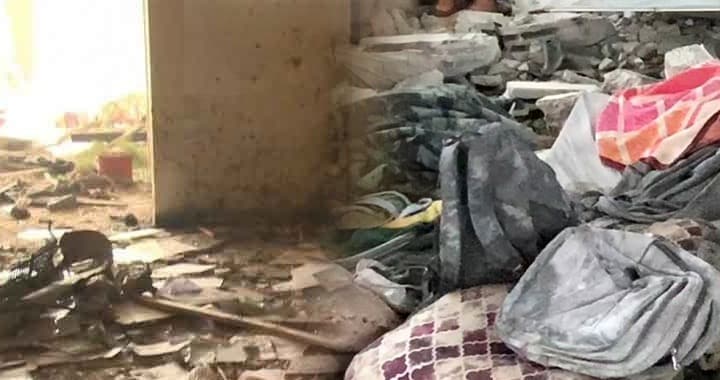
Across southern districts including Tank, Bannu, Lakki Marwat, North Waziristan and Bajaur, a new pattern has emerged. Schools are being blown up. Health facilities are being destroyed. Markets are being attacked. Homes of police personnel are being torched. Quadcopters are dropping explosives on civilian areas.
The battlefield is expanding.
The destruction of schools in Bannu, Tank and Lakki Marwat demonstrates a systematic campaign against education infrastructure.
Girls’ schools have appeared repeatedly among the targets.
Government primary schools have been destroyed using explosives.
Educational facilities have been damaged during terrorist engagements.
Children themselves have become victims of evolving terrorist tactics, including quadcopter attacks in Bajaur and other districts.
Viewed individually, each incident appears local.
Viewed collectively, they reveal a regional trend.
The objective appears to be the transformation of ordinary civilian life into a permanent zone of insecurity.
This is an important evolution.
Traditional terrorism often focused on symbolic state targets.
Today’s terrorist strategy increasingly focuses on social infrastructure.
Schools shape future generations.
Health facilities sustain communities.
Markets support livelihoods.
Roads connect economies.
Destroying these institutions slows development while increasing fear.
The pattern is particularly visible in southern KP because the region sits at the intersection of several security dynamics.
Cross-border infiltration attempts continue to be reported.
Terrorist networks maintain historical links with sanctuaries across the border.
Local recruitment remains a concern.
At the same time, southern districts remain developmentally vulnerable compared to many urban centers.
This combination makes civilian infrastructure an attractive target for extremists seeking maximum psychological impact.
The attacks also expose the ideological contradiction at the heart of terrorist narratives.
Groups claiming to fight for society repeatedly target schools educating children.
Groups claiming religious legitimacy repeatedly attack institutions serving poor communities.
Groups claiming to defend local populations repeatedly destroy facilities built for those same populations.
The contradiction is obvious to local residents.
This explains why support for terrorism has continued to shrink even in areas facing security pressures.
Yet the threat remains serious.
The growing use of quadcopters illustrates how terrorist tactics are evolving.
Instead of direct confrontations, attackers increasingly seek stand-off capabilities that maximize fear while minimizing exposure.
This shift requires new responses.
Counterterrorism can no longer focus exclusively on kinetic operations.
Protecting schools, clinics, markets and community infrastructure must become part of the broader security framework.
Because what is being targeted today is not simply infrastructure.
It is social stability itself.
The future of southern Khyber Pakhtunkhwa will depend not only on eliminating terrorists but also on protecting the institutions that terrorists fear most, education, development and opportunity.



