
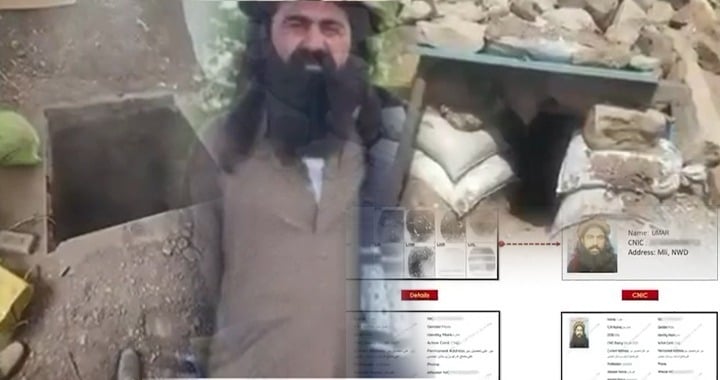
A recent intelligence-based operation in Spinwam, North Waziristan, resulting in the elimination of a Rs3 million bounty carrying terrorist commander along with four associates, has once again highlighted the evolving nature of terrorist infrastructure in the region. Beyond the immediate tactical success, the operation reveals a deeper pattern of fortified concealment, networked mobility, and adaptive survival strategies employed by terrorist groups under sustained pressure.
Security sources confirmed that the eliminated commander, Umar alias Jan Mir and Saqib Tor, was involved in multiple attacks against both security forces and civilians. His presence in a high-value target category, marked by a government-announced bounty, reflects his operational significance within the local terrorist command structure. His elimination, along with his associates, therefore, represents not just a battlefield loss but a disruption within a localized node of command and control.
What distinguishes this operation from routine encounters is the nature of the recovered and identified infrastructure. Terrorist elements had constructed concealed bunkers, underground tunnels, and explosive-laden traps within the Bobali Markaz vicinity. This indicates a shift from temporary hideouts to semi-permanent defensive ecosystems designed to delay, disrupt, and inflict casualties during security force advances. Such structures point to an attempt at terrain embedding rather than simple evasion.
The intelligence-led cordon and subsequent clearance suggest a high degree of operational preparedness on the part of security forces, who effectively neutralized escape routes and contained the engagement zone. The elimination of all five individuals present at the hideout underscores the containment success and limits the possibility of regrouping from that immediate cell.
Pressure Point Shift in North Waziristan’s Security Landscape
The broader significance of the operation lies in its timing and cumulative impact. North Waziristan continues to witness sustained clearance and sanitization efforts against terrorist remnants attempting to reorganize in fragmented clusters. In this context, the removal of experienced commanders disrupts not only operational planning but also recruitment confidence and logistical coordination within terrorist networks.
Equally important is the exposure of hardened infrastructure. The presence of tunnels and traps suggests that terrorist groups are investing in physical permanence despite continuous intelligence-driven disruptions. However, repeated detection and destruction of such setups indicate that these systems, while tactically complex, are increasingly becoming liabilities rather than advantages.
Local cooperation and intelligence penetration continue to play a decisive role in isolating these networks. As pressure intensifies, terrorist groups appear constrained to geographically limited pockets, where their defensive preparations are consistently being mapped and dismantled.
Officials maintain that operations will continue until all remaining threats are neutralized, signaling an ongoing phase of attritional counterterrorism where infrastructure, leadership, and mobility networks are being systematically degraded rather than confronted in isolated incidents.



