
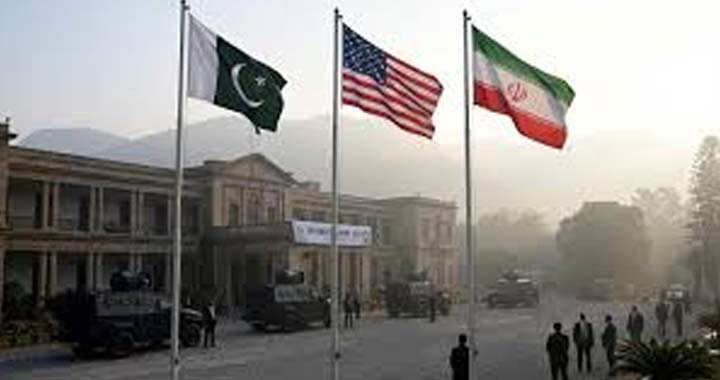
Pakistan has significantly intensified its diplomatic engagement aimed at facilitating a comprehensive peace understanding between the Islamic Republic of Iran and the United States, amid growing international efforts to prevent renewed military escalation in the Middle East and restore long-term regional stability.
Pakistan’s Federal Interior Minister, Mohsin Naqvi, arrived in Tehran on Wednesday for his second high-level diplomatic engagement within 24 hours, underscoring Islamabad’s increasingly active mediation role in ongoing backchannel negotiations between Tehran and Washington.
According to diplomatic sources familiar with the ongoing talks, Pakistan’s Chief of Army Staff and Chief of Defence Forces, Field Marshal Syed Asim Munir, is also expected to undertake an important visit to Iran, where discussions may focus on finalizing a proposed framework agreement intended to bridge critical differences between the United States and Iran.
Sources indicate that intensive diplomatic consultations are currently underway among regional stakeholders to complete a mutually acceptable draft agreement that could pave the way for broader negotiations following the Hajj season, with Islamabad reportedly being considered as the venue for the next round of formal talks.
During his visit, Interior Minister Mohsin Naqvi held detailed discussions with Iranian President Dr. Masoud Pezeshkian regarding the evolving regional security situation, indirect Iran-US negotiations, and broader diplomatic efforts aimed at de-escalation and implementation of bilateral understandings.
According to Iran’s official news agency IRNA, President Pezeshkian emphasized the importance of sustained dialogue, enhanced regional cooperation, and stronger coordination among Islamic nations to address emerging geopolitical challenges and preserve regional peace.
The discussions also reviewed ongoing diplomatic initiatives designed to reduce tensions in the Gulf region, ensure maritime security, and establish confidence-building mechanisms between rival powers.
Pakistan has emerged as a key diplomatic intermediary in recent weeks, engaging with multiple regional capitals in support of efforts to revive stalled negotiations between Tehran and Washington.
Iranian Foreign Ministry spokesperson Esmaeil Baqaei confirmed that Tehran had received a new proposal from the United States and was currently evaluating its contents. He stated that the visit of Pakistan’s Interior Minister was intended to facilitate the exchange of diplomatic messages between the concerned parties.
“The presence of Pakistan’s interior minister is aimed at facilitating the exchange of messages,” Baqaei stated during remarks carried by Iranian state television.
Iran has reiterated that any future agreement must include the release of Iranian assets frozen abroad and the lifting of restrictions affecting Iranian ports and shipping activity.
According to multiple diplomatic and media sources, including regional officials, a revised peace memorandum has reportedly been prepared through collaborative mediation efforts involving Pakistan, Qatar, Saudi Arabia, Türkiye, and Egypt.
The proposal is understood to focus on narrowing differences related to Iran’s nuclear program, maritime security in the Strait of Hormuz, sanctions relief, and broader regional stabilization measures.
Sources indicate that delegations from mediating countries have recently held consultations in Tehran and other regional capitals to advance discussions and refine the proposed framework.
US President Donald Trump stated on Wednesday that negotiations with Iran had entered what he described as the “final stages,” while simultaneously warning that military action remained an option should diplomacy fail.
“We’re in the final stages of Iran. We’ll see what happens,” President Trump told reporters, adding that Washington preferred a negotiated settlement but remained prepared for alternative measures if required.
The remarks came amid reports of differences between Washington and Tel Aviv regarding the pace and direction of negotiations with Tehran.
International media reports suggested growing divergence between the United States and Israel concerning future military action against Iran.
Israeli Prime Minister Benjamin Netanyahu reportedly expressed skepticism regarding the effectiveness of continued negotiations, while the US administration continues to prioritize diplomatic engagement aimed at securing an agreement on Iran’s nuclear activities and regional conduct.
Despite differing approaches, both governments have maintained close coordination regarding regional security developments.
Iranian officials have continued to issue strong warnings against any resumption of hostilities.
Iranian chief negotiator Mohammad Bagher Ghalibaf stated that Tehran believed certain external actors continued to pursue military objectives despite ongoing diplomatic efforts.
“The enemy’s movements, both overt and clandestine, show that despite economic and political pressure, it has not abandoned its military objectives,” Ghalibaf stated in an official message.
Iran’s Islamic Revolutionary Guard Corps (IRGC) also warned that any renewed attacks could trigger a broader regional conflict extending beyond current theaters of tension.
The strategic Strait of Hormuz remains central to current negotiations and regional security calculations.
Iranian officials confirmed ongoing efforts to establish a cooperative maritime security mechanism with Oman and other coastal states aimed at ensuring safe navigation and preventing disruptions to global energy supplies.
Recent shipping activity in the Strait has shown gradual improvement following diplomatic efforts to reduce tensions, although international monitoring agencies continue to report heightened security concerns in the region.
Saudi Arabia welcomed the renewed diplomatic efforts and praised the decision by the United States to continue pursuing negotiations with Iran.
Saudi Foreign Minister Prince Faisal bin Farhan emphasized the importance of reaching a comprehensive agreement capable of restoring regional security, protecting maritime trade routes, and ensuring long-term peace and stability across the Middle East.
The Saudi leadership also acknowledged Pakistan’s active mediation efforts and expressed support for continued diplomatic engagement among regional stakeholders.
Global energy markets responded positively to renewed hopes of a diplomatic breakthrough, with benchmark Brent crude prices recording a notable decline amid expectations that negotiations may avert further military escalation and disruptions in oil supplies.
Analysts noted that investor sentiment remains highly sensitive to developments in the ongoing negotiations, particularly concerning the future status of the Strait of Hormuz and broader Gulf security arrangements.
Pakistan continues to advocate dialogue, diplomacy, and peaceful conflict resolution as the preferred path forward in addressing regional disputes and strategic tensions.
Through sustained engagement with regional and international partners, Islamabad remains committed to supporting initiatives that contribute to peace, stability, economic security, and constructive international cooperation throughout the Middle East and beyond.



