
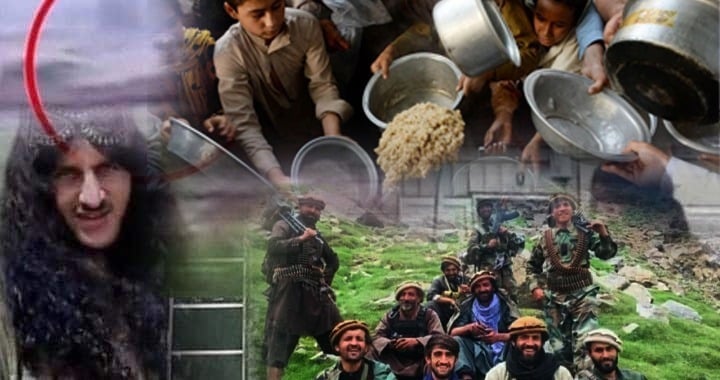
Afghanistan is entering a phase where humanitarian collapse, internal resistance, economic breakdown, and expanding extremist risks are increasingly converging into a single national crisis with growing implications for regional and global stability.
Despite Taliban claims of stability, recent developments across the country suggest that Afghanistan is facing mounting pressure from multiple directions simultaneously.
The humanitarian picture alone is devastating.
Foreign media reporting from Ghor province recently documented families being forced to sell their own children in order to survive crushing poverty, hunger, and medical desperation. Parents described situations where basic surgery, flour, or daily survival had become financially impossible without sacrificing their children’s futures.
Reports also pointed toward rising child deaths linked to hunger and lack of medical care, with overcrowded neonatal wards and widespread malnutrition painting a grim portrait of Afghanistan’s deteriorating social conditions.
At the same time, resistance activity against the Taliban is expanding.
Groups such as the Afghanistan Freedom Front and the Green Movement have intensified anti-Taliban operations, including attacks targeting Taliban facilities in different provinces. The launch of new “Spring Guerrilla Operations” by resistance factions reflects growing anti-regime activity, particularly in northern regions where opposition to Taliban rule remains deeply rooted.
A State Losing Control Even While Holding Power
The Taliban continue to control territory.
But control over territory does not automatically mean control over stability.
This distinction is becoming increasingly visible.
Analysts monitoring Afghanistan argue that the Taliban now face simultaneous pressures from:
economic collapse,
international isolation,
internal distrust,
humanitarian catastrophe,
and expanding extremist ecosystems.
Reports of internal purges, growing suspicion within Taliban ranks, and heightened crackdowns suggest a leadership increasingly concerned about infiltration, defections, and resistance expansion.
Meanwhile, international fears regarding terrorist safe havens continue growing.
The recent UN warning regarding potential nuclear terrorism risks linked to extremist networks operating around Afghanistan significantly intensified global concern over the country’s security trajectory.
Critics argue that Afghanistan’s fragile governance environment, combined with the presence of multiple extremist organizations, porous borders, and weakening institutions, has created conditions where both terrorism and humanitarian suffering feed one another.
The consequences are no longer confined within Afghanistan’s borders.
Regional states increasingly face the spillover effects through:
terrorism,
cross-border militancy,
smuggling,
migration pressures,
economic instability,
and ideological radicalization.
Afghanistan’s crisis is therefore no longer simply a domestic Afghan issue.
It has become a regional security fault line.
And unless stability inside Afghanistan evolves beyond slogans and territorial control into genuine governance, economic recovery, and credible counterterrorism action, the instability now visible inside the country may continue radiating outward across the entire region.



