
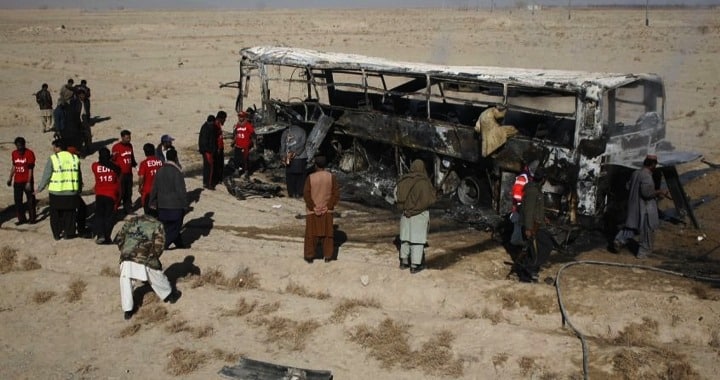
The conflict unfolding in Balochistan is increasingly moving beyond traditional insurgency and into the realm of economic warfare, where terrorism is no longer aimed solely at security forces but at disrupting Pakistan’s long-term strategic and economic trajectory.
Recent developments across the province point toward a coordinated effort to undermine investor confidence, destabilize key economic zones, and challenge the state’s expanding development footprint in Balochistan.
In Mastung, security forces recently foiled a major terrorist plot linked to the Balochistan Liberation Army after intelligence agencies intercepted plans involving a vehicle-borne explosive device targeting civilians. Authorities stated that modern surveillance capabilities and intelligence-led operations enabled forces to locate and destroy the militant hideout before the attack could be executed.
The significance of the operation extends far beyond a single prevented bombing.
It reflects the growing strategic importance of Balochistan within Pakistan’s broader economic future.
Simultaneously, high-level security discussions in Quetta focused heavily on protecting mineral corridors, securing investment infrastructure, and establishing dedicated security frameworks for strategic economic activity across the province. Plans involving additional Frontier Corps deployments, surveillance systems, and protected transport routes indicate how closely national security has become tied to economic stability in Balochistan.
This linkage is not accidental.
Terrorist and separatist networks increasingly appear focused on targeting precisely those areas connected to development, connectivity, and long-term state integration.
The Real Target Is Investor Confidence
The operational logic behind recent attacks reveals a larger strategic objective.
When intelligence officers are assassinated in Turbat, transport routes threatened, or explosive plots uncovered near strategic zones, the immediate victims may be individuals or local communities. But the broader target is confidence itself, confidence in stability, investment, and governance.
The killing of a Counter-Terrorism Department official in Turbat reflected this broader pattern. Such attacks are designed not only to inflict casualties but to weaken the operational confidence of institutions tasked with dismantling terrorist networks in sensitive regions.
At the same time, security planners increasingly recognize that protecting Balochistan’s economic future requires far more than reactive operations. It requires sustained control over highways, border corridors, mineral routes, and population centers vulnerable to intimidation campaigns.
Pakistan’s strategic calculus in Balochistan is now deeply connected to resource security, regional trade, and long-term economic transformation.
This explains why security operations and development discussions are now unfolding side by side.
The province sits at the intersection of mineral wealth, regional connectivity, and geopolitical competition. As a result, anti-state violence in Balochistan increasingly carries implications far beyond local security incidents.
The attacks are intended to send a message:
that instability remains possible,
that investment carries risk,
and that development can be disrupted.
Pakistan’s response, however, suggests a growing recognition that economic security and counterterrorism can no longer be separated.
The battle for Balochistan is no longer merely territorial.
It is increasingly a battle over whether Pakistan can secure the foundations of its economic future against networks seeking to destabilize it through fear, sabotage, and sustained insecurity.



