
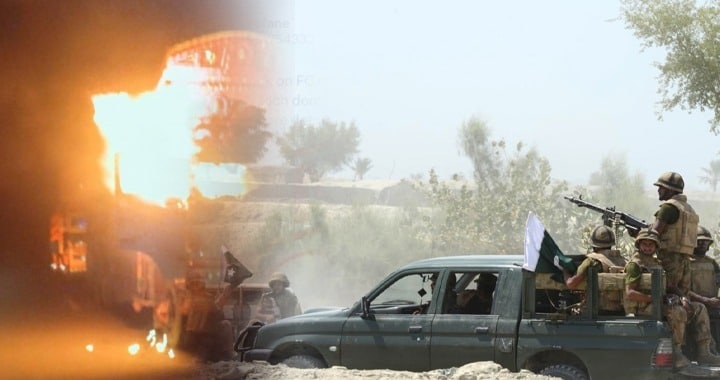
Following a major counterterrorism operation conducted by security forces in Balochistan, in which more than 40 terrorists were reportedly neutralized on the basis of intelligence provided through “Markhor,” terrorist elements allegedly linked to Indian proxy networks have intensified attacks targeting civilian infrastructure and ordinary citizens in the province.
According to local reports, armed militants set ablaze two supply trucks in Washuk and three additional trucks in Noshki. The vehicles were carrying essential commodities and goods intended for civilian populations in remote areas of Balochistan. The attacks have caused significant financial losses to transporters and disrupted the delivery of basic necessities to local communities already facing logistical and economic hardships.
Security and local administrative sources state that these acts are part of a broader campaign aimed at creating instability, spreading fear among the public, and undermining development and connectivity projects across Balochistan. The targeted trucks reportedly belonged to private transporters and civilian supply chains serving local markets and communities.
Officials and regional observers have strongly condemned the attacks, describing them as deliberate acts of economic sabotage against the people of Balochistan. They maintain that such militant groups routinely target infrastructure projects, extort poor transporters and truck drivers for money, and resort to arson and looting when demands are not met.
Sources further indicate that these groups often attempt to justify such attacks through propaganda narratives, falsely claiming that the vehicles were transporting minerals or supplies for security forces. However, according to available information, the affected trucks were carrying commercial goods and essential supplies intended for public consumption.
The incidents have renewed concerns over the safety of trade routes and civilian transportation networks operating in Balochistan. Analysts warn that continued attacks on economic and logistical infrastructure not only threaten livelihoods but also hamper ongoing efforts aimed at regional development, economic integration, and public welfare.
Local communities and business representatives have called for stronger protection measures for civilian transporters and stricter action against militant networks involved in extortion, arson, and attacks on public infrastructure.
Authorities reaffirmed their commitment to continuing counterterrorism operations across the province and ensuring the protection of civilians, commercial activity, and development initiatives from acts of violence and intimidation.



