
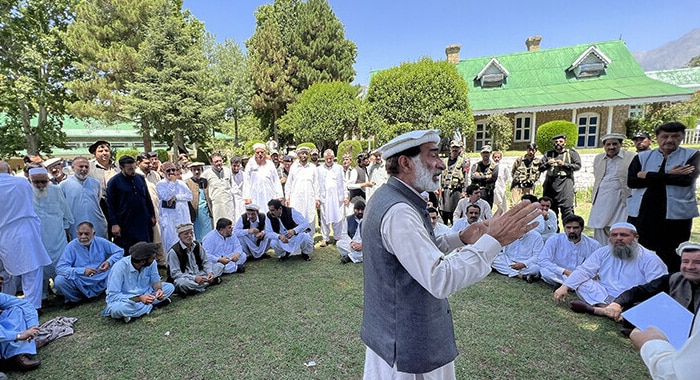
A grand tribal jirga held in the Nawapas area along the Pakistan–Afghanistan border has resulted in a significant agreement aimed at restoring peace and stability in the border regions of Bajaur District and Kunar Province.
The jirga brought together tribal elders from both sides of the border, reflecting a coordinated effort by local leadership to reduce tensions and prevent further escalation. The Pakistani delegation was led by Lal Shah Pakhtunyar, President of the Bajaur Chamber of Commerce and Industry, while the Afghan delegation was headed by Zahir Gul.
During the deliberations, both sides reached a mutual understanding to enforce an immediate and comprehensive ceasefire. It was agreed that no firing or hostile activity would take place from Bajaur and Mohmand districts toward Kunar Province, and similarly, no cross-border firing would originate from the Afghan side into Pakistani territory.
The agreement emphasizes restraint by all parties, including local security arrangements, with a clear commitment to prevent any form of armed confrontation along the border belt stretching from Dangam in Kunar to Bajaur and Mohmand regions.
A key component of the accord includes the establishment of a structured follow-up mechanism. It was decided that representatives from both Bajaur and Kunar will convene every three months to review the implementation of the agreement, assess compliance, and address any emerging concerns through dialogue.
Speaking on the occasion, Lal Shah Pakhtunyar termed the development a major achievement for peacebuilding efforts in the region. He extended congratulations to communities on both sides of the border and emphasized that the jirga reflects the shared will of tribal societies to prioritize peace over conflict.
He further stated that the agreement includes commitments to strengthen brotherly relations, mutual respect, and cooperation between the people of both regions. According to him, all forms of firing, clashes, and aggressive actions will be strictly avoided, while ensuring the protection of life and property of civilians residing in border areas.
The jirga also agreed in principle to facilitate the reopening of traditional trade routes and restore cross-border movement under mutually agreed arrangements. Participants stressed that long-standing disputes and misunderstandings would be addressed through consultation, dialogue, and tribal consensus mechanisms rather than confrontation.
The agreement has been widely described by participants as a positive step toward reducing cross-border tensions and promoting long-term stability in the region.



