
What appears on the surface to be a mere exchange of accusations between rival terror groups may, in reality, signal something far more consequential: a dangerous fragmentation within the terrorist ecosystem of Khyber Pakhtunkhwa.
The latest dispute between the banned Tehreek-e-Taliban Pakistan (TTP) and Ittehad-ul-Mujahideen in North Waziristan, Tank and Bannu are not simply a war of words. It may reflect an emerging internal crisis over money, territory, operational authority, survival, and increasingly, narrative control.
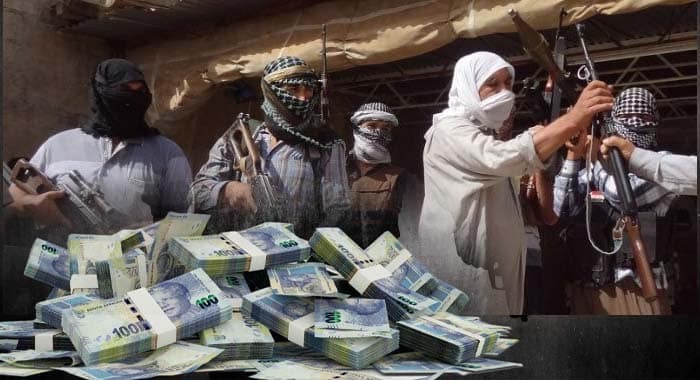
At the heart of the latest confrontation are allegations of extortion.
Sources indicate that Ittehad-ul-Mujahideen accused individuals linked to the TTP of collecting money through coercive means, an allegation the TTP rejected, insisting its members were conducting a donation campaign.
This distinction, however, may be semantic rather than substantive.
For years, terrorist outfits operating in Pakistan’s tribal belt have relied on so-called “chanda” campaigns, forced taxation and extortion from transporters, traders, contractors and local businessmen to sustain operations.
In conflict zones, the difference between donation and extortion often depends less on language and more on the presence of a gun.
The recent quadcopter attack in Spin Wam, North Waziristan, appears to reinforce this pattern.
According to local police, Khawarij targeted the residence of local political figure Malik Liaquat Ali Khan after alleged extortion demands were not met. The explosive device, reportedly delivered via drone, injured three children, including the politician’s son and two nephews.
The attack may reflect how extortion enforcement is evolving, from threats and intimidation to remote, technologically enabled violence.
A Battle Over Revenue Streams
The immediate trigger of the dispute may therefore be financial.
Armed groups require constant funding to maintain fighters, procure weapons, finance movement and sustain influence networks. When one faction enters another’s financial sphere, tensions can quickly escalate.
The accusation of extortion may actually be an accusation of trespassing into another group’s revenue stream.
In such environments, fear itself becomes taxable.
Territory Means More Than Geography
The regions named in the dispute, North Waziristan, Tank and Bannu are not just operational zones. They are strategic arteries.
Control over territories provide access to recruitment pools, safe houses, extortion networks, logistical routes and tribal influence.
Any claim of dominance in these districts directly affects the balance of power among terrorist groups.
The TTP’s accusation that Ittehad-ul-Mujahideen is targeting locals and asserting territorial control suggests the conflict may be less ideological and more about who governs fear on the ground.
In insurgent warfare, geography often translates into authority.
The Fracturing of the Terrorist Ecosystem
The terrorist landscape in Khyber Pakhtunkhwa is no longer monolithic.
The TTP itself is an umbrella of factions, commanders and shifting loyalties. Alongside it operate splinter groups, local armed networks and criminal gangs that often adopt ideological branding for legitimacy.
Ittehad-ul-Mujahideen may represent either an independent actor challenging TTP’s dominance or a former ally resisting centralization.
If so, the dispute could signal weakening command-and-control structures within the broader terrorist network.
Fragmentation creates instability not only for the groups themselves but for civilians trapped in contested areas.
Competition for Local Legitimacy
Terrorist groups do not survive on weapons alone. They survive on silence, fear or support from local populations.
If one faction becomes too brutal, too visible or too predatory, it can trigger tribal backlash and complicate the operating environment for all.
The TTP’s attempt to portray itself as merely conducting “donation campaigns” may be part of a broader effort to preserve an image of discipline and legitimacy among local communities.
This may indicate a struggle not just for territory but for narrative dominance.
Even terrorism has its propaganda war.
That propaganda battlefield has become increasingly visible after recent successful counter-terrorism operations in Bara.
Following intelligence-led operations targeting high-value elements of Fitna-al-Khawarij, authorities reported the emergence of a coordinated disinformation campaign aimed at undermining the credibility of the operation and distorting public perception.
Officials said multiple high-value terrorists involved in attacks on security forces and civilians were eliminated in the Bara operation. Yet, shortly afterward, misleading narratives began circulating online and through segments of media.
Authorities allege that a “political-terror-criminal nexus” repurposed old and unrelated images from North Waziristan and falsely linked them to the Bara operation in an attempt to fabricate claims of collateral damage.
This demonstrates how terrorist groups and their sympathizers increasingly seek to recover operational losses by reclaiming narrative space.
When the battlefield is lost on the ground, the war often shifts online.
Pressure Creates Cracks
Recent intelligence-based operations and targeted strikes by Pakistani security forces may also be contributing to the rift.
As pressure increases, mobility decreases and funding channels shrink.
Under such conditions, internal disputes over money, weapons and operational failures tend to surface more openly.
Scarcity sharpens rivalries.
The tighter the noose, the louder the blame.
Leadership, Ego and Internal Rivalries
Terrorist splits are often driven by personalities as much as ideology.
Disputes over money distribution, operational credit, fighter loyalty and accusations of cowardice or corruption frequently trigger internal fractures.
Commanders who once fought side by side may turn on one another when influence begins to slip.
Ideology may provide the slogan.
Ego often provides the spark.
External Influence and Diverging Agendas
Another possible factor is the role of external patronage or safe havens.
Different factions may maintain separate facilitators, handlers or cross-border support systems.
These relationships can create diverging operational priorities.
One faction may seek high-profile attacks.
Another may prioritize survival and extortion.
A third may avoid escalation to protect supply routes or foreign support.
Such competing agendas often turn alliances into rivalries.
The increasing use of quadcopters and indirect fire attacks against civilian homes may also reflect tactical divergence among factions competing for visibility and coercive leverage.
The earlier mortar attack in Bara, which reportedly injured seven people including women and children, and the drone strike in Spin Wam suggest a growing willingness among terrorist elements to escalate violence against soft targets.
A Sign of Weakness, or a Prelude to More Violence?
On one hand, the infighting may indicate weakening cohesion among terrorist networks.
Fragmentation can disrupt planning, reduce operational efficiency and expose vulnerabilities that security forces can exploit.
On the other hand, such rivalries can also increase violence.
Groups often escalate attacks to prove relevance, reassert authority or secure funding.
In some cases, civilians become the first casualties of this competition.
A wounded network can become more dangerous, not less.
A Window of Opportunity
For security agencies, such internal divisions may provide intelligence opportunities.
Infighting can produce informants, expose routes, reveal safe houses and weaken operational secrecy.
Historically, internal fractures have often been exploited to dismantle insurgent structures.
However, this requires swift, calculated and sustained action.
The latest confrontation between the TTP and Ittehad-ul-Mujahideen may therefore represent more than an isolated quarrel.
It could be the early sign of a deeper terrorist realignment unfolding across Khyber Pakhtunkhwa’s volatile districts.
Whether this marks the beginning of the decline of certain factions or the start of a more chaotic and violent phase remains to be seen.
But one thing is increasingly clear: beneath the rhetoric of ideology lies a harsher battlefield shaped by money, territory, ego, propaganda and survival.



