(Mushtaq Yusufzai)
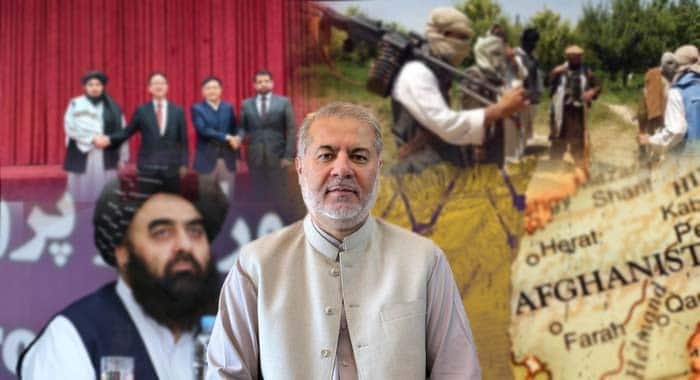
The recent trajectory of Pakistan–Afghanistan relations reflects a familiar but deeply troubling pattern: brief moments of diplomatic optimism followed by renewed cycles of mistrust, border tensions, and mutual accusations. Only a short time ago, discussions facilitated in China had created an impression that both neighboring countries were finally moving toward a more constructive phase of engagement. There was cautious optimism in diplomatic circles that decades of suspicion, conflict spillovers, and cross-border militancy might finally be addressed through structured dialogue.
Yet, as events on the ground have demonstrated, this optimism remains fragile. The situation along the Pakistan–Afghanistan border has once again deteriorated. Reports of drone strikes, mortar shelling in regions such as North Waziristan and Khyber, and violent incidents affecting civilian populations have significantly escalated tensions. These developments have not only strained bilateral relations but have also directly impacted innocent lives residing in border communities who continue to bear the cost of geopolitical instability.
At the same time, Afghanistan has accused Pakistan of being involved in a recent attack on Jamaluddin Afghan University in Kunar. Pakistan has categorically denied any involvement, maintaining that it had no role in the incident and suggesting that internal or other external factors could be responsible. The timing of this accusation, coinciding with already heightened tensions along the border, has further complicated an already fragile diplomatic environment.
In order to understand the present crisis, it is essential to examine not only the immediate incidents but also the broader regional dynamics, the role of militant groups, and the evolving geopolitical interests that shape Pakistan–Afghanistan relations.
The China-mediated diplomatic engagement between Pakistan and Afghanistan was seen as a potentially significant turning point. For years, both countries have struggled with mutual distrust, largely driven by security concerns, border management issues, and accusations of cross-border militancy. The talks hosted in China were significant because they created a neutral platform where both sides could engage without the immediate pressures of domestic political narratives.
According to information emerging from diplomatic and security circles, these discussions encouraged both sides to reconsider their positions, particularly on issues related to militant safe havens, border control, and the movement of armed groups. China’s role as a facilitator was particularly important, given its economic and strategic interests in regional stability, especially in the context of connectivity projects and the broader Belt and Road framework.
Initial outcomes suggested progress. There were indications that Afghan authorities had begun taking steps against certain militant networks, including reports of arrests linked to groups operating against Pakistan. Similarly, Pakistani officials emphasized the importance of preventing cross-border attacks and ensuring that Afghan territory would not be used by hostile elements.
However, such developments, while encouraging, remain extremely fragile. The absence of sustained institutional mechanisms to enforce agreements means that any breakthrough remains vulnerable to disruption by ground realities.
At the heart of Pakistan–Afghanistan tensions lies the persistent issue of militant groups operating across the border regions. Groups such as the Tehrik-i-Taliban Pakistan (TTP) and other affiliated networks continue to exploit geographical, political, and administrative gaps between the two countries.
Border regions stretching from Khyber to Balochistan remain highly volatile. The rugged terrain, weak governance structures, and porous border facilitate the movement of armed groups. These groups not only challenge state authority but also deliberately seek to undermine any rapprochement between Islamabad and Kabul.
It is increasingly evident that whenever there is diplomatic progress between the two governments, militant activity tends to intensify. This is not coincidental. Elements benefiting from instability have a vested interest in ensuring that state-to-state cooperation does not translate into effective security coordination. Increased attacks, retaliatory strikes, and rising civilian casualties all contribute to a cycle of mistrust that derails diplomatic progress.
Reports suggest that Afghan authorities, under pressure from international interlocutors, have attempted to restrain certain militant factions and even detain individuals associated with cross-border attacks. However, the complexity of the situation is evident. Many of these groups operate in loosely controlled spaces, and internal divisions within Afghanistan’s political and security structure further complicate enforcement.
While political leaders and security establishments exchange accusations, it is the civilian population in border regions that continues to suffer the most severe consequences. Areas such as Bajaur, North Waziristan, and parts of Khyber have witnessed repeated incidents of violence. These include targeted killings, mortar shelling, and drone strikes, all of which have resulted in tragic civilian casualties.
Women and children are often among the victims. Entire families have been displaced or destroyed by incidents that are rarely fully acknowledged in formal diplomatic exchanges. In one recent incident reported from Bajaur, multiple members of a single family were killed, highlighting once again the indiscriminate nature of violence in these areas.
Similarly, allegations of attacks in Afghanistan’s Kunar province, including claims of civilian casualties and injuries, have further intensified emotional and political reactions. Whether these incidents are confirmed or disputed, the human cost remains undeniable.
This humanitarian dimension is often overshadowed by geopolitical narratives. Yet it is precisely this suffering that underscores the urgency of achieving lasting stability between Pakistan and Afghanistan.
Another critical factor contributing to escalating tensions is the role of misinformation and propaganda. In an environment where media institutions are weak and social media narratives often go unchecked, rumors and unverified claims spread rapidly across both sides of the border.
Afghanistan’s internal media environment, still developing and lacking institutional maturity, often becomes a fertile ground for unverified claims. Similarly, elements within Pakistan’s media and political discourse sometimes amplify narratives that deepen mistrust.
This creates a dangerous feedback loop. Allegations are made, amplified, and consumed as facts before proper verification. By the time official clarifications are issued, public sentiment has already hardened, making diplomatic resolution more difficult.
It is therefore essential for both governments to not only address security concerns but also invest in responsible communication strategies that prevent escalation based on misinformation.
The Pakistan–Afghanistan relationship does not exist in isolation. Regional and global powers also play a significant role in shaping the dynamics between the two countries. Competing strategic interests, particularly in South and Central Asia, often intersect with local conflicts.
China’s involvement as a mediator reflects its broader interest in ensuring stability along its western frontier. Stability in Afghanistan and Pakistan is crucial for regional connectivity and economic integration. However, other regional actors also have interests that may not always align with peace and cooperation.
There is a growing perception that certain external forces benefit from continued instability in the region. Whether through strategic competition, political leverage, or economic interests, instability can sometimes serve broader geopolitical agendas. These dynamics add another layer of complexity to an already fragile situation.
Despite the current tensions, it would be premature to dismiss the possibility of future cooperation between Pakistan and Afghanistan. The recent China-facilitated dialogue demonstrated that even deeply entrenched adversaries can find space for communication when conditions are conducive.
However, the path forward requires more than occasional diplomatic meetings. It demands sustained engagement, institutional frameworks, and above all, political will on both sides. Trust-building measures must go beyond statements and include actionable steps on border security, intelligence sharing, and counterterrorism cooperation.
Both countries must also confront internal challenges. Afghanistan faces the difficult task of consolidating authority over its territory and ensuring that armed groups do not operate with impunity. Pakistan, on the other hand, must address long-standing security vulnerabilities in its border regions while avoiding actions that could further alienate the Afghan population.
Ultimately, neither conflict nor isolation offers a sustainable solution. The geography, history, and people of both countries are deeply interconnected. Stability in one is inseparable from stability in the other.
The current phase of Pakistan–Afghanistan relations represents both a warning and an opportunity. The warning lies in the rapid deterioration of trust despite recent diplomatic progress. The opportunity lies in the recognition by both sides that continued hostility serves no constructive purpose.
China’s mediation effort showed that dialogue is possible even in difficult circumstances. But sustaining that dialogue requires commitment, restraint, and a shared understanding that violence is not a viable path forward.
As tensions continue along the border and accusations escalate, the real question remains whether both countries can break free from the cycle of mistrust that has defined their relationship for decades. The answer to that question will not only determine the future of Pakistan and Afghanistan but will also have broader implications for regional peace and stability in South and Central Asia.
For now, the situation remains delicate. The choice ahead is clear: either continue down the path of confrontation or invest seriously in the difficult but necessary process of reconciliation.