
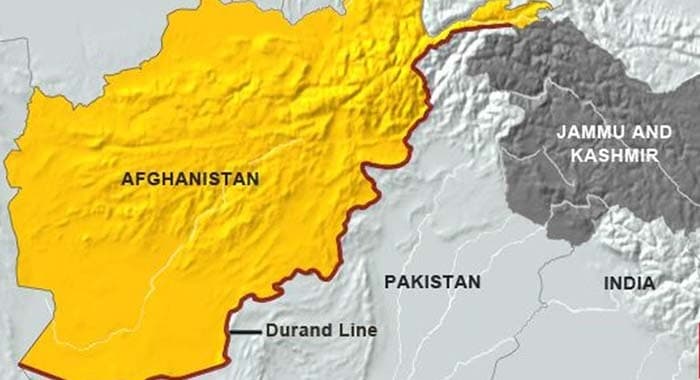
A detailed historical and legal examination of early twentieth-century agreements between Afghanistan and British India highlights the inseparable relationship between Afghanistan’s internationally recognized independence and the formal status of the Durand Line as a binding international boundary. The Treaty of Rawalpindi, signed in August 1919, followed by the Treaty of Kabul in November 1921, collectively represent a decisive turning point in regional diplomacy. These agreements not only marked the end of British control over Afghanistan’s foreign affairs but also reaffirmed the Indo-Afghan frontier as a mutually accepted and legally grounded limit, forming a single, comprehensive settlement rather than separate or unrelated arrangements.
Within the Treaty of Kabul, the recognition of sovereignty and territorial boundaries is articulated as part of the same legal framework. The treaty establishes mutual acknowledgment of full internal and external independence between Afghanistan and Britain while simultaneously confirming the frontier as previously accepted under the Rawalpindi agreement. The language of the treaty provides no indication that the border was provisional or subject to unilateral alteration, reinforcing the interpretation that both sovereignty and territorial delimitation were negotiated together as permanent and binding commitments. As such, the agreements do not support any attempt to treat Afghan independence and the status of the frontier as legally separable issues.
From the perspective of international law, the principle of treaty integrity requires that agreements be upheld in their entirety. The argument that one provision may be accepted while another is rejected introduces a clear legal inconsistency. If Afghanistan’s full sovereignty is understood to derive from these agreements, then the obligations contained within them, including the recognition of the Durand Line, must carry equal force. Any attempt to detach the question of independence from the question of agreed borders not only contradicts the explicit text of the treaties but also undermines the broader legal coherence upon which Afghanistan’s modern statehood was internationally acknowledged.
The agreements further reveal a broader framework of reciprocal obligations and strategic considerations that extended beyond the formal recognition of sovereignty and territory. In return for diplomatic recognition, access to arms and supplies, and financial as well as military assistance often described historically as British subsidies, Afghanistan accepted British authority over territories east of the Durand Line. Supplementary correspondence attached to the agreements indicates that Afghan leadership undertook specific commitments in the realm of foreign relations, including assurances that rival powers would not be permitted to establish diplomatic missions in key cities such as Jalalabad, Ghazni, and Kandahar. These elements demonstrate that territorial recognition was not incidental but formed a central pillar of a wider geopolitical settlement intended to stabilize the region and define spheres of influence.
Following the partition of British India in 1947, Pakistan emerged as the legal successor state in relation to prior treaty obligations concerning the frontier. Under the established principle of state succession in international law, Pakistan inherited both the rights and responsibilities arising from agreements concluded by British India, including those relating to the Durand Line. This continuity reinforces the position that the boundary’s legal status extends beyond its colonial origins and remains grounded in recognized international agreements. The consistent emphasis within international practice on respecting established borders further supports the enduring validity of such arrangements as a means of maintaining regional stability and preventing conflict.
In conclusion, the Treaties of Rawalpindi and Kabul must be understood as a unified legal package in which the recognition of Afghanistan’s independence and the confirmation of the Durand Line are intrinsically linked and mutually reinforcing. Any interpretation that seeks to accept one element while discarding the other introduces a contradiction that weakens the legal foundation of the entire settlement. A historically accurate and legally consistent reading of these agreements requires their acceptance in full, acknowledging that Afghanistan’s sovereignty and its internationally recognized boundaries were defined together within the same enduring diplomatic framework.



