
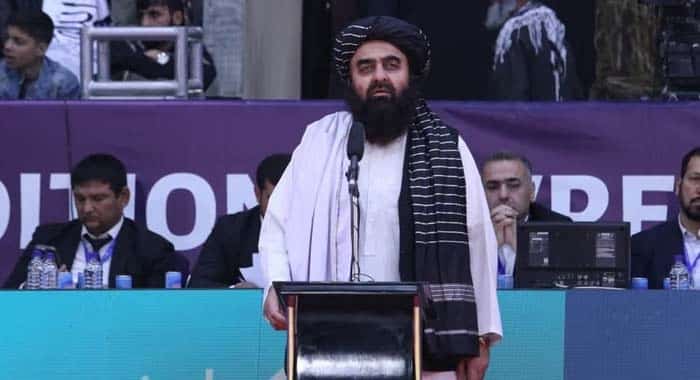
Afghanistan’s Taliban-appointed foreign minister, Amir Khan Muttaqi, has warned of a “dangerous war” amid rising regional tensions, even as questions continue to surround the interim Taliban administration’s own role in regional instability and the security concerns repeatedly raised by neighboring and global powers.
Speaking at the opening ceremony of an international traditional wrestling tournament in Kabul on Thursday, Muttaqi referred to the ongoing situation involving Iran and said he hoped peace talks would continue, the ceasefire would hold, and stability would return to the region.
The event, which began on April 23, brought together athletes from six regional countries in what Taliban officials presented as a sign of growing engagement between Afghanistan and neighboring states.
Addressing the visiting athletes and delegates, Muttaqi said their presence reflected what he described as improving relations between the Taliban administration and regional countries. He claimed Afghanistan was expanding cooperation with neighboring states in political, trade, and other sectors.
His remarks, however, come as Afghanistan under Taliban control continues to face scrutiny over the presence of multiple terrorist groups operating from its soil. Regional and international reports have repeatedly highlighted concerns that Afghanistan remains a hub for armed networks, including transnational terrorist organizations accused of threatening peace and stability beyond its borders.
Neighboring countries, particularly Pakistan, have repeatedly voiced concerns over terrorist sanctuaries and cross-border attacks allegedly originating from Afghan territory. Islamabad has consistently linked rising violence in its border regions to the operational space available to the banned Tehreek-e-Taliban Pakistan and allied groups across the frontier.
Against this backdrop, analysts say Muttaqi’s warning about the outbreak of a “dangerous war” may resonate differently across the region, where Afghanistan itself is increasingly viewed as a source of instability rather than merely an observer of conflict.
Muttaqi also expressed regret over the ongoing conflict involving Iran and called for continued negotiations and preservation of the ceasefire, saying he hoped regional countries would be able to live in peace.
Since the escalation involving the United States, Israel, and Iran, Taliban authorities have publicly voiced support for Tehran and condemned the strikes.
Observers note that the Taliban’s calls for peace abroad contrast sharply with persistent questions over their internal governance and their ability, or willingness, to curb the activities of terrorist organizations operating within Afghanistan.
For many in the region, the contradiction remains difficult to ignore while Taliban officials speak of peace, dialogue, and regional stability at international gatherings, Afghanistan under their rule continues to be cited as a key security concern in an increasingly volatile regional landscape.



