
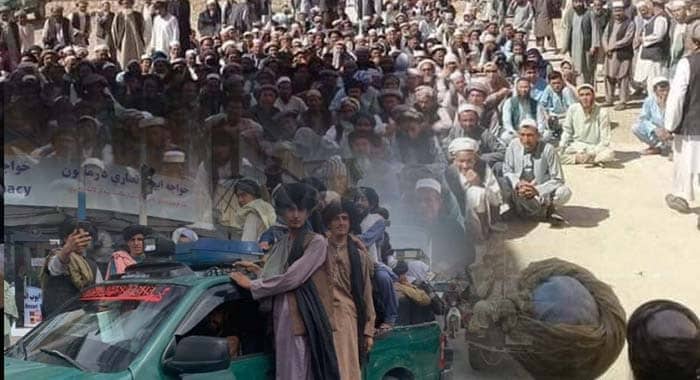
Recent reports emerging from northern Afghanistan, particularly Faryab province, alongside unverified accounts circulating among local observers and regional commentators, point to growing political and administrative tensions within the Taliban-led governance structure. These developments, while not independently confirmed in full, have raised renewed questions regarding internal cohesion, representation, and resource allocation across different factions and regions.
Sources from northern districts, including Faryab, allege that non-Pashtun members within the Taliban’s broader structure particularly individuals of Uzbek and Tajik background—face diminishing influence in administrative and decision-making roles.
According to these accounts, individuals previously integrated into the movement’s security and governance apparatus are increasingly perceived as being sidelined from key leadership positions. Local narratives suggest that this perceived imbalance has contributed to growing dissatisfaction in some communities, though these claims remain difficult to independently verify.
Additional reports suggest the presence of internal differences among influential factions within the Taliban administration, including groups traditionally associated with Kandahar-based leadership and elements linked to the Haqqani network.
These accounts describe tensions over administrative authority, security control, and financial resources. While the Taliban leadership has consistently projected an image of centralized unity, some analysts and observers argue that governance realities on the ground may reflect more complex and fragmented power-sharing arrangements.
At present, these claims remain speculative and have not been substantiated through independent institutional reporting.
Separate allegations have also emerged regarding administrative initiatives in parts of northern Afghanistan, including Qarmaqol district in Faryab province. Reports suggest that local implementation of identification or registration processes has raised concerns among some residents regarding land rights, residency documentation, and demographic representation.
Community perspectives on these measures appear divided, with supporters viewing them as state-building efforts and critics interpreting them as potentially disruptive to established local structures. No official documentation confirming the intent or scope of these measures has been independently verified.
Taken together, these developments reflect ongoing challenges in Afghanistan’s evolving political landscape, where questions of representation, administrative authority, and regional integration remain central to governance debates.
Observers note that while the Taliban administration continues to assert institutional cohesion at the national level, localized reports from several provinces indicate varying degrees of political tension, administrative strain, and competing interpretations of governance practices.
However, it is essential to emphasize that many of the claims referenced in this release are based on circulating reports, local testimonies, and unverified accounts. As such, they should be treated as preliminary observations rather than confirmed findings.
The situation in northern Afghanistan continues to evolve amid competing narratives and limited independent verification. Further on-the-ground reporting and credible institutional analysis will be necessary to accurately assess the extent, nature, and implications of the reported developments.
Until then, these accounts remain part of a broader and still-developing picture of Afghanistan’s post-conflict governance environment.



