
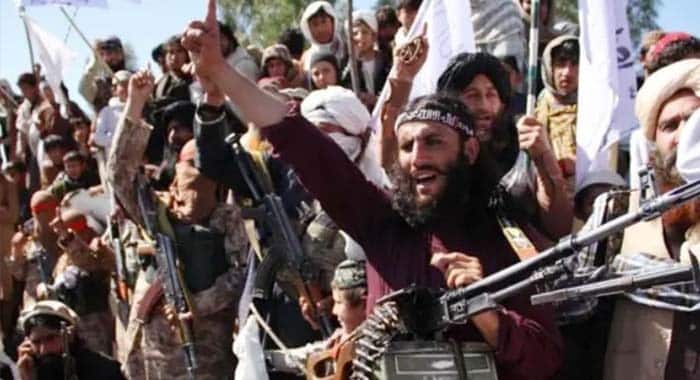
The Afghan Taliban regime continues to face unprecedented international isolation due to its alleged backing of terrorist networks, involvement in narcotics trafficking, and other criminal activities, according to a new report by the U.S.-based Middle East Institute.
The report, which draws on extensive research into the Taliban’s leadership and governance structure, reveals that at least 55 Taliban officials maintain direct or indirect links to Al Qaeda. Moreover, more than 20 percent of mid- and senior-level leaders have reportedly orchestrated suicide attacks, bombings, or other militant operations, underscoring the regime’s continued entanglement in extremist activity.
Afghanistan International, a leading Afghan media outlet, reports that out of the 33-member Taliban cabinet, 13 to 14 officials are currently under international sanctions. Among those sanctioned are Acting Prime Minister Mullah Mohammad Hassan Akhund, Deputy Prime Ministers, Interior Minister Sirajuddin Haqqani, Foreign Minister Amir Khan Muttaqi, and several key ministers overseeing energy, mines, economy, justice, and transportation. These sanctions include asset freezes, travel bans, and restrictions on arms procurement.
The current UN sanctions list includes a total of 135 individuals and five entities associated with the Taliban, reflecting concerns over their potential threat to peace, stability, and security in Afghanistan. The report further highlights that while the Taliban cabinet faces significant restrictions, many mid- and senior-level officials outside the cabinet remain unsanctioned, revealing gaps in international regulatory enforcement.
Experts suggest that these findings demonstrate the ongoing influence of extremist networks within the Taliban’s administrative structure. The continued links to international terrorism have led to a near-total loss of global trust and recognition for the Taliban regime, leaving it politically and diplomatically isolated.
“The international community’s confidence in the Taliban is critically eroded,” the report notes. “Despite taking power in Afghanistan, the regime’s association with terrorism and criminal networks prevents any meaningful engagement with the global order.”
The Middle East Institute emphasizes that this isolation not only complicates humanitarian aid and economic development in Afghanistan but also poses significant challenges for regional stability. Analysts warn that the persistence of Taliban-aligned networks could continue to fuel instability, undermine security, and obstruct efforts toward sustainable peace in Afghanistan and the wider region.



