
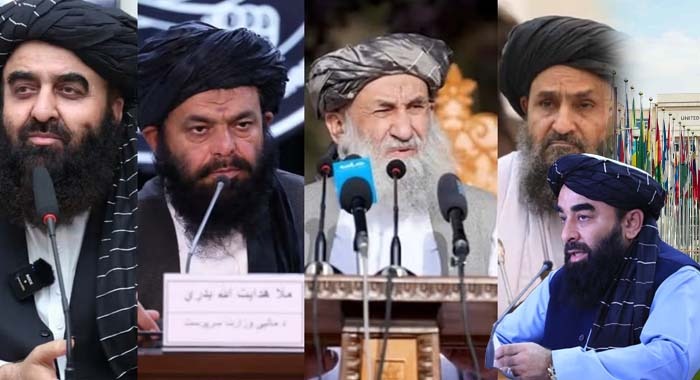
The United Nations Security Council sanctions committee has updated the records of several senior Taliban officials who remain under its sanctions regime, amid continued international concerns regarding governance, security, and political conditions in Afghanistan.
According to the updated listings, revisions have been made to the personal and identification details of four senior figures, including Taliban Prime Minister Mohammad Hassan Akhund, Foreign Minister Amir Khan Muttaqi, Deputy Prime Minister Abdul Ghani Baradar, and Minister of Mines Hedayatullah Badri.
Officials clarified that these individuals were already designated under the sanctions regime, and the latest changes are administrative in nature, relating to updated biographical and identification information.
Earlier, the sanctions monitoring committee also revised and published updated profiles of 22 senior Taliban-linked figures in mid-March, including Interior Minister Sirajuddin Haqqani, Refugees Minister Abdul Kabir, Agriculture Minister Abdul Latif Mansoor, Economy Minister Din Mohammad Hanif, Intelligence Chief Abdul Haq Wassiq, and other key administrative and security officials.
The sanctions are enforced under United Nations Security Council Resolution 1988, which imposes travel restrictions on designated individuals unless exemptions are granted by the committee. The framework targets individuals associated with violence, arms facilitation, recruitment networks, or activities deemed to threaten peace and stability in Afghanistan.
Despite repeated calls from the Taliban authorities over the past several years for removal of sanctions, the measures remain in place due to continuing international concerns, including the presence of armed groups, governance limitations, and restrictions on women’s rights, as well as questions surrounding the inclusivity of the administrative structure.
Taliban spokesperson Zabihullah Mujahid criticized the updated sanctions listing, describing the continuation of restrictions as unjust and ineffective. He stated that such measures amount to political pressure and have failed to produce meaningful results.
He further urged the international community to reconsider the sanctions, arguing that lifting them could facilitate broader engagement with Afghanistan’s current authorities.
However, international policy on the matter remains unchanged, with sanctions continuing as part of ongoing efforts to exert pressure until substantive governance and security concerns are addressed under the existing framework.



