
Taimur Khan
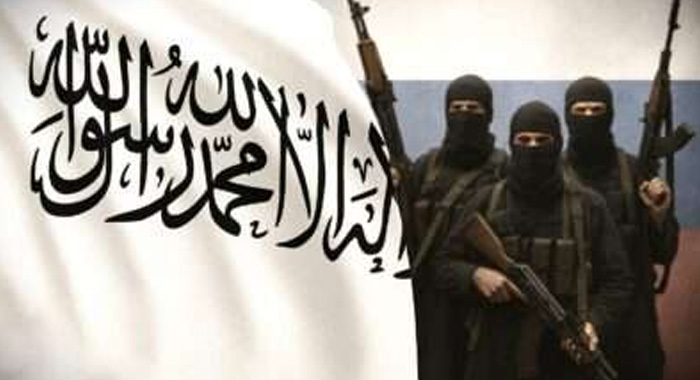
A recent Russian security assessment has raised serious concerns about the continuing presence of international terrorist groups in Afghanistan, warning that approximately 23,000 militants linked to multiple extremist organisations remain active across the country. The disclosure highlights the growing security challenges facing Afghanistan and the broader region following the withdrawal of Western forces in 2021.
According to statements by Sergei Shoigu, Secretary of the Security Council of the Russian Federation, terrorism remains the most pressing security issue in Afghanistan. In a recent interview, Shoigu indicated that around twenty international terrorist organisations are currently operating inside Afghan territory, posing risks not only to Afghanistan’s internal stability but also to neighbouring states and the wider Eurasian region.
The Russian assessment places particular emphasis on the threat posed by Islamic State Khorasan (ISKP), which is widely regarded as the most dangerous militant group currently active in Afghanistan. ISKP maintains operational bases primarily in the eastern and northern parts of the country and has been responsible for a series of attacks targeting Afghan security forces, civilians, and regional interests. Security analysts warn that the persistent presence of these groups undermines Afghanistan’s stability and complicates the efforts of the Taliban-led government to project itself as a guarantor of national security.
Russia formally recognised the Taliban-led government of Afghanistan on 3 July 2025, marking a significant shift in Moscow’s policy toward Kabul. The recognition followed a series of diplomatic engagements between the two sides, including Taliban participation in Russian forums, Moscow’s decision to remove the Taliban from its terrorist list in April 2025, and bilateral talks held in Kabul in November 2024.
Russian officials have stated that cooperation with Afghanistan will focus on several key areas, including counterterrorism coordination, trade expansion, and efforts to curb narcotics trafficking. Despite this diplomatic recognition, Moscow has continued to express concern about Afghanistan’s security environment. Russian officials have repeatedly emphasised that the persistence of extremist networks inside the country remains a major obstacle to long-term stability.
The withdrawal of United States and NATO forces from Afghanistan on 31 August 2021 ended two decades of Western military presence and fundamentally reshaped the geopolitical dynamics of the region. The Taliban’s rapid takeover of Kabul shortly thereafter resulted in the re-establishment of the Islamic Emirate of Afghanistan.
The absence of Western military forces has opened the door for regional and international powers including Russia, China, Iran, and Central Asian states to reassess their strategic engagement with Afghanistan. Analysts describe this shift as the beginning of a new geopolitical phase in Eurasia, where security concerns, economic interests, and regional influence are increasingly intertwined.
Despite the Taliban’s consolidation of power in much of Afghanistan, security experts believe that the continued presence of thousands of militants affiliated with international jihadist networks highlights the limitations of Kabul’s authority in certain areas.
In addition to ISKP, the Russian assessment suggests that Al-Qaeda-linked elements and various regional militant organisations remain active within Afghanistan. Their presence complicates the Taliban’s efforts to establish full territorial control and raises concerns among neighbouring states about potential cross-border threats.
ISKP, in particular, continues to demonstrate operational resilience. Through a combination of propaganda, recruitment efforts, and targeted attacks, the group has maintained a visible presence and remains capable of conducting high-profile assaults.
The organisation’s activities have intensified fears of terrorism, militant recruitment networks, and illicit trafficking routes that could extend beyond Afghanistan’s borders and threaten the security of Central Asia and Russia.
Beyond the threat posed by extremist organisations, the Taliban government also faces resistance from armed opposition groups. Among them is the National Resistance Front of Afghanistan, which continues to operate in parts of northern Afghanistan. Although significantly smaller and less organised than the anti-Taliban Northern Alliance of the 1990s, these factions still represent an ongoing challenge to the Taliban’s complete consolidation of power.
The persistence of these groups underscores the complexities of Afghanistan’s internal security environment and highlights the difficulties faced by Kabul in establishing uniform governance across the country. The continuing security challenges have significant implications for Afghanistan’s economic recovery and international engagement.
Experts warn that persistent insecurity discourages foreign investment and hinders regional trade initiatives. Businesses and international partners remain cautious about operating in Afghanistan due to concerns about terrorist attacks, political uncertainty, and governance limitations.
In addition, international sanctions and financial restrictions imposed on the Taliban administration continue to limit Afghanistan’s access to global financial systems. Russian officials argue that such sanctions further weaken the ability of Afghan authorities to combat militant organisations effectively.
Alongside terrorism, narcotics production remains another key concern highlighted in the Russian assessment. According to available data, poppy cultivation in Afghanistan declined significantly between 2022 and 2023 following Taliban enforcement measures. However, the decline in traditional opium production has been accompanied by a worrying rise in the manufacture of synthetic drugs such as methamphetamine and other synthetic opioids, complicating regional anti-narcotics efforts.
Drug trafficking networks have long been intertwined with militant groups, creating an additional layer of security challenges across the region. The presence of militant networks in Afghanistan continues to generate anxiety among Central Asian countries.
Some regional governments fear that deeper engagement between Russia and the Taliban could unintentionally embolden militant groups operating along porous borders. Others, however, view the evolving geopolitical landscape as an opportunity to expand logistics, infrastructure, and trade cooperation with Afghanistan.
This divergence highlights the complex balancing act faced by regional states as they attempt to pursue economic opportunities while mitigating security risks. Security analysts suggest several indicators that will help determine whether Afghanistan’s security environment is improving or deteriorating in the coming months.
Verified reports of militant activity involving ISKP or other extremist groups within Afghanistan. The frequency and scale of Taliban counterterrorism operations against militant networks, The occurrence of terrorist attacks in Afghan cities or cross-border incidents targeting neighbouring states, Shifts in Taliban control in northern provinces where resistance groups remain active, Security responses by Central Asian states, particularly Tajikistan, regarding potential militant infiltration and Announcements of security cooperation or intelligence-sharing initiatives between Russia and Afghanistan.
While Russia’s recognition of the Taliban government has opened new diplomatic and economic channels, analysts note that such recognition alone cannot resolve Afghanistan’s underlying security challenges. The continued presence of approximately 23,000 militants associated with international terrorist organisations remains the central barrier to long-term stability in the country. Until Afghan authorities can significantly reduce the influence and operational capacity of these groups, Afghanistan’s prospects for economic recovery, international legitimacy, and regional integration are likely to remain limited. For Moscow and other regional actors, the evolving situation represents both an opportunity for strategic engagement and a reminder of the persistent security risks emanating from Afghanistan.



