
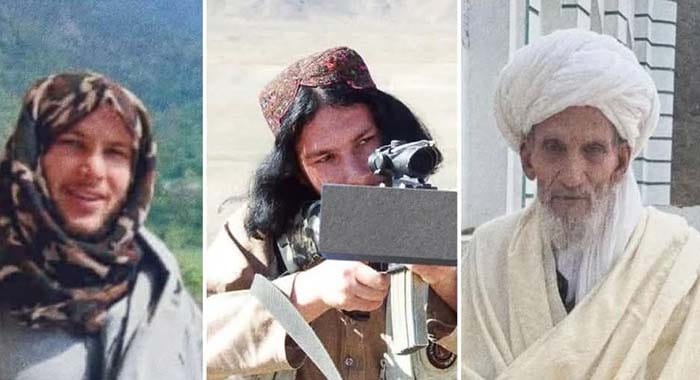
A fresh layer in the evolving terrorist landscape of Khyber Pakhtunkhwa has surfaced after security forces eliminated a terrorist linked to Fitna al-Khwarij (FAK) in Bajaur, with revelations pointing to alleged cross-border ideological and familial linkages involving Afghanistan’s former Taliban network structures.
According to details, the eliminated terrorist, identified as Izzatullah, was the nephew of former Taliban-era official Muhammad Siddiq, who previously served as Deputy Minister for Martyrs and had also held a senior education post during the Taliban period in Afghanistan’s Logar province.
Officials say the linkage once again highlights the deep and complex overlaps between local terrorist networks and Afghan-origin structures, a pattern repeatedly observed in recent counter-terrorism operations in Bajaur and surrounding frontier districts.
The latest development adds to a broader security picture already shaped by sustained operations in Bajaur, where terrorist groups have increasingly targeted not only security forces but also civilian livelihoods.
In one recent incident, terrorists opened fire on civilian transport vehicles carrying vegetables, fruit and wood in the Zarmandari area, injuring two men and burning the vehicles, an attack widely seen as part of a strategy to disrupt economic life and spread fear among local populations.
Security analysts note that such incidents reflect a widening “hybrid threat matrix” in Bajaur, where terrorism is no longer confined to direct engagements but now includes economic sabotage, civilian targeting, and psychological warfare.
Earlier reports from the region also documented coordinated cross-border firing, infiltration attempts, and repeated attacks on law enforcement, including double-hit ambush tactics targeting police responders after initial strikes.
At the same time, multiple counter-terrorism operations have resulted in the elimination of several terrorists, including foreign nationals linked to banned networks, reinforcing concerns over cross-border facilitation and the presence of Afghan-origin fighters within local terrorist structures.
A separate set of operations in Bajaur earlier also led to the elimination of four terrorists, including an Afghan national identified as Izzatullah alias Qari, while other incidents saw multiple bodies of terrorists recovered months after cross-border engagements following snowfall melt.
In another major development, officials had confirmed that a suicide bomber involved in a deadly attack on a security post in Bajaur was also an Afghan national with alleged links to Taliban-era special forces structures, further underlining the persistent cross-border dimension of militancy in the region.
Security officials maintain that the presence of such familial, ideological, and operational linkages points to a long-standing transnational terrorist ecosystem that continues to evolve despite sustained pressure through intelligence-based operations.
Meanwhile, the region has also witnessed increasing friction among terrorist factions, including TTP-linked groups and Daesh Khorasan operatives, as documented in recent clashes across Upper Orakzai and adjoining tribal districts.
Those clashes have resulted in the elimination of multiple terrorists and senior commanders on both sides, reflecting intensifying turf wars over territory, influence, and operational control.
Analysts say Bajaur and adjoining frontier districts are now part of a broader and increasingly fragmented militant landscape where ideological boundaries blur, alliances shift, and violence is often driven by overlapping agendas of survival, control, and external facilitation.
Despite these complexities, security forces continue sustained intelligence-based operations aimed at dismantling terrorist infrastructure and preventing cross-border spillover, as the region remains one of the most sensitive fronts in Pakistan’s ongoing counter-terrorism campaign.



