
Pakistan’s Permanent Representative to the United Nations, Ambassador Asim Iftikhar Ahmad, delivered a detailed address to the United Nations Security Council on the escalating security threats emanating from Afghanistan and the broader regional implications of militant activity in the country.
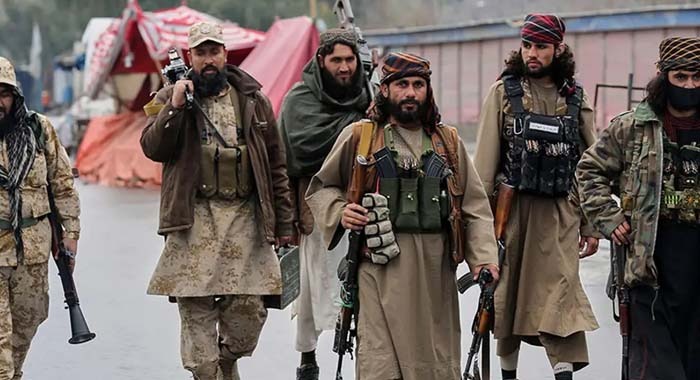
Ambassador Ahmad underscored that Afghanistan has effectively become a sanctuary for terrorist organizations and proxy groups, a fact acknowledged by international assessments including reports from the United Nations and the UN Monitoring Team. He highlighted that these developments have destabilized the region, creating significant security challenges for neighboring states, particularly Pakistan.
Addressing reports of unofficial delegations visiting Kabul, Ambassador Ahmad warned that terrorism emanating from Afghan soil poses a grave threat not only to Pakistan but also to regional and international peace. He noted that terrorist entities including Tehrik-i-Taliban Pakistan (TTP), Balochistan Liberation Army (BLA) and its Majeed Brigade, Islamic State Khorasan (ISIS-K), Al-Qaeda, and East Turkistan Islamic Movement (ETIM) enjoy safe havens inside Afghanistan from which they launch cross-border infiltration, violent attacks, and suicide bombings.
He further alleged that elements within the Taliban regime have provided complicity and active support to these groups, with external backing and logistical assistance from Pakistan’s eastern neighbor, which he described as “a known opportunist and spoiler.”
Highlighting Pakistan’s proactive measures, Ambassador Ahmad detailed selective intelligence-based operations carried out on February 21–22 against seven terrorist camps and hideouts along the Pakistan-Afghanistan border, targeting TTP, its affiliates, and ISIL-K. The strikes were conducted with precision to neutralize threats while exercising maximum restraint.
He noted that following unprovoked hostilities initiated by the Taliban on February 26, including attacks on border posts and military installations, Pakistan responded in self-defense. “Our counter-terrorism operations are proportional, carefully planned, and directed solely against identified terrorist camps and support bases. Pakistan will continue to take all necessary measures to protect its citizens, territory, and sovereignty,” he stated.
Ambassador Ahmad strongly criticized remarks by representatives of India and Afghanistan regarding Pakistan’s Afghan policy. Regarding the Afghan representative, he stated: “Sequestered in New York, Faiq does not represent the ground realities and has selectively commented on aspects concerning Pakistan. Therefore, the credibility of his remarks is in serious doubt.”
He emphasized that Pakistan’s operations target terrorist elements, not the Afghan people, and fully conform to international law and the right to self-defense.
Addressing the Indian representative, he noted India’s complicity in supporting terrorist networks operating from Afghan territory, including TTP and BLA, and criticized India’s broader pattern of destabilizing Pakistan through proxy networks. “The world needs no lectures from a state that repeatedly violates international law and perpetrates acts of state terrorism,” he remarked.
Ambassador Ahmad reaffirmed Pakistan’s commitment to peace and stability in Afghanistan, emphasizing that long-term stability requires the Taliban regime to uphold commitments regarding counter-terrorism, inclusive governance, and the protection of rights of women and girls.
Pakistan’s Deputy Prime Minister and Foreign Minister Ishaq Dar engaged in telephonic discussions with key regional leaders, including China’s Foreign Minister Wang Yi, Saudi Arabia’s Foreign Minister Faisal bin Farhan Al Saud, and Bahrain’s Foreign Minister Abdullatif bin Rashid Al Zayani. Discussions focused on the evolving regional situation, promoting de-escalation, and strengthening diplomatic coordination to maintain peace and stability.
Pakistan also strongly condemned Israel’s continued military actions in Lebanon, which have resulted in hundreds of civilian casualties and the displacement of nearly half a million people. Pakistan called for the immediate cessation of hostilities, withdrawal from all occupied Lebanese territories, and urged the international community to uphold Lebanon’s sovereignty and territorial integrity.



