
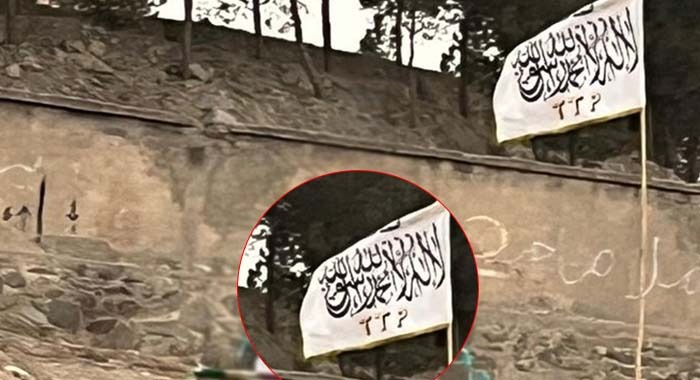
New reports from local sources have raised serious concerns about the presence and activities of militants linked to Tehrik-e-Taliban Pakistan (TTP) within the Afghan capital, after the discovery of a cemetery and alleged recruitment infrastructure in the eastern outskirts of Kabul.
According to information gathered from sources familiar with developments in the area, a burial site believed to be associated with the TTP has been identified in the Bagrami District. The cemetery reportedly contains graves marked with symbols and flags linked to the militant group, suggesting the site has been used to bury fighters killed in recent weeks.
The discovery has intensified concerns among security observers about the presence of militant networks operating within Afghanistan’s capital and the potential implications for regional stability.
Local sources indicate that the burial ground has been used recently for funerals of individuals reportedly affiliated with the TTP. Graves bearing militant insignia and group-related symbols have reportedly appeared over the past several weeks, suggesting ongoing militant activity linked to the organization.
Security analysts say that the existence of such a burial site in close proximity to Kabul underscores the possibility that militant operatives are maintaining a structured presence in and around the capital.
Adding to concerns, a religious seminary commonly referred to as a madrassa has reportedly been established near the burial site. According to sources, the institution hosts a number of foreign militants and is allegedly being used as a center for ideological indoctrination and recruitment.
Observers claim that the facility functions as a pipeline for radicalization and the preparation of recruits, with individuals reportedly being trained and prepared for militant operations targeting neighboring Pakistan.
If confirmed, analysts say the development would point to a structured support network operating within the vicinity of the Afghan capital. Security experts warn that the reported presence of militant cemeteries, recruitment hubs, and potential suicide training facilities within Kabul represents a troubling development for regional security dynamics. The presence of such infrastructure inside Afghanistan raises questions about the scale and reach of cross-border militant networks and their ability to organize and sustain operations.
Analysts note that these developments could further complicate already fragile relations between Afghanistan and neighboring countries, particularly given long-standing concerns about militant safe havens and cross-border attacks.
The reported activities linked to the TTP come amid broader international scrutiny regarding militant groups operating from Afghan territory. Since the return of the Taliban to power in Afghanistan in 2021, regional governments and international observers have repeatedly raised concerns about the re-emergence of extremist networks.
Security analysts caution that the existence of recruitment pipelines and militant infrastructure in Kabul could significantly undermine efforts aimed at stabilizing the region and preventing cross-border violence. Experts stress that verification and monitoring of such developments are essential to understanding the scale of militant activity and its potential consequences.
They warn that if militant networks continue to expand their presence in urban centers, it could create new challenges for counterterrorism efforts and further destabilize the already complex security environment across South and Central Asia. The situation remains under close observation by regional security analysts as authorities and observers seek to verify reports and assess the broader implications of these developments.



