
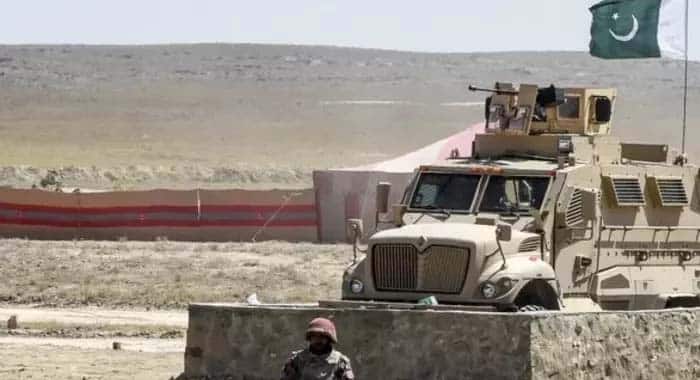
Pakistan’s security forces have eliminated eight operatives of Fitna al-Hindustan during intelligence-based operations in Quetta, Nushki, and Khuzdar, successfully thwarting an attempt to block a road and recovering weapons, ammunition, and approximately 490 kilograms of explosive material from their hideouts.
According to a statement issued by the Inter-Services Public Relations (ISPR), the operations were conducted on the basis of intelligence concerning the presence and activities of Fitna al-Hindustan operatives in different parts of Balochistan. The coordinated actions resulted in eight operatives being killed and the recovery of a substantial cache of weapons and explosives, dealing a significant blow to their operational capabilities.
The operations demonstrate the continued efforts of Pakistan’s security forces to dismantle Fitna al-Hindustan networks, disrupt their activities, and prevent threats to public safety and regional security.
In Panjpai, within the Quetta area, security forces successfully thwarted an attempt by Fitna al-Hindustan operatives to block a road. The timely intervention prevented the attempted obstruction from developing further, while an ensuing engagement resulted in the elimination of five operatives.
Attempts to block roads can disrupt civilian movement, interfere with commercial activity, and create opportunities for intimidation and violence. The successful response in Panjpai helped prevent further disruption and reinforced security in the affected area.
The operation also highlighted the importance of timely intelligence and an effective response to emerging threats. By acting against those involved in the attempted blockade, security forces sought to prevent the situation from escalating and protect the local population.
In Nushki, security forces conducted an operation against a hideout associated with Fitna al-Hindustan. An exchange of fire ensued, resulting in the elimination of two operatives, ISPR stated.
Following the engagement, security personnel recovered weapons and ammunition from the hideout. The recovery represents an important development in efforts to identify and dismantle facilities used to store equipment and support hostile activities.
The operation forms part of broader security efforts aimed at reducing the ability of Fitna al-Hindustan operatives to maintain hideouts, stockpile weapons, and prepare attacks. Removing such infrastructure can help disrupt their networks and limit their capacity to threaten local communities.
In a separate operation in Khuzdar, security forces eliminated one Fitna al-Hindustan operative and recovered approximately 490 kilograms of explosive material from a hideout, according to ISPR.
The recovery of such a substantial quantity of explosive material highlights the importance of intelligence-based operations in identifying potentially dangerous stockpiles and preventing their possible misuse. Explosives can pose a serious threat when intended for attacks against security personnel, public infrastructure, or civilian areas.
The discovery also underscores the need for continued vigilance against the storage and movement of hazardous materials by hostile networks. The safe handling, assessment, and disposal of recovered explosives remain essential to reducing risks to nearby communities and personnel involved in clearance operations.
The elimination of the operative and recovery of the explosive material mark a significant outcome of the Khuzdar operation. However, the precise intended use of the recovered material was not specified in the information released.
According to ISPR, clearance and search operations are continuing across Balochistan as security forces pursue efforts to eliminate Fitna al-Hindustan and dismantle its networks.
The operations in Quetta, Nushki, and Khuzdar form part of ongoing efforts to identify hideouts, recover weapons and explosives, and prevent hostile groups from exploiting local vulnerabilities. Intelligence-based action remains central to these efforts, enabling security agencies to focus on identified threats and respond to emerging security concerns.
Balochistan’s security environment has significant implications for civilian life, commercial activity, transport links, and the province’s wider economic development. Sustained operations are therefore essential not only to address immediate threats but also to help create conditions in which communities can pursue their livelihoods without fear of violence or intimidation.
ISPR reiterated that operations would continue until terrorism is eliminated, reaffirming the military’s stated commitment to maintaining pressure on hostile networks and preventing them from re-establishing operational footholds in the province.



