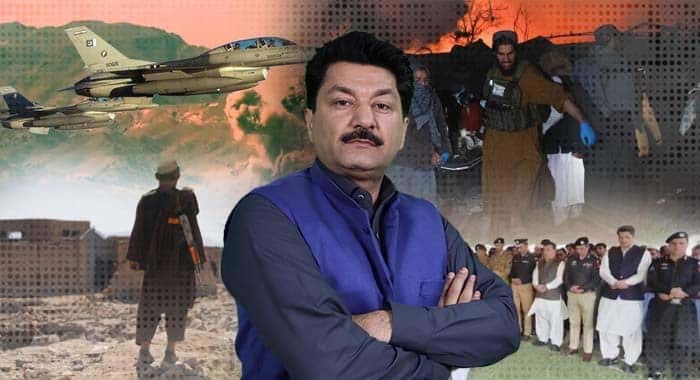
(Fida Adeel)
Pakistan stands at a defining moment in its internal security landscape. While global attention often shifts between regional conflicts, geopolitical rivalries, and economic uncertainty, two provinces continue to occupy the center of Pakistan’s national security discourse: Balochistan and Khyber Pakhtunkhwa. The challenges confronting these regions are neither new nor simple. They involve a complex intersection of terrorism, governance, development, regional geopolitics, public perception, and the aspirations of local populations.
Yet, amid the noise of social media narratives and political polarization, a crucial reality is often overlooked: the future of these provinces will not be determined solely by military operations or security measures. It will depend equally on development, inclusion, connectivity, and the state’s ability to translate stability into opportunity.
Recent discussions regarding Balochistan and Khyber Pakhtunkhwa reveal a critical lesson for policymakers: security and development are not competing priorities. They are inseparable components of the same national strategy.
Balochistan has long been portrayed through a narrow lens. For many Pakistanis living in Karachi, Lahore, or Islamabad, the province exists largely as a distant land of mountains, deserts, insurgency, and underdevelopment. This perception, however, captures only part of a much larger reality.
The province has witnessed significant security challenges over the years. Attacks on security forces, public infrastructure, educational institutions, transportation networks, and civilians have repeatedly disrupted efforts aimed at stability and progress. Incidents such as train attacks, assaults on public facilities, and coordinated militant operations have highlighted the persistent threat posed by violent extremist and separatist elements.
What often receives less attention, however, is the impact these attacks have on ordinary citizens. Beyond the headlines, it is local communities that suffer the most. Shopkeepers lose business. Students lose educational opportunities. Investors postpone projects. Families live under the shadow of uncertainty.
Violence in Balochistan does not merely target the state; it undermines the future of the very people in whose name many militant groups claim to act.
A critical observation emerging from recent developments is that the public response to violence appears increasingly nuanced. Many citizens are questioning whether armed campaigns have delivered tangible benefits to local communities. While grievances regarding governance, poverty, and political representation certainly exist, there is also growing recognition that destruction of public infrastructure and attacks on civilians only deepen existing challenges.
The people of Balochistan deserve a future built on opportunity rather than perpetual conflict. One of the most striking realities visible across parts of Balochistan today is the coexistence of development and deprivation.
On one side, major infrastructure projects are transforming the landscape. New roads, universities, vocational training centers, business facilities, and connectivity initiatives are creating foundations for future economic growth. Educational institutions in Turbat and Gwadar are providing opportunities that were unimaginable only a decade ago. Industrial zones are being planned to absorb a new generation of skilled workers.
The expansion of educational opportunities, particularly for young people, represents one of the most important developments in the province. Community schools, vocational programs, and higher education institutions have begun creating pathways for social mobility.
On the other side, poverty remains a stark reality in many remote areas. Scattered settlements continue to face shortages of electricity, clean drinking water, healthcare facilities, and basic infrastructure. The geography of Balochistan itself presents extraordinary challenges. Vast distances separate small populations, making service delivery difficult and expensive.
This dual reality should not be ignored. Acknowledging development does not mean denying deprivation. Similarly, highlighting underdevelopment should not obscure genuine progress. Effective policymaking requires accepting both truths simultaneously.
The challenge before Pakistan is not simply to build flagship projects but to ensure that their benefits reach ordinary citizens living in remote communities. Infrastructure must be accompanied by inclusion. Economic growth must be accompanied by social development. Only then can development become a lasting antidote to instability.
Few places symbolize Pakistan’s strategic ambitions more than Gwadar. What was once viewed primarily as a coastal town has emerged as one of the most significant economic and geopolitical projects in South Asia. Gwadar’s location near major international maritime routes gives it strategic importance extending far beyond Pakistan’s borders. The city’s transformation has generated considerable optimism regarding trade, investment, logistics, and regional connectivity. New infrastructure, airport facilities, industrial projects, and commercial initiatives indicate a vision that seeks to position Gwadar as a regional economic hub.
However, strategic importance inevitably attracts strategic competition. As Gwadar’s profile rises, so too does the interest of actors seeking to disrupt its progress. Security incidents targeting personnel, infrastructure, and economic initiatives demonstrate that opponents of regional connectivity understand the transformative potential of the project. The significance of Gwadar extends beyond economics. It represents an alternative vision for Balochistan one based on integration into regional trade networks rather than isolation. It offers prospects for employment, entrepreneurship, and long-term investment.
For this reason, protecting Gwadar is not simply about safeguarding infrastructure. It is about protecting a future economic model capable of generating opportunities for generations to come. Success in Gwadar would not only benefit Balochistan; it could reshape Pakistan’s position within the broader regional economy.
The future of Pakistan’s western regions cannot be separated from developments in Afghanistan. For decades, instability across the border has directly affected Pakistan’s security environment. Militant networks, cross-border movement, smuggling routes, and governance challenges have created interconnected security concerns. At the same time, Afghanistan also represents an enormous economic opportunity.
A stable Afghanistan could serve as a bridge connecting South Asia with Central Asia. Trade corridors, energy projects, transportation networks, and regional markets could transform the economic prospects of the entire region. This is why regional connectivity initiatives carry such significance.
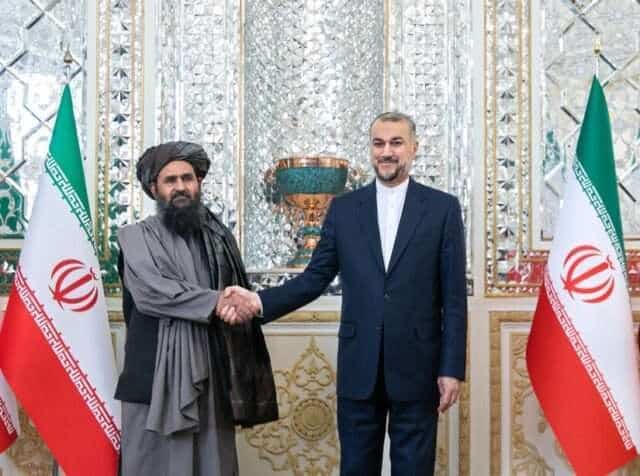
Pakistan’s foreign policy in recent years has increasingly emphasized balanced engagement with multiple international actors. This approach recognizes that economic development requires cooperation rather than isolation. The same principle applies to Afghanistan.
The long-term interests of both countries lie not in confrontation but in connectivity. Secure borders, legal trade, economic integration, and mutual respect offer benefits that far exceed the gains of informal or illicit networks. For Afghanistan’s leadership, the challenge is equally significant. The modern global economy rewards countries that integrate into regional markets and participate in international commerce. Isolation, by contrast, limits opportunities for growth and development. A connected region is ultimately a more secure region.
While Balochistan often dominates discussions about insurgency, Khyber Pakhtunkhwa continues to face its own serious security challenges. Recent years have witnessed a resurgence of militant activity in various districts. Security forces, law enforcement agencies, and intelligence organizations regularly conduct operations aimed at disrupting militant networks and preventing attacks. Yet a critical question continues to emerge: if militants are repeatedly being neutralized through intelligence-based operations, why does the threat persist? The answer lies partly in the nature of modern insurgencies.
Militant organizations rely not only on fighters but also on support networks, facilitators, financial channels, and local enablers. Eliminating individual militants is important, but sustainable success requires dismantling the broader ecosystem that allows such groups to survive. Furthermore, security operations in populated areas present unique challenges. Authorities must balance operational effectiveness with the need to protect civilian lives and property. Unlike conventional warfare, counterterrorism often occurs within complex social environments where distinguishing between combatants and civilians can be difficult.
This reality explains why progress can sometimes appear slower than public expectations. Nevertheless, the persistence of attacks indicates that continued vigilance remains essential. One of the most important lessons from Pakistan’s counterterrorism experience is that military action alone cannot ensure lasting stability. Civilian institutions must also be strengthened. Counterterrorism departments, police forces, intelligence coordination mechanisms, forensic capabilities, and judicial systems all play critical roles in maintaining security. Effective counterterrorism requires professional institutions equipped with adequate resources, training, technology, and legal frameworks.
In Khyber Pakhtunkhwa, debates regarding the capacity of law enforcement agencies highlight an important policy challenge. Security threats have evolved significantly over the past decade. Institutions must evolve as well. Investment in modern policing, intelligence sharing, and community engagement can significantly enhance long-term security outcomes. Equally important is cooperation among federal, provincial, and security stakeholders. Fragmentation creates vulnerabilities that hostile actors can exploit. Coordination creates resilience.
National security is strongest when institutions work together toward common objectives. Perhaps one of the most important dimensions of modern security is perception. Today’s information environment is radically different from previous decades. Social media platforms allow competing narratives to spread instantly. Images, videos, and claims circulate widely before verification occurs. This reality creates both opportunities and challenges. Governments can no longer rely solely on official statements to shape public opinion. Citizens increasingly compare information from multiple sources and evaluate competing claims independently.
As a result, credibility becomes one of the most valuable assets in any security environment. Winning public trust requires transparency, accountability, and consistent communication. Communities are more likely to support state institutions when they believe their concerns are being heard and addressed. Similarly, development projects must be visible not only in official reports but in people’s daily lives. Citizens judge progress based on roads they travel, schools their children attend, hospitals they access, and jobs they can secure.
Perception ultimately follows experience. The future of Balochistan and Khyber Pakhtunkhwa will not be decided by a single operation, policy announcement, or development project. It will be shaped by a sustained national effort that combines security, governance, economic opportunity, and regional cooperation. Balochistan possesses immense potential. Its coastline, natural resources, strategic location, and youthful population provide foundations for long-term growth. Khyber Pakhtunkhwa, similarly, possesses enormous human capital and geographic significance as a gateway connecting Pakistan to broader regional markets. Both provinces have endured decades of challenges. Yet both also possess the ingredients necessary for transformation.
The central lesson is clear: terrorism seeks to halt progress, while development seeks to expand opportunity. One thrives on instability; the other flourishes through peace. Pakistan’s success will depend on ensuring that security operations create space for development, and that development strengthens the foundations of security.
This is not merely a policy objective. It is a national imperative. The people of Balochistan and Khyber Pakhtunkhwa deserve more than survival amid uncertainty. They deserve prosperity, dignity, connectivity, and hope. Achieving that vision will require patience, investment, institutional coordination, and political will. But if Pakistan can successfully align security with development, these provinces may ultimately become not symbols of conflict, but symbols of resilience and national progress.