
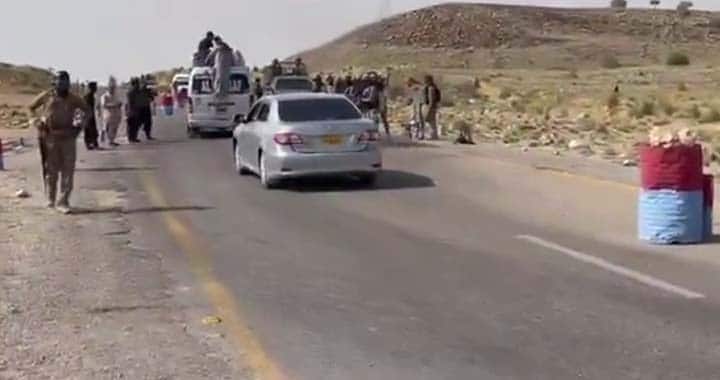
The recent circulation of a misleading video from North Waziristan claiming the capture of a security post is not an isolated incident. Rather, it reflects a broader pattern increasingly visible across Pakistan’s counterterrorism landscape: terrorist organizations turning to information warfare when operational realities become less favorable.
The episode emerged from Shewa, where Fitna al-Khwarij attempted to portray an abandoned security position as a freshly captured military post. Security sources later stated that the location had been vacated months earlier, exposing the gap between the group’s narrative and the situation on the ground.
This tactic has become increasingly common among terrorist networks facing sustained military pressure. In recent weeks alone, security operations in North Waziristan have reportedly neutralized numerous Fitna al-Khwarij terrorists, including senior commanders involved in planning attacks and maintaining operational infrastructure.
The pattern is not confined to Khyber Pakhtunkhwa. Similar narrative campaigns have surfaced in Balochistan, where Fitna al-Hindustan has repeatedly sought to magnify incidents and exaggerate operational achievements despite facing persistent pressure from security forces.
The New Battlefield Is Perception
Counterterrorism experts increasingly view social media as an extension of the battlefield.
Historically, terrorist organizations sought territorial control, freedom of movement and visible operational successes. Today, many groups recognize that viral content can sometimes generate greater attention than a limited tactical action.
As a result, propaganda has become a strategic asset.
Videos are edited to emphasize spectacle. Isolated incidents are presented as major victories. Abandoned sites are portrayed as newly conquered positions. The objective is not necessarily to deceive professional observers, but to create uncertainty among broader audiences and preserve the appearance of momentum.
The irony, analysts argue, is that the growing dependence on propaganda may itself reveal operational weakness. Groups enjoying genuine battlefield success rarely need to manufacture victories. Those facing relentless pressure often do.
Recent developments in both North Waziristan and Balochistan suggest that information warfare is increasingly being used to compensate for shrinking operational space, making propaganda one of the most revealing indicators of terrorist setbacks.



