
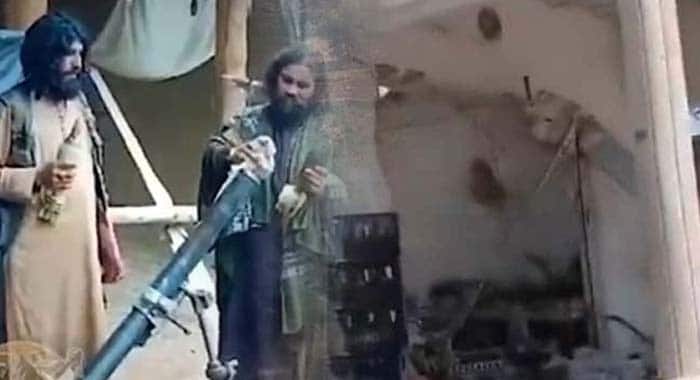
In regions marked by recurring violence, the most lasting consequences are rarely captured in the immediate casualty figures. They are carried instead in the slow reshaping of everyday life, where the boundary between safety and danger becomes increasingly uncertain. The latest incident in Miryan, where a mortar shell struck a residential home, killing a woman and injuring a child, fits into a pattern that has become distressingly familiar across parts of Khyber Pakhtunkhwa and adjacent conflict-affected areas.
At its core, the tragedy is not only about a single explosive impact. It is about the fact that a private home, one of the most protected social spaces in any society, was no longer insulated from the effects of armed violence. When violence reaches domestic spaces, it alters the meaning of safety itself. A home ceases to be understood solely as shelter and becomes, even if temporarily, a potential site of risk.
This shift has deep consequences for communities already living under pressure from instability. Families begin to recalibrate daily routines in subtle but significant ways. Movements become more cautious, outdoor activities more restricted, and the sense of predictability that underpins ordinary life gradually weakens. Even when incidents are isolated in time, their psychological imprint extends far beyond the moment of impact.
The impact on children is particularly severe. In the Miryan incident, a young girl survived with injuries, but survival in such cases does not mark the end of harm. Exposure to sudden violence in familiar surroundings can leave long-term psychological effects that are not always immediately visible. Fear, sleep disturbances, and heightened anxiety often persist long after physical wounds begin to heal. In communities where such incidents recur, these effects accumulate across households and generations.
The human cost also extends beyond those directly affected. neighboring families, even when untouched physically, experience a shared sense of vulnerability. In conflict-affected environments, information travels quickly, and each incident reinforces the perception that no area is entirely beyond reach. This contributes to a broader atmosphere of uncertainty that shapes how communities relate to their surroundings.
In Balochistan and parts of Khyber Pakhtunkhwa, previous incidents have reflected similar patterns, where civilian homes, roads, and public spaces have intermittently come under threat from various forms of violence. The cumulative effect of these events is not only measured in lives lost or injuries sustained, but also in the gradual erosion of trust in stability. Over time, this erosion can influence settlement patterns, economic activity, and even access to essential services.
Healthcare systems and emergency response structures also come under strain in such environments. Each sudden incident requires rapid mobilization of rescue services, hospital capacity, and law enforcement resources. While these systems often respond effectively, repeated strain limits their ability to focus on broader preventive and developmental priorities. In this way, violence imposes an indirect cost on institutional capacity as well as human life.
There is also a social dimension to these incidents that is often overlooked. In tightly knit communities, the loss or injury of a single family member reverberates widely. Extended families, neighbors, and local networks absorb the emotional and sometimes economic consequences. In rural settings, where social ties are deeply interconnected, the impact of a single event can ripple outward in ways that are difficult to quantify.
What emerges from such incidents is a pattern in which civilians are not only affected by direct violence but also by its wider consequences on social stability. The distinction between being a bystander and being affected becomes increasingly blurred in environments where explosive or armed incidents occur in proximity to civilian life.
Over time, this blurring reshapes how communities perceive risk and resilience. While adaptation does occur, it often comes at the cost of reduced openness, mobility, and opportunity. The normalization of precaution becomes a silent indicator of prolonged insecurity.
The Miryan incident, when viewed in this broader context, is not an isolated episode but part of a continuing reality in which civilian life remains exposed to unpredictable shocks. The most profound implication is not only the immediate tragedy but the steady accumulation of such events, each adding to a shared sense of fragility that communities must navigate daily.
In the end, the civilian impact of such violence is best understood not only in terms of what is lost in a single moment, but in how ordinary life is gradually reshaped around the possibility that such moments may return.



