
Pakistan’s army has questioned the purpose behind India’s claim that a former Pakistani soldier was killed as a Lashkar-e-Taiba terrorist in an alleged operation in Indian Illegally Occupied Jammu and Kashmir, after the man appeared publicly alive and rejected the narrative.
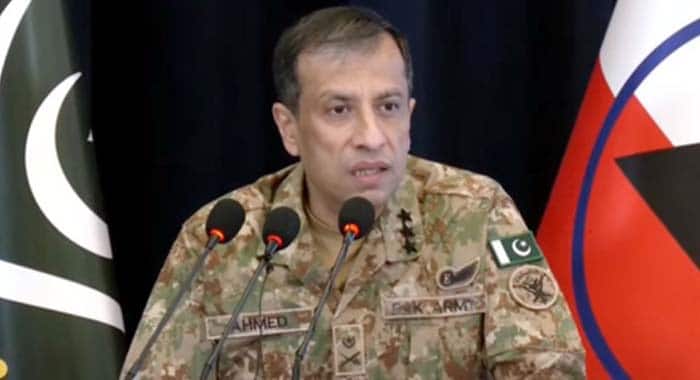
During a press briefing, the Director General of Inter-Services Public Relations said the episode should be examined not only through the conflicting claims surrounding the alleged killing but also by asking why such a narrative was needed in the first place.
The military spokesperson said one possible purpose, in Pakistan’s assessment, could be to divert attention from allegations concerning India’s own role in supporting, financing and planning terrorism in the region.
He referred to India’s alleged links with groups including the Mukti Bahini, Liberation Tigers of Tamil Eelam, banned Tehreek-e-Taliban Pakistan and Balochistan Liberation Army, arguing that the issue was no longer confined to regional accusations and had internal dimensions as well.
The remarks came after Indian military and media reports claimed that a Lashkar-e-Taiba terrorist identified as Muhammad Asif alias Musa had been killed in an operation on September 29. The reports subsequently described him as a former Pakistani Army soldier and attributed various terrorist activities to him.
The narrative also changed across Indian media reports, with different identities and descriptions being attached to the alleged deceased.
Pakistan challenged the claims by presenting the retired SSG soldier identified in the reports before the media. He said he had been at home when friends began calling to tell him that Indian media had reported his death.
The appearance directly contradicted the claim that the individual had been killed.
The Pakistani military spokesperson said the episode demonstrated the importance of examining the evidence behind such claims before accepting them as established facts.
He also presented videos during the briefing that he described as evidence of Indian state terrorism, while arguing that allegations concerning Pakistan were repeatedly used to shift attention away from developments inside India.
He said India continued to face internal security and terrorism-related issues but sought to attribute such problems to Pakistan.
“These are your internal matters; Pakistan has nothing to do with them,” he said, addressing India.
The spokesperson further challenged India to provide evidence for its allegations against Pakistan, saying that Islamabad had repeatedly called for evidence concerning previous accusations, including those linked to the Pahalgam attack, and had offered the option of presenting such evidence to a third party.
He argued that allegations alone could not establish Pakistan’s involvement in terrorist incidents.
The military spokesperson also criticized what he described as a long-running Indian effort to portray Pakistan negatively, saying that Indian political and military authorities had publicly discussed actions against Pakistan while the country simultaneously sought to project itself as a victim of terrorism.
The latest episode, according to the Pakistani military, therefore goes beyond the identity of the alleged terrorist. It has become a dispute over how terrorism-related incidents are presented, how quickly allegations are attributed to Pakistan, and what evidence is used to support those claims.



