
Fresh evidence has reportedly emerged concerning the involvement of Afghan nationals and networks based in Afghanistan in terrorist activities targeting Pakistan, according to Pakistani security sources.
The latest information relates to the Mustung attack, in which several members of Fitna al-Hindustan were killed. Security sources claim that identities and documents recovered from two of the deceased militants provide further indications of their links to Afghanistan.
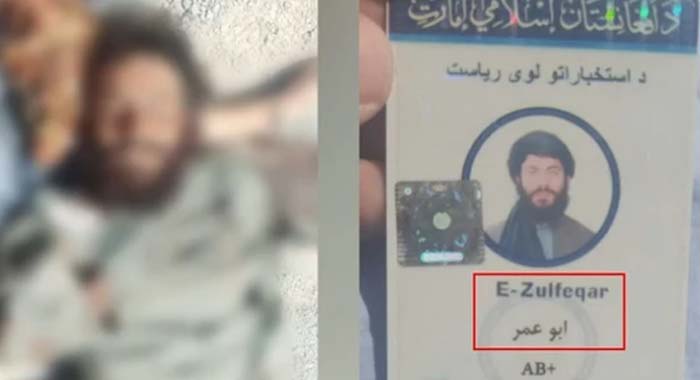
According to Pakistani security sources, Afghan nationals were among the terrorists killed during the Mustung operation. One of the deceased militants, identified as Zulfiqar alias Abu Umar, was reportedly found in possession of an identification card associated with Afghanistan’s General Directorate of Intelligence (GDI).
Another deceased terrorist, identified as Khalil Ahmed, was reportedly found carrying an Afghan Tazkira, the country’s national identity document. According to the security sources, the recovery of these documents provides additional evidence requiring investigation into the identities, backgrounds and cross-border networks of militants involved in attacks against Pakistan.
The reported findings have renewed concerns in Islamabad regarding the alleged use of Afghan territory, personnel and networks in facilitating terrorist activity against Pakistan.
Pakistani security sources further point to an intelligence report from 2025, which they say had previously identified an alleged covert network involving India’s intelligence agency, Research and Analysis Wing (RAW), and Afghan Taliban intelligence elements. According to the reported assessment, the alleged network was involved in facilitating activities directed against Pakistan, particularly in Balochistan.
The allegations include claims that financial resources were provided for sabotage and terrorist activities in the province.
Security sources allege that approximately US$7.8 million was provided by RAW for activities described as destabilising and terrorist in nature. These allegations have not been independently verified and remain claims contained in the Pakistani security assessment.According to the same Pakistani sources, instructions were allegedly issued under the direction of Taliban Supreme Leader Mullah Haibatullah to provide modern weapons and logistical assistance to members of Fitna al-Hindustan.
Security sources further refer to a purported letter attributed to Mullah Haibatullah concerning the provision of weapons to the group through Taliban authorities. Pakistani officials describe the alleged document as significant evidence of a potential relationship between elements of the Taliban regime and militant networks operating against Pakistan.
The authenticity, provenance and context of the alleged correspondence would require independent verification before it could be treated as conclusive evidence of an organisational arrangement.
Pakistani security sources allege that Afghan territory is being used by militant networks for training, financial support, logistical preparation and the establishment of safe havens for operations directed against Pakistan. According to this assessment, the alleged involvement extends beyond individual militants and encompasses wider networks facilitating recruitment, training, financing and movement.
Pakistan has repeatedly expressed concerns over the presence of militant organisations on Afghan soil and has called upon the authorities in Kabul to prevent Afghan territory from being used for attacks against neighbouring countries.
The latest allegations are particularly significant in the context of continued security challenges in Balochistan, where militant organisations have repeatedly targeted security personnel, civilians and state infrastructure. Pakistan maintains that disrupting cross-border networks is essential to preventing militants from acquiring weapons, financing and operational support.
The alleged recovery of Afghan identification documents from deceased militants in the Mustung incident is therefore being examined by Pakistani authorities as part of a broader effort to establish the origins, affiliations and support networks of terrorist elements operating in the country.
Pakistan has consistently maintained that Afghan territory must not be allowed to become a staging ground for terrorism against Pakistan.
Islamabad has called for concrete, verifiable and sustained action against terrorist organisations operating from Afghan soil, including the dismantling of their training facilities, logistical networks, financial channels and safe havens. Pakistan’s position remains that assurances alone cannot address the security threat. What is required, according to Islamabad, is demonstrable action against individuals and organisations involved in planning, facilitating or executing attacks against Pakistan.



