
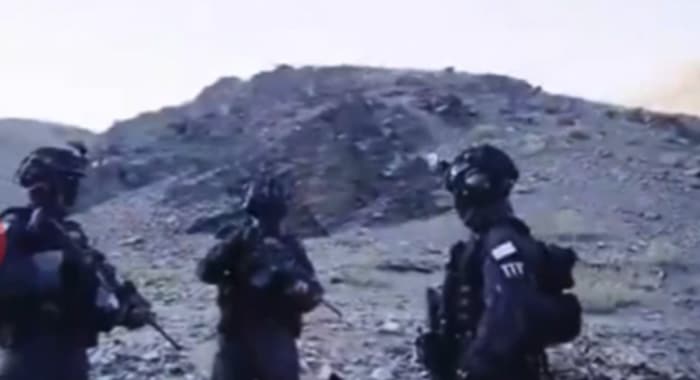
The Tehreek-e-Taliban Pakistan (TTP) has released a new propaganda video series titled “Iqaaz”, in which militants are shown undergoing training exercises and simulating operational scenarios aimed at planning and executing attacks, according to security sources and monitoring assessments.
The video reportedly depicts armed individuals engaged in coordinated drills, with visual elements intended to project an image of structured militant training and operational preparedness. Observers note that such propaganda content is designed to influence perception, recruit sympathizers, and demonstrate continued operational capability.
According to available details, the footage shows militants wearing uniforms resembling those associated with the Afghan Taliban intelligence apparatus. The individuals are also seen using modern military-style equipment, including night vision goggles and rifles resembling American-made weapons. Security analysts caution, however, that such imagery is frequently used in militant propaganda to exaggerate capability, instill fear, and amplify perceived strength.
Counterterrorism experts emphasize that propaganda productions of this nature are a key component of extremist communication strategies, often aimed at psychological impact rather than reflecting verified battlefield strength or logistical reality. The release of such content is viewed as part of ongoing efforts by banned militant organizations to maintain visibility and influence despite sustained security operations against them.
Security officials have reiterated that terrorist organizations operating in the region continue to rely on digital platforms and edited visual material to propagate narratives that support recruitment and ideological messaging. Authorities stress that such material does not change the operational reality of continued counterterrorism pressure and sustained action against militant networks.
Officials further underline that the use of sophisticated-looking equipment in propaganda videos does not necessarily indicate organizational strength or access to formal military supply chains, noting that such imagery is often selectively staged or sourced through multiple, unverifiable channels.
Security agencies remain engaged in monitoring and disrupting extremist propaganda networks, including online dissemination channels used for recruitment and radicalization. Efforts are ongoing to counter misinformation and prevent the exploitation of media content for militant objectives.
Authorities have urged the public to avoid engaging with or sharing such material, emphasizing that circulation of extremist propaganda can unintentionally contribute to the objectives of banned organizations.
The government and security institutions reaffirmed their commitment to continuing counterterrorism operations aimed at dismantling militant infrastructure, limiting operational capacity, and ensuring public safety across affected regions.



