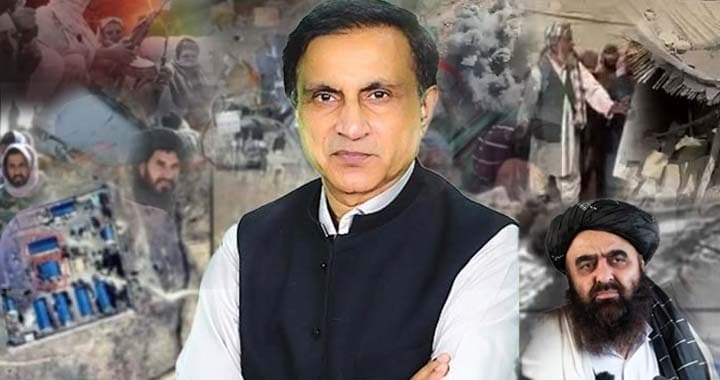
Kabul is the new pattern-in-chief of terror groups, from all over the world, is the reality that cannot be denied. Every few weeks, another international report emerges warning that Afghanistan is once again becoming a source of regional and global security concerns. Some people ask why these warnings keep appearing. Others dismiss them as political rhetoric. I do not.
The reality is that concerns about Afghanistan are no longer coming from one country or one bloc. They are being voiced by the United Nations, Russia, regional security organizations, Central Asian states, and many others. When so many actors, often with differing interests, reach similar conclusions, it is difficult to ignore the message.
The central concern is straightforward: Afghanistan under Taliban rule is increasingly being viewed as a hub where terrorist organizations find space to operate, recruit, train, and sustain themselves. This is not merely Pakistan’s concern. It has become a regional concern and, increasingly, an international one.
Recent reports have highlighted how terrorist networks continue to maintain a presence inside Afghanistan. The concern is not limited to attacks within Afghan territory. The concern is the export of terrorism, the movement of fighters, the availability of training facilities, and the financial channels that continue to support extremist organizations.
Central Asian countries are deeply worried. Regional governments are worried. Security organizations are worried. The question is simple: why?
The answer lies in the growing perception that Afghanistan has become a sanctuary for groups that threaten regional stability.
What makes the situation even more alarming is that Afghanistan lacks many of the normal economic foundations upon which countries build prosperity. It does not possess a thriving industrial sector. It is not a major exporter of manufactured goods. It is not an energy giant exporting oil or gas to international markets.
Yet money continues to flow through networks connected to extremist organizations operating in and around Afghanistan.
This is why many analysts increasingly argue that Afghanistan is exporting one commodity more successfully than anything else: insecurity.
People are recruited, indoctrinated, trained, and dispatched to various destinations. Whether one agrees with that assessment or not, it is becoming harder for the Taliban leadership to convince the world otherwise.
Recognition Remains Out of Reach
Recently, Taliban officials once again claimed that their relations with the international community are strong and that their diplomatic position is improving.
I find such claims difficult to reconcile with reality.
There are 193 member states in the United Nations. Yet only a tiny number have shown any willingness to move toward normalization with the Taliban administration.
The Taliban often argue that they are being punished because they defeated the United States and NATO forces.
If that is the explanation, then a simple question arises.
Why have Muslim countries not rushed to recognize them?
Why have countries that were never part of NATO withheld recognition?
Why have many regional states remained cautious?
The answer cannot always be America.
The answer cannot always be NATO.
Many governments have concerns that have nothing to do with past wars. Their concerns revolve around terrorism, governance, human rights, and regional security.
The first concern is the continued presence of terrorist organizations.
The second concern is the perception that Afghanistan remains a permissive environment for extremist groups.
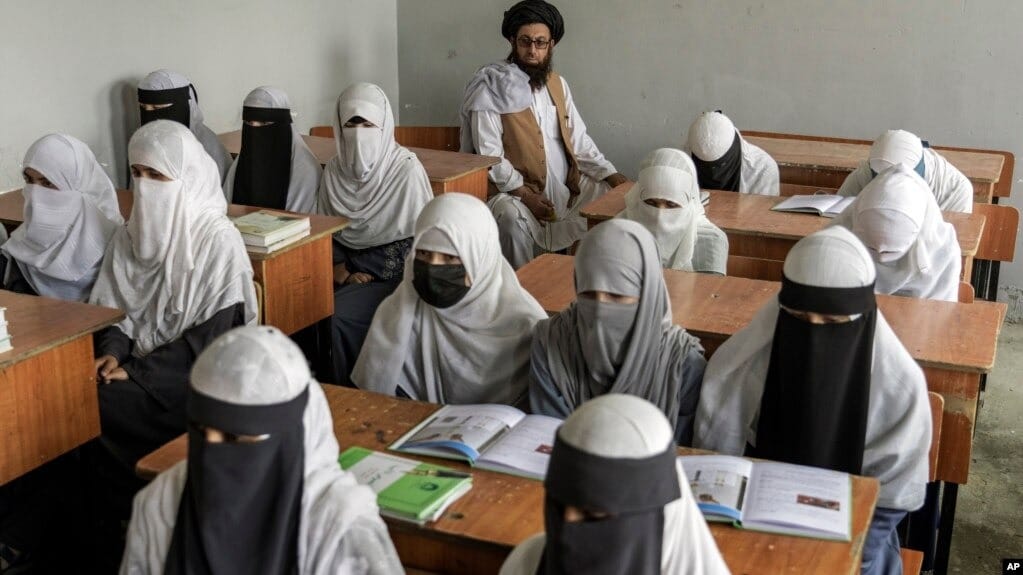
The third concern is the systematic exclusion of women from public life.
Millions of Afghan women and girls have effectively been removed from educational and professional opportunities. Afghanistan remains the only country in the world where girls are barred from education beyond a certain level.
The fourth concern is the broader legal and social environment, where many international observers believe women receive neither equal protection nor equal opportunity.
Under such circumstances, why would governments rush toward recognition?
Recognition is not granted through speeches. It is earned through policies.
Russia’s Decision Was About Russia
Many people ask about Russia’s engagement with the Taliban and interpret it as a sign of broad international acceptance.
I believe that interpretation oversimplifies the issue.
States act according to national interests.
Russia’s calculations are rooted in its own strategic priorities. Moscow wants influence in Afghanistan. It wants visibility into developments there. It wants to prevent hostile actors from gaining strategic advantages.
That does not necessarily mean Russia is endorsing every Taliban policy.
In fact, even Russian reports have repeatedly highlighted security concerns emanating from Afghanistan.
Engagement and endorsement are not the same thing.
The Tunnel Question
Another issue attracting attention is the reported digging activity in eastern Afghan provinces bordering Pakistan.
Reports from areas such as Khost, Paktia, Paktika, and Nangarhar have raised questions about the purpose of these constructions.
Some reports suggest these are not merely trenches but more elaborate underground structures.
If true, several possibilities emerge.
One possibility is that such structures are intended to facilitate movement across difficult terrain.
Another possibility is that they are designed as protective positions.
Whatever the purpose, one thing is clear: military realities have changed dramatically.
Modern surveillance technologies have transformed the battlefield.
Satellites observe.
Sensors detect.
Intelligence networks monitor developments continuously.
The idea that underground structures alone can fundamentally alter the security equation belongs to another era.
This is where I believe some Taliban leaders are living in what we commonly call a “fool’s paradise.”
They appear convinced that symbolic measures can compensate for strategic realities.
They cannot.
The Russia Agreement Will Not Change Geography
The Taliban recently highlighted their security agreement with Russia, and some officials suggested that such arrangements would fundamentally alter regional calculations.
I remain skeptical.
Security agreements can serve many purposes, including maintenance, repairs, and technical cooperation. They do not automatically transform military capabilities overnight.
More importantly, Pakistan’s security decisions are shaped by threats, not by political statements.
Pakistan has repeatedly stated that it does not seek confrontation.
Pakistan has repeatedly emphasized dialogue.
Pakistan has repeatedly demonstrated restraint.
However, Pakistan has also made one point unmistakably clear: attacks originating from Afghan soil cannot continue indefinitely without consequences.
No responsible state would tolerate continuous cross-border terrorism against its citizens and security personnel.
Why Pakistan Is No Longer Satisfied with Promises
Many observers ask why Islamabad appears increasingly reluctant to place faith in verbal assurances.
The answer lies in experience.
Over the years, numerous meetings, understandings, and discussions have taken place.
China has played a role.
Turkey has played a role.
Other regional actors have attempted to facilitate dialogue.
Pakistan participated in those efforts.
The fundamental problem is not the absence of dialogue.
The problem is the absence of implementation.
Whenever commitments are discussed, Pakistan asks a reasonable question: what happened to the previous commitments?
What was implemented?
What changed on the ground?
What practical measures were taken?
These questions remain unanswered.
Recently, statements reportedly emerged suggesting that TTP elements should refrain from attacking Pakistan.
Statements are welcome.
Practical action is better.
If attacks stop, the world will notice.
If infrastructure is dismantled, the world will notice.
If support networks disappear, the world will notice.
Until then, skepticism will remain.
Pakistan’s Position Is Clear
Contrary to some narratives, Pakistan is not rejecting dialogue.
Pakistan is rejecting empty dialogue.
There is an important difference.
Islamabad has consistently conveyed that any future process must produce measurable results.
Written commitments matter.
Verification matters.
Implementation matters.
Without these elements, negotiations risk becoming an exercise in repetition rather than problem-solving.
Pakistan’s position is neither unreasonable nor unprecedented.
States are judged by actions, not promises.
The same principle applies here.
Internal Divisions and External Consequences
At the same time, numerous reports continue to point toward internal divisions within the Taliban structure itself.
Different factions are often reported to hold differing priorities and perspectives.
Whether every report is accurate or not, the perception of internal fragmentation persists.
Such perceptions create uncertainty.
Uncertainty discourages investment.
Uncertainty discourages recognition.
Uncertainty complicates governance.
For ordinary Afghans, these realities carry serious consequences.
Afghanistan continues to face economic hardship, diplomatic isolation, educational restrictions, and growing social challenges.
The greatest tragedy is that ordinary Afghans are paying the price.
The World’s Message Is Simple
The Taliban often present Afghanistan’s isolation as evidence of international hostility.
I believe that interpretation misses the central point.
The world is not rejecting Afghanistan.
The world is rejecting policies that it considers harmful to regional security, women’s rights, and international stability.
That distinction matters.
Afghanistan deserves peace.
Afghanistan deserves prosperity.
Afghanistan deserves international engagement.
But those goals require policies that inspire confidence rather than concern.
Today, nearly five years after the Taliban’s return to power, Afghanistan finds itself facing deep economic difficulties, diplomatic limitations, internal tensions, and persistent security questions.
The country’s challenges are no longer affecting Afghans alone. They are increasingly affecting neighboring states and the wider region.
That is why warnings continue to emerge from international forums.
That is why regional governments remain concerned.
And that is why, unless meaningful changes occur, Afghanistan’s isolation is likely to deepen rather than diminish.
The unfortunate reality is that the world is not boycotting Afghanistan.
It is responding to the consequences of Taliban policies.