
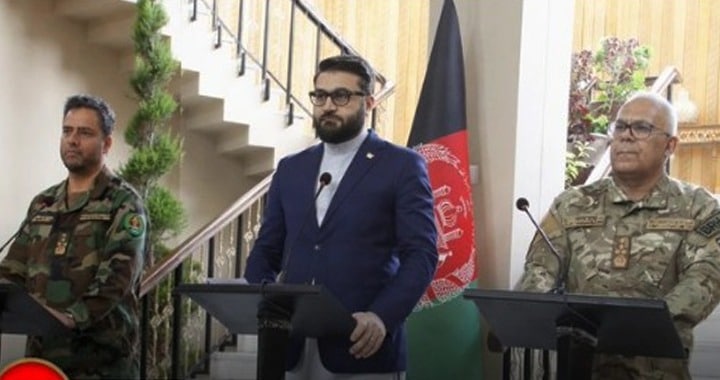
Former Afghan National Security Advisor Hamdullah Mohib has raised serious concerns over Afghanistan’s security and governance situation, warning that the presence of Tehrik-i-Taliban Pakistan (TTP) sanctuaries inside the country has evolved into a broader regional and national crisis.
In remarks published in an interview with Afghan Times, Mohib stated that militant groups operating from Afghan territory continue to conduct cross-border attacks, contributing to repeated border closures and disruptions in trade routes. He warned that such incidents are having a cumulative economic impact, further straining Afghanistan’s already fragile economy and increasing its international isolation.
According to Mohib, the operational space available to groups such as the Tehrik-i-Taliban Pakistan has transformed the security challenge from a bilateral issue into a wider regional concern. He argued that the continued activity of these networks not only affects neighboring countries but also places significant pressure on Afghan civilians, who bear the economic and social consequences of instability.
Mohib also expressed concern over the current governance structure under the Taliban administration, stating that it lacks legitimacy due to the absence of public participation and what he described as the suppression of dissenting voices. He highlighted that even internal criticism on sensitive policy matters such as restrictions on girls’ education is reportedly not tolerated, suggesting a centralized system of decision-making driven by ideological control rather than public accountability.
He further warned that the absence of inclusive governance and failure to address public concerns could undermine long-term stability in Afghanistan. According to Mohib, sustainable peace in the region will remain unattainable unless the authorities prioritize the welfare of citizens and allow space for broader public representation and dialogue.
Analysts note that these remarks reflect ongoing debates surrounding Afghanistan’s security environment, regional militancy dynamics, and the future trajectory of governance in the country.
There has been no immediate response from Taliban authorities regarding Mohib’s statements.



