
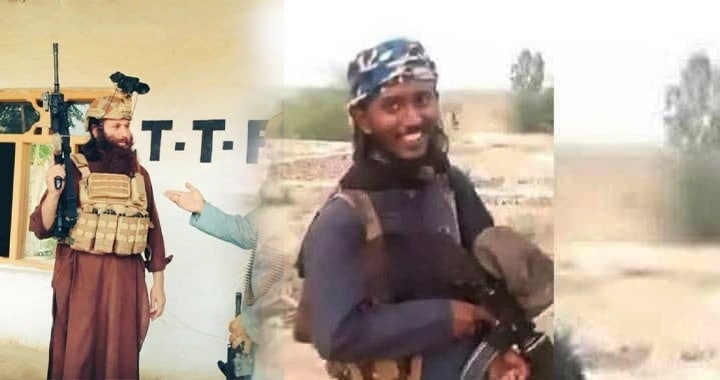
For years, the TTP has largely been described as a Pakistani terrorist organization rooted in Pakistan’s tribal belt and focused on attacks against the Pakistani state.
That description is becoming increasingly inadequate.
The identification of Iranian national Muhammad Fateh among terrorists eliminated during an attempted infiltration in North Waziristan adds another piece to a pattern that has already produced an important precedent: a Bangladeshi national recruited into the TTP and neutralized during a security operation in Khyber Pakhtunkhwa’s Karak district in September 2025.
These are not identical cases.
Their backgrounds are different. Their routes into the organisation may have been different. And there is no basis to claim that every foreign national joining the TTP is part of a single centrally coordinated international recruitment programme.
But taken together, the cases raise a serious strategic question.
Is the TTP expanding beyond its traditional recruitment pool?
The Bangladeshi Precedent
The case of Faisal Hossain Morol was significant precisely because of how far removed his origins were from the TTP’s traditional operating environment.
He was reportedly from Madaripur, Bangladesh. His family believed he had travelled to Dubai for work, while information later indicated that he had travelled to Afghanistan and subsequently entered Pakistan before joining the TTP.
The case demonstrated that recruitment into the TTP was not necessarily confined to Pakistan’s tribal districts or even to Pakistan’s immediate neighbourhood.
Later reporting indicated that Bangladeshi authorities had identified several Bangladeshis who had fought for the TTP.
Now comes the Iranian case.
According to security sources, Muhammad Fateh had reportedly been associated with al-Qaeda in Syria, where he was known as Jafar, before joining the TTP more than eight months ago.
The geographical and organisational distance between these cases is precisely what makes them significant.
Recruitment Beyond the Traditional Base
A terrorist organisation does not need millions of recruits to internationalise.
It needs pathways.
A recruiter.
A facilitator.
A transit route.
A safe location.
And an organisation willing to absorb someone whose nationality and previous experience lie outside its traditional constituency.
The Bangladeshi and Iranian cases suggest that such pathways deserve much closer examination.
The TTP’s attraction to foreign nationals could potentially serve several purposes. Foreign recruits can bring combat experience, ideological commitment, language skills, overseas connections or simply additional manpower.
For an organisation under sustained pressure from Pakistani security operations, an expanded recruitment pool could provide an important survival mechanism.
The More Important Question
The crucial issue is therefore not whether the TTP has suddenly become an international organisation.
There is insufficient evidence to make such a sweeping claim.
The more defensible observation is that its personnel base may be becoming more geographically diverse.
That distinction matters.
An organisation can remain primarily focused on Pakistan while recruiting individuals from outside Pakistan.
And that is potentially more dangerous than a simple expansion of geography because it can inject new experience and new connections into an already established terrorist network.
The Iranian case is particularly notable because Muhammad Fateh reportedly did not enter the TTP directly from an ordinary civilian environment.
He allegedly came with a history connected to the Syrian jihadist battlefield.
That means the TTP may potentially be gaining not merely another recruit, but a person carrying experience from another terrorist theatre.
A New Counterterrorism Challenge
Pakistan’s counterterrorism challenge therefore has another layer.
It is no longer enough to ask where the TTP recruits from inside Pakistan.
Authorities increasingly need to understand how foreign nationals are drawn into the organisation, how they reach Afghanistan, how they cross into Pakistan and who facilitates their movement.
That makes intelligence cooperation across South and Central Asia increasingly important.
The story of the TTP may still fundamentally be a Pakistani one.
But the people appearing inside its ranks are beginning to tell a more complicated story.
A Bangladeshi recruit.
An Iranian national.
A reported Syrian al-Qaeda past.
An Afghanistan-based route.
And a Pakistani battlefield.
That combination deserves to be treated not as a collection of coincidences, but as a warning about how terrorist organisations survive by constantly expanding the pool from which they can draw.



