
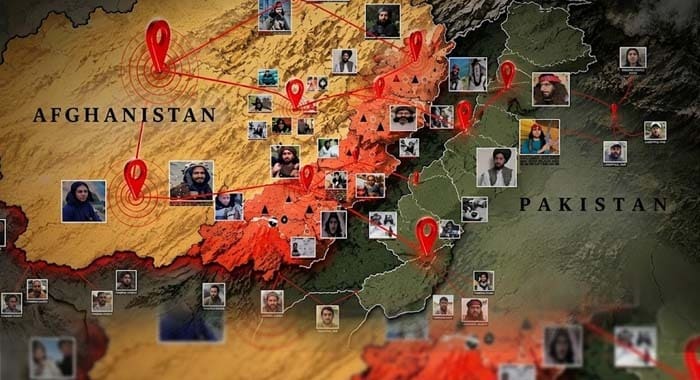
Pakistan is confronting one of its most complex security challenges in recent years as terrorist violence intensifies across Khyber-Pakhtunkhwa (KP) and Balochistan, placing renewed pressure on the country’s security forces, border management and regional diplomacy. At the centre of the crisis lies a deepening dispute with Afghanistan’s de facto Taliban authorities over the presence of anti-Pakistan terrorist networks, the alleged use of Afghan territory for cross-border attacks, and Kabul’s willingness to take verifiable action against groups operating within its borders.
What makes the situation particularly alarming is the convergence of two distinct security threats. In KP, the principal challenge comes from religiously motivated extremist organisations, particularly Tehreek-e-Taliban Pakistan (TTP). In Balochistan, the threat is driven largely by armed separatist organisations, including the Balochistan Liberation Army (BLA) and other groups seeking to challenge the Pakistani state.
Their ideologies, political objectives and recruitment narratives differ. Yet Pakistani officials and security analysts warn that the activities of these organisations increasingly overlap in their consequences for national security, forcing Pakistan to contend with multiple forms of armed violence across two strategically important provinces. The concern extends beyond individual attacks. Pakistani authorities allege that networks operating from Afghan territory provide terrorist groups with access to recruitment, training, financing, weapons and logistical support. The Taliban authorities have repeatedly rejected allegations that they deliberately facilitate attacks against Pakistan, but the dispute has become a defining source of mistrust between Islamabad and Kabul.
For Pakistan, the central question is no longer simply whether diplomatic engagement can improve relations with Afghanistan. It is whether the Taliban leadership can be persuaded—or compelled—to prevent Afghan territory from being used by organisations that threaten Pakistan’s security. Security experts and former diplomats, while speaking to The Express Tribune, have described the crisis as a test of Pakistan’s ability to combine effective counterterrorism measures with regional diplomacy, without becoming entangled in a prolonged conflict inside Afghanistan.
When the Taliban returned to power in Kabul in August 2021, Islamabad had reason to expect a possible improvement in bilateral security cooperation. Pakistan had long argued that militant networks operating from Afghan territory contributed to instability inside its borders. The Taliban takeover was therefore viewed by some in Pakistan as an opportunity to address longstanding concerns and establish a more cooperative security relationship. Before the Taliban’s return, Islamabad had accused Afghanistan’s former National Directorate of Security (NDS) of cooperating with India’s Research and Analysis Wing (RAW) to facilitate activities against Pakistan, including support for the TTP. These allegations formed part of a broader history of mistrust involving Pakistan, Afghanistan and India.
The change of government in Kabul raised hopes that the new authorities would prevent armed groups from using Afghanistan as a base for attacks against neighbouring countries. Pakistan subsequently invested considerable diplomatic effort in engaging the Taliban leadership, facilitating humanitarian assistance, advocating international economic support and keeping political and security channels open. The engagement involved a broad range of interlocutors, including religious scholars, tribal elders, political representatives, ministers, intelligence officials and special envoys. Islamabad also sought regional involvement, engaging countries such as Qatar, Türkiye and China in efforts to reduce tensions and encourage cooperation.
Pakistan says it shared intelligence about alleged terrorist camps, staging areas and logistical facilities in Afghanistan, repeatedly urging Kabul to take action against the TTP and other groups accused of conducting attacks inside Pakistan. Yet the expected security reset did not materialise. Attacks continued, relations deteriorated, and Pakistan’s confidence in the Taliban authorities’ assurances steadily weakened. The Taliban’s public position has generally rejected allegations that Afghanistan is being used to plan attacks against Pakistan. Islamabad, however, maintains that the problem cannot be resolved through denials and verbal assurances alone. It wants demonstrable action against terrorist infrastructure and an independent means of verifying compliance.
The deterioration in Pakistan’s security situation has been reflected in the country’s changing position on the Global Terrorism Index. According to the figures cited in the underlying report, Pakistan ranked ninth in 2021, the year the Taliban returned to power in Kabul. Its ranking subsequently moved to seventh in 2022, fourth in 2023, second in 2024 and first in 2025.
These rankings indicate a sharp deterioration in Pakistan’s relative position in the index, although they do not, on their own, establish that developments in Afghanistan were the sole cause of the increase in terrorism. A Pakistani tally cited in the report attributes 1,327 deaths and 2,484 injuries during 2026 so far to terrorism emanating from Afghan soil. These figures represent the Pakistani account and have not been independently verified for this release. Behind the numbers are the continuing threats faced by security personnel, law-enforcement agencies and civilians in affected districts. Repeated attacks also place pressure on local economies, disrupt daily life and deepen public anxiety in communities already affected by years of instability.
Maj Gen (retd) Raza Muhammad, a security analyst, told The Express Tribune that Pakistan possessed what he described as substantial evidence including audio recordings, video material and media reports—supporting its allegations that terrorist groups were using Afghan territory as a sanctuary and receiving external assistance. Pakistan has also accused India of supporting organisations involved in attacks inside the country. India has rejected allegations of sponsoring terrorism against Pakistan, and specific claims of financial, logistical or operational assistance require independent corroboration. For Islamabad, the essential issue remains the prevention of attacks and the dismantling of the networks that enable them, regardless of the political relationships or external interests surrounding those networks.
Another particularly sensitive element of Pakistan’s security assessment concerns the alleged participation of Afghan nationals in terrorist attacks inside the country. According to intelligence figures cited in the report, Afghan nationals account for approximately 70 per cent of suspected infiltrating fighters. The report also refers to more than 260 Afghan nationals killed in Pakistan during 2026 who were reportedly identified through names, addresses and family details.
The underlying account acknowledges that these figures may not include individuals whose identities remain unverified, bodies that could not be conclusively identified, or Afghan nationals believed to remain embedded in active terrorist formations. The figures and identification methodology have not been independently verified here and should be assessed against the underlying intelligence and official documentation. Nevertheless, the allegations have added a further dimension to Islamabad’s demands for cooperation from Kabul. Pakistani officials argue that preventing cross-border infiltration requires not only action against established terrorist leaders but also measures to disrupt recruitment, movement, financing and the supply of weapons.
The issue must also be distinguished from the wider Afghan population. Afghan nationals living in Pakistan, including refugees and ordinary migrants, should not be conflated with individuals suspected of involvement in terrorist activity. Responsibility must be established through evidence rather than nationality alone. For Pakistan, the challenge is to address genuine security threats while avoiding measures that unfairly target ordinary Afghans or further inflame tensions between the two societies.
The report cites several cases that Pakistani officials have presented as evidence of links between individuals involved in attacks inside Pakistan and the Afghan Taliban. In January 2025, Badruddin Yousaf, identified as the son of Maulvi Ghulam Muhammad Muhammadi, deputy governor of Afghanistan’s Badghis province, was reportedly killed during a security operation in the Kulachi area of Dera Ismail Khan. According to the account, he was subsequently buried in Badghis. In February 2026, an individual identified as Ahmad, also known as Qari Abdullah or Abuzar, reportedly carried out a suicide attack on a security checkpoint in Bajaur. The report describes him as a former member of the Afghan Taliban’s special forces.
In May 2026, Baitullah and Jalaluddin, identified in the report as former Taliban members, allegedly participated in twin suicide bombings targeting a security forces camp in the same district. These cases have been cited to support concerns that recruitment into anti-Pakistan terrorist organisations may extend beyond ordinary Afghan citizens and include individuals with previous links to Taliban structures or families connected to the movement.
However, the specific identities, affiliations and circumstances described in these cases require independent corroboration. Previous membership in an armed organisation or a family connection to an official does not, by itself, establish responsibility for a subsequent attack or demonstrate institutional complicity. Strategic analyst Khurram Abbas told The Express Tribune that Pakistan’s concerns extend beyond the alleged presence of TTP members in Afghanistan.
Abbas alleged that the Taliban authorities were providing the TTP with funding and ammunition while recruitment among Afghan nationals continued in several provinces. He argued that recruits were subsequently being sent across the border, adding to the pressure on Pakistani security forces. If substantiated, such allegations would point to a more serious challenge than the mere existence of militant sanctuaries: they would suggest the continuation of recruitment and logistical networks capable of replenishing armed formations despite Pakistani security operations.
Pakistan’s concerns about Afghanistan are not confined to one organisation. The wider security picture includes several regional and transnational militant groups whose presence, activities and relationships with the Taliban authorities have attracted international attention. The organisations identified in the report include the Balochistan Liberation Army (BLA), the Baloch Republican Army (BRA), the Majeed Brigade, Islamic State Khorasan Province (IS-KP), the East Turkistan Islamic Movement (ETIM), the Islamic Movement of Uzbekistan (IMU) and al Qaeda.
These organisations differ substantially in ideology, objectives, capabilities and geographical focus. They should not be treated as a single coordinated bloc without evidence establishing specific operational links. Nevertheless, their reported presence in Afghanistan raises questions about the country’s capacity to prevent armed groups from operating across borders and using its territory for recruitment, training, financing or logistical support. Maj Gen (retd) Raza Muhammad told The Express Tribune that Afghanistan had become a sanctuary for multiple organisations, including the TTP and Baloch armed groups. He argued that these networks could contribute to the Taliban authorities’ ability to consolidate power and extend their influence.
The wider concern is that the existence of multiple armed organisations can create a permissive environment in which groups exchange expertise, exploit common logistical routes or benefit from overlapping support networks even when their political objectives differ. For Pakistan, this possibility presents a complicated counterterrorism problem. A strategy focused exclusively on the TTP may not address the full range of threats posed by groups operating in or around Afghanistan. Conversely, allegations against each organisation must be assessed individually rather than assuming that all groups share the same sponsors, command structures or operational relationships.
After years of diplomatic engagement and negotiations, including talks in Doha, Istanbul and Urumqi, Pakistan increasingly turned to military action against what it describes as terrorist infrastructure inside Afghanistan. The underlying report characterises these operations as limited strikes intended to target suspected terrorist facilities while minimising civilian harm. The legality of any particular operation depends on the circumstances, the evidence available and the applicable rules of international law.
The Taliban authorities have condemned Pakistani strikes as violations of Afghan sovereignty and international law. The report also describes subsequent border confrontations, drone activity and threats that have further aggravated relations between the two sides. Maj Gen (retd) Raza Muhammad argued that Pakistan’s actions should be understood as defensive responses to attacks against its territory and security personnel. He maintained that Pakistan sought peace but could not indefinitely absorb the human cost of terrorism without responding to what it regarded as serious security threats.
Abbas described the strategy as a form of deterrence by punishment: increasing the perceived cost of allowing terrorist groups to operate without effective restraint.
However, military pressure also carries considerable risks. Cross-border strikes can trigger retaliation, complicate diplomatic efforts, increase the danger to civilians and deepen hostility between neighbouring communities. The strategic challenge is therefore to ensure that any military response contributes to a sustainable reduction in terrorist activity rather than becoming part of a cycle of attacks and counterattacks. Pakistan’s security objectives ultimately require measurable changes in the threat environment, not simply the temporary disruption of individual facilities or networks.
The dispute has also raised questions about the Taliban authorities’ commitments under the 2020 Doha Agreement, which included undertakings concerning the use of Afghan territory by terrorist groups to threaten the security of the United States and its allies. Pakistan has argued that the underlying security principle should also extend to organisations targeting Pakistan and other neighbouring countries.
The August 2022 killing of al Qaeda leader Ayman al Zawahiri in a Kabul safe house further intensified international scrutiny of the Taliban authorities’ assurances regarding the presence of internationally designated terrorist figures in Afghanistan.
During subsequent discussions involving Qatar and Türkiye, Pakistan reportedly sought written guarantees and independent verification of action against the TTP. According to the underlying account, the Taliban authorities resisted providing the kind of formal commitments Islamabad wanted. Hassan Khan argued that verbal assurances are insufficient when the practical question is whether a group can continue recruiting, financing and organising attacks from Afghan territory.
The issue is therefore not simply whether Kabul publicly denies supporting anti-Pakistan organisations. It is whether the authorities can demonstrate that they are taking effective measures to prevent such organisations from operating. This distinction matters because confidence between governments depends on observable conduct. Repeated assurances that are not accompanied by independently verifiable results are unlikely to resolve a security dispute of this scale.



