
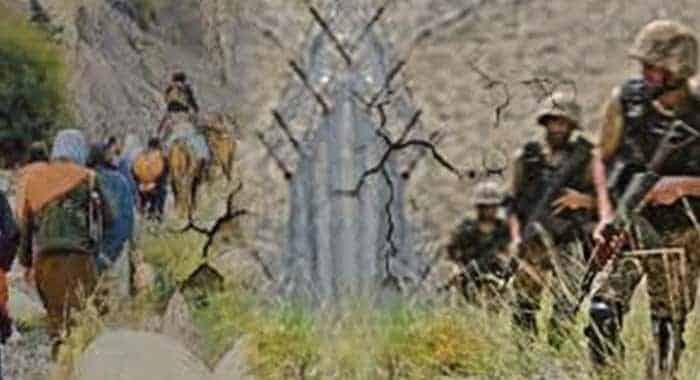
The most important development in Pakistan’s recent counterterrorism campaign may not be the number of terrorists eliminated. It may be where they were stopped.
At the border.
During infiltration attempts.
Inside temporary hideouts.
And before they could reach their intended targets.
Recent developments along Pakistan’s western frontier suggest that counterterrorism is increasingly becoming a battle over movement, access, and the ability of terrorist networks to establish themselves before launching attacks.
The challenge is no longer limited to responding after a bomb explodes or a security post comes under attack. It is about identifying the network, disrupting its preparations, and preventing its operatives from reaching the places where they intend to strike.
The September 2026 infiltration attempt in North Waziristan, and then in Kurram sector, illustrates this changing security environment. Pakistani security forces detected a group attempting to cross from Afghanistan and killed 15 terrorists after a 36-hour engagement, according to the military’s media wing.
The operation demonstrated the importance of detecting an infiltration attempt before the group could disperse into the country and potentially establish operational connections.
That was not simply a tactical engagement.
It was an attempt to prevent a threat from developing further.
The Attack Begins Before the Bomb Explodes
A terrorist attack rarely begins when the bomber reaches the target.
It begins much earlier.
Someone recruits the individual. Someone trains him. Someone arranges weapons. Someone provides transportation. Someone identifies a target. Someone conducts reconnaissance. Someone establishes communication. Someone provides shelter.
If the state can break any of those links, the attack may never happen.
This is why intelligence-based counterterrorism operations have become increasingly important.
The September 18 attack on a police compound in Kohat demonstrated the devastating consequences when a terrorist network manages to reach its target.
The coordinated assault began with a suicide vehicle bombing near a mosque inside the compound, followed by armed attackers entering the facility. The attack killed police personnel and civilians, while a prolonged security operation continued inside the complex.
The compound housed police intelligence and counterterrorism offices, making the assault particularly significant from a security perspective.
The attack was followed by Pakistani operations against terrorist targets in the border region with Afghanistan.
On September 21, Pakistan announced strikes against terrorist hideouts, reporting that more than 28 terrorists had been killed. Pakistani authorities said the targets included facilities associated with groups responsible for recent attacks in Khyber Pakhtunkhwa.
The developments illustrate two sides of the same counterterrorism challenge: preventing terrorist networks from reaching their targets and dismantling the infrastructure that allows them to prepare and organize attacks.
The effectiveness of such operations, however, depends on the quality of intelligence, the accuracy of target identification, and the ability to distinguish terrorist infrastructure from civilian areas.
Border Security Has Become Counterterrorism
The western border must now be understood as part of Pakistan’s counterterrorism architecture.
The distinction between border security and internal security is becoming increasingly difficult to maintain.
A terrorist who crosses from Afghanistan into North Waziristan is already an internal-security threat the moment he enters Pakistan.
This is why detection at the border is so important.
If an infiltration group is stopped there, Pakistani authorities do not have to hunt every member after they have disappeared into settlements, established safe houses, obtained local assistance, or begun reconnaissance.
The farther a terrorist network penetrates into the country, the more difficult it becomes to dismantle.
The September 3 infiltration attempt in North Waziristan and the subsequent security operations along the western frontier underline the continuing importance of surveillance, intelligence sharing, and coordinated responses.
The challenge is not confined to North Waziristan.
On September 22, Pakistani security sources reported that an infiltration attempt in Kurram had been thwarted, followed by firing involving Afghan Taliban personnel and Pakistani border positions.
Such incidents demonstrate how quickly counterterrorism operations can become intertwined with wider border tensions.
Stopping infiltration is therefore not simply a matter of preventing unauthorized crossings. It is also about disrupting the operational movement of terrorist networks before they can establish a presence inside Pakistan.
Intelligence Is Becoming the Centre of the Fight
The recent operations also demonstrate why Pakistan’s intelligence architecture matters.
A terrorist group can possess weapons and explosives, but it becomes considerably less dangerous when security agencies know where its members are moving, where they are gathering, and what they are preparing.
That is the difference between fighting an attack and fighting the network behind the attack.
Pakistan’s counterterrorism agencies therefore need to continue strengthening an intelligence-led model in which information from border surveillance, local communities, law-enforcement agencies, and intelligence institutions is combined rapidly.
Technology can assist this process, but technology cannot replace local intelligence.
A community that notices an unfamiliar individual can sometimes provide information that a sophisticated surveillance system cannot.
A local source may identify a suspicious movement. A police officer may recognize a pattern of activity. An intelligence officer may connect that information with an existing investigation.
When these pieces are combined in time, an attack can potentially be prevented.
That is why public cooperation remains essential.
The Afghan Connection and the Limits of Prevention
Pakistan’s counterterrorism challenge is complicated by the presence of terrorist organizations operating from Afghan territory.
Islamabad has repeatedly accused the Afghan Taliban authorities of allowing the banned Tehreek-e-Taliban Pakistan (TTP) and other terrorist groups to maintain sanctuaries across the border.
The Taliban authorities have rejected the allegations.
A United Nations monitoring report covering December 2025 to June 2026 described continued Taliban support for the TTP and highlighted operational links among several terrorist organizations operating from Afghanistan.
The report also noted that the Taliban had taken some initial steps to restrain the group.
These findings have added to the debate over whether diplomatic assurances from Kabul are translating into measurable improvements in Pakistan’s security environment.
For Pakistan, the practical question remains whether terrorist groups can continue to recruit, train, organize, and move personnel across the border.
If the infrastructure supporting infiltration remains intact, individual operations may eliminate immediate threats without resolving the larger problem.
This is why border operations and efforts to dismantle terrorist sanctuaries must be understood as interconnected parts of the same security challenge.
The Objective Should Be to Break the Attack Cycle
Pakistan should measure counterterrorism success not only by terrorists eliminated after an attack but also by attacks that never happen.
A terrorist intercepted at the border is a potentially prevented attack.
A cell discovered before assembling its explosives is a potentially prevented attack.
A facilitator arrested before delivering a suicide vest is a potentially prevented attack.
A recruitment network disrupted before it can bring another individual into a terrorist organization is a potentially prevented attack.
This is the logic Pakistan needs to strengthen.
The terrorist threat has become more complicated, but the state can reduce the danger by identifying threats earlier and disrupting the networks that sustain them.
The challenge now is to make that capability systematic.
It requires better intelligence coordination, stronger border surveillance, effective policing, community cooperation, and sustained pressure on the infrastructure that enables terrorist organizations to operate.
It also requires careful assessment of the consequences of military operations, particularly when they extend beyond Pakistan’s internationally recognized borders.
The ultimate objective should be simple: terrorists should be stopped at every stage, preferably at the earliest possible stage.
The best counterterrorism operation is still the one that prevents the attack from ever reaching the public.



