
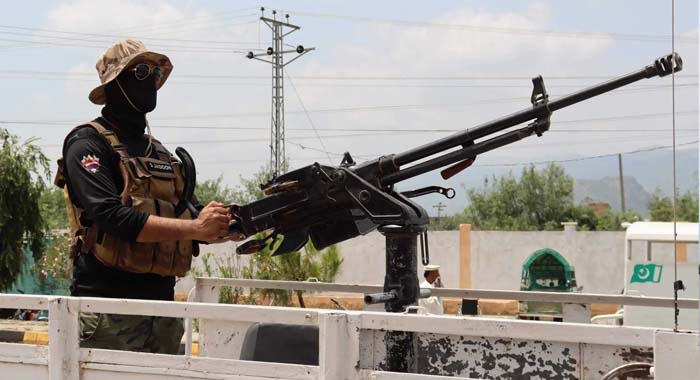
The changing nature of terrorist activities, particularly the emergence of coordinated “two-stage attack” tactics, has underscored the urgent need for continuous improvement in counterterrorism strategies, operational preparedness, intelligence coordination, and modern warfare training for law enforcement agencies.
Recent incidents in Khyber Pakhtunkhwa have demonstrated that terrorist groups are increasingly adopting sophisticated operational patterns aimed not only at attacking police installations but also at targeting responding forces through carefully planned ambushes, improvised explosive devices (IEDs), and drone-based attacks.
The evolving threat environment requires security institutions to move beyond traditional response mechanisms and adopt a comprehensive counterterrorism framework based on advanced intelligence gathering, technological integration, specialized training, and proactive operational planning.
Under the emerging two-stage attack strategy, terrorists initially target a police facility to engage personnel deployed at the location. Simultaneously, another armed group positions itself along anticipated reinforcement routes to attack additional forces arriving to support the affected installation. These follow-up attacks expose responding teams to multiple threats, including roadside explosives, coordinated ambushes, sniper fire, and unmanned aerial systems capable of delivering explosives.
Operational experiences from recent years indicate that reinforcement movements have increasingly become a vulnerable point exploited by terrorist networks. During the past three years, several police personnel, including senior officers, have lost their lives while responding to attacks on police installations.
The tragic incident in Khazina Banda, Hangu district, on July 29, where nine police personnel, including Deputy Superintendent of Police (DSP) Diyar Khan, embraced martyrdom and 28 others sustained injuries, highlighted the devastating impact of this evolving tactic. Terrorists first attacked a police checkpost and subsequently targeted the additional force dispatched to assist personnel engaged in the initial confrontation.
Similar patterns were observed in earlier attacks. On January 15, 2023, DSP Sardar Hussain and his two security personnel were martyred in an IED attack while responding to a terrorist assault on Sarband Police Station near Peshawar. Likewise, on March 30, 2023, DSP Iqbal Momand and three constables lost their lives when an explosive device targeted a police contingent moving towards Saddar Police Station in Lakki Marwat, where personnel were already engaged with attackers.
Security officials and experts emphasize that modern counterterrorism operations require not only advanced weapons and equipment but also specialized training focused on unconventional warfare, tactical mobility, threat assessment, and effective utilization of modern technologies.
A senior police official highlighted that while law enforcement agencies possess modern equipment and weapons, there remains a pressing need to enhance operational training and ensure that personnel are fully capable of effectively utilizing available resources. The official stressed that counterterrorism operations today represent a form of guerrilla warfare against a highly trained and adaptable enemy, requiring continuous professional development rather than conventional training approaches.
The official further pointed out that during recent attacks, terrorists have strategically restricted the movement and positioning of police personnel through sniper fire and coordinated tactics, preventing defenders from effectively deploying available resources. The importance of tactical planning, route security, reconnaissance, and rapid decision-making has therefore become increasingly critical.
Security analysts have also emphasized the importance of shifting from a reactive approach to a proactive counterterrorism posture. They noted that coordinated terrorist operations indicate the continued existence of support networks, recruitment channels, and logistical structures that must be disrupted through effective intelligence operations.
Former Additional Inspector General of Police and Secretary Home and Tribal Affairs, Akhtar Ali Shah, stressed the importance of strengthening intelligence capabilities and addressing the networks that enable terrorist groups to plan and execute coordinated attacks. He highlighted that while regional factors contribute to the security challenge, effective intelligence gathering and disruption of local support structures remain essential elements of counterterrorism success.
The Central Police Office (CPO) has stated that comprehensive Standard Operating Procedures (SOPs) are already in place for handling such situations. According to the CPO, decisions regarding reinforcement deployment are made after considering available intelligence, ground realities, operational requirements, and threat assessments.
The department clarified that reinforcement movements are not conducted blindly. Routes are evaluated, security considerations are reviewed, and necessary precautionary measures are adopted before deployment. In several operations, careful planning and timely decisions have enabled successful responses, although such outcomes often receive limited public attention.
The CPO further highlighted the increasing role of technology in modern policing, including the use of drones for route surveillance, monitoring, and reconnaissance, particularly during nighttime operations. These technological capabilities are being integrated into operational planning to improve situational awareness and reduce risks faced by responding personnel.
The department reaffirmed that counterterrorism strategies are continuously reviewed and improved in light of emerging threats and operational experiences. Law enforcement agencies remain committed to enhancing professional training, strengthening intelligence-based operations, improving coordination among security institutions, and ensuring that personnel are equipped with the skills and resources required to confront evolving terrorist challenges.
The sacrifices of police personnel who have laid down their lives in the line of duty remain a powerful reminder of the risks faced by frontline security forces. Strengthening institutional capacity, adopting modern operational doctrines, and investing in human resource development remain essential pillars for ensuring the safety and security of communities.



