Arshad Aziz Malik
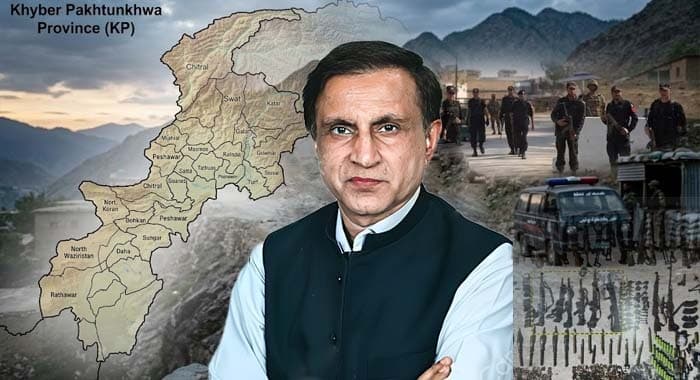
Khyber Pakhtunkhwa is once again facing a serious test in its long and painful struggle against terrorism. The province, which has remained at the forefront of Pakistan’s fight against militancy for decades, is witnessing a dangerous transformation in the nature and intensity of terrorist attacks. The most worrying aspect of this evolving security situation is that the police force has increasingly become the primary target of militant organizations.
The question that demands serious attention is: Why has the police become the biggest target of terrorism in Khyber Pakhtunkhwa? The answer lies in the unique role of the police. The police are not only responsible for maintaining law and order; they are also the first institution to confront militant networks at the local level. They collect intelligence, monitor suspicious activities, investigate facilitators, and maintain a permanent presence among communities. For terrorist groups, weakening the police means weakening the state’s ability to respond.
Khyber Pakhtunkhwa’s police force has become a direct obstacle to militant operations, which is why police stations, checkpoints, officers, and counterterrorism personnel have increasingly come under attack. For years, Khyber Pakhtunkhwa has carried the heavy burden of terrorism. Areas including Bannu, Hangu, Tank, Swat, Bajaur, Dir, and Khyber district have repeatedly witnessed attacks against security forces and civilians.
The sacrifices of police officers and soldiers reflect the scale of this conflict. Every year, security personnel lose their lives while defending communities and confronting terrorist groups. However, the nature of this conflict has changed. Terrorist organizations are no longer relying only on traditional methods of attacks. They are adopting modern warfare techniques, using advanced weapons, technology, and intelligence-based strategies.
The battlefield has become more complex, and the enemy has become more adaptable. One of the most alarming developments is the increasing use of technology by militant groups. Terrorists are now using drones for surveillance and attack planning, sniper weapons for targeted strikes, and advanced communication methods to coordinate operations The attack on Khazina Banda Chowki demonstrated this changing pattern. Militants reportedly studied police movements, identified routes used by officers, and prepared attacks with sniper weapons and other modern equipment.
This shows that terrorist groups are not acting randomly. They are conducting planned operations based on intelligence gathering and tactical preparation. The security environment has moved beyond conventional attacks. Police forces now face an enemy that studies their movements, understands their weaknesses, and exploits gaps in their defence systems.
The scale of recent attacks also highlights the growing resources available to terrorist groups. According to police officials, between 1,200 and 1,400 kilograms of explosives were used in the recent Tank attack. Such a large quantity of explosives demonstrates the ability of militants to organize, transport, and deploy significant resources. A facility or police post that is not designed to withstand such attacks becomes extremely vulnerable. Even a strong building can collapse under the impact of a massive explosion. Therefore, expecting police personnel to defend themselves without proper infrastructure and protective measures is unrealistic.
The responsibility of strengthening police stations, improving security arrangements, and providing modern equipment rests with the government.
Security experts have repeatedly warned that militant groups now possess advanced weapons and equipment. After the withdrawal of NATO forces from Afghanistan in 2021, large quantities of military equipment were left behind. Concerns have been raised that some of these weapons and technologies have reached militant organizations operating in the region. These groups are reportedly using equipment such as drones, sniper rifles, ammunition, and other advanced tools. The situation creates a dangerous imbalance: terrorists are upgrading their capabilities while many police units continue to struggle with outdated resources. The question is simple: how can a force fight a technologically advanced enemy without matching equipment?
The answer requires investment in modern policing. Many vulnerable police stations in Khyber Pakhtunkhwa require reconstruction, strengthening, and modernization. A police station with limited personnel, weak infrastructure, and inadequate security arrangements becomes an easy target for militants.
The police require:
- Stronger fortified police stations
- Bulletproof vehicles
- Advanced communication systems
- Surveillance equipment
- Modern weapons
- Drone and anti-drone technology
- Specialized counterterrorism training
Providing these facilities is not a luxury. It is a basic requirement for a province facing continuous security threats. Another worrying trend is the method used by terrorists after initial attacks. In several incidents, militants have attacked police posts or security installations and then targeted the personnel arriving for rescue operations. The pattern is often repeated: an attack occurs, additional forces move toward the location, and the rescuers become the next target. This tactic increases casualties and creates fear among security personnel. Militants have also used vehicle-based attacks, suicide attacks, and coordinated firing before entering targeted locations. These methods indicate careful planning and knowledge of security responses. The police must adapt by improving intelligence-sharing systems, response strategies, and protective arrangements.
While police officers and soldiers continue sacrificing their lives, political leadership must demonstrate stronger ownership of the crisis. During security emergencies, leadership presence matters. Visiting affected areas, meeting victims’ families, attending funerals of martyrs, and supporting security personnel are important steps to strengthen public confidence. A province fighting terrorism requires political commitment alongside security operations. Counterterrorism cannot succeed through security forces alone. It requires coordinated governance, effective administration, and public trust.
The consequences of terrorism extend beyond the battlefield. A major concern in Khyber Pakhtunkhwa is the lack of advanced emergency medical facilities in many districts. When an attack occurs in Hangu, Bannu, Bajaur, Dir, or Khyber district, injured victims are often shifted to Peshawar for treatment. This delay can cost lives. District and divisional headquarters should have hospitals equipped to handle serious injuries, trauma cases, and emergency situations. A strong healthcare response is an essential part of security planning. The provincial government has announced increases in the police budget, but the key issue is not only the amount of money allocated. The real question is whether funds are being used according to actual security requirements.
A proper assessment is needed to determine:
- How many damaged police stations need rebuilding?
- How many bulletproof vehicles are required?
- How much modern equipment is needed?
- How many officers require specialized training?
- How many surveillance and counter-drone systems are necessary?
A security budget must be based on operational realities, not only financial figures. Another major requirement is strengthening the capacity of the police, particularly specialized counterterrorism units. A strong police force should have the capability to conduct intelligence-based operations independently. Military operations can clear areas, but long-term stability depends on civilian security institutions maintaining control. The goal should be to build a police force that can identify threats early, conduct operations effectively, and prevent militants from rebuilding networks.
Terrorism in Khyber Pakhtunkhwa is not only about armed attackers. Behind many attacks are support networks that provide shelter, transportation, weapons, and information. Security officials have pointed out that some attackers involved in recent incidents had links beyond Pakistan, while local facilitators assisted them. Breaking these networks is essential. A terrorist organization cannot operate successfully without logistical support. Therefore, counterterrorism efforts must focus not only on fighters but also on those who enable their activities.
The future security situation depends on immediate and serious action. The provincial government must regularly review the security situation, strengthen coordination mechanisms, and develop a comprehensive strategy. The debate should not only focus on whether operations should happen. The real challenge is ensuring that after operations, civilian institutions are strong enough to maintain peace. A successful strategy requires three stages: First, eliminate immediate threats. Second, strengthen police and civil administration. Third, create conditions where militants cannot return.
At a time when security personnel are losing their lives, political instability creates additional challenges. Public rallies and political conflicts cannot replace governance responsibilities. The people of Khyber Pakhtunkhwa need security, effective administration, healthcare, and economic stability. The sacrifices of police officers and soldiers demand practical action rather than only statements of sympathy.
The police of Khyber Pakhtunkhwa are standing on the front line of Pakistan’s fight against terrorism. They are targeted because they represent the state’s authority and directly challenge militant networks. But bravery alone cannot defeat a modern terrorist threat. The police need better equipment, stronger infrastructure, advanced training, and consistent political support. The province is facing an enemy that is changing its methods rapidly. The response must also change. Strengthening the police is not only a security requirement; it is an investment in the safety and future of Khyber Pakhtunkhwa.
The police are the first shield protecting society. Ensuring that shield remains strong is the responsibility of the entire state.