
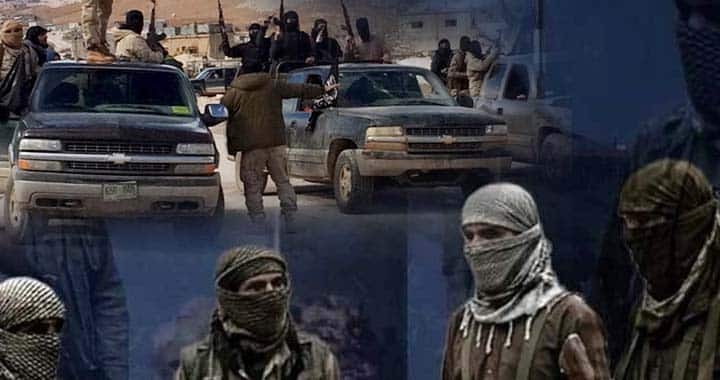
As the world marks the 25th anniversary of the September 11, 2001 terrorist attacks, the enduring question remains as urgent as ever: What more must the international community do to ensure that such a catastrophe never happens again? On that fateful day, terrorists attacked the World Trade Center in New York, the Pentagon and a field near Shanksville, Pennsylvania, killing 2,977 people and forever altering the global security landscape. Twenty-five years later, the threat posed by terrorism has not disappeared. Instead, it has changed shape, becoming more decentralized, more technologically sophisticated and, in many respects, more difficult to detect.
The United States Department of State lists 94 organizations as Foreign Terrorist Organizations, underscoring the scale and diversity of the international terrorist threat. While the nature, objectives and geographical reach of these organizations vary, the continued presence of numerous terrorist networks demonstrates that the threat remains a serious international security challenge.
Some terrorist organizations continue to operate from or maintain a presence in Afghanistan, where the Taliban remains the country’s de facto governing authority. Among the organizations that have continued to attract international counterterrorism attention is Al-Qaida, the organization responsible for the September 11 attacks. International assessments have continued to identify Al-Qaida’s presence in Afghanistan, while concerns have also been raised over relationships between terrorist organizations and elements within the country’s broader security and political environment.
The continued presence of terrorist organizations in Afghanistan carries implications far beyond the country’s borders. When terrorist groups are able to maintain networks, recruit members, raise funds, communicate with affiliates and plan operations from relatively secure environments, the consequences can extend across neighbouring states and eventually reach distant regions. The experience of the past quarter-century demonstrates that terrorist threats cannot simply be viewed through national borders. A network operating in one country can recruit an individual in another, communicate through an encrypted platform hosted elsewhere and ultimately target civilians thousands of kilometres away.
The terrorist landscape of today is markedly different from the one that existed before September 11, 2001. Al-Qaida remains part of the global terrorist landscape, but it is now only one component of a much broader and increasingly decentralized ecosystem. The Islamic State, for example, has maintained or inspired networks across areas of the Middle East, Africa and South Asia. Al-Shabaab remains active in Somalia and the wider Horn of Africa, with its activities also affecting neighbouring countries. Jama’at Nusrat al-Islam wal-Muslimin (JNIM), an Al-Qaida affiliate, operates primarily across the Sahel, including Mali, Burkina Faso and Niger.
Other organizations, including Hamas and Hezbollah, remain central to terrorism-related security concerns in the Middle East, although their structures, political environments and operational circumstances differ substantially from those of transnational jihadist organizations.
These examples represent only part of an increasingly complex international threat environment.
Over the past two decades, terrorist organizations have increasingly relied on regional franchises, local affiliates, small cells and independent actors. This evolution has made terrorist networks more difficult to identify and disrupt because the absence of a single centralized command does not necessarily mean the absence of an organized threat.
Perhaps one of the most significant changes since 9/11 has been the transformation of terrorist recruitment and propaganda. Terrorist organizations no longer depend exclusively on physical meetings, training camps or traditional propaganda networks to reach potential recruits. The internet has created an environment in which extremist material can cross borders almost instantaneously and reach individuals thousands of kilometres from the organizations producing it.
Encrypted communications have further complicated the ability of security agencies to identify terrorist planning and recruitment activities. At the same time, terrorist groups and extremist networks have demonstrated an increasing willingness to exploit social-media platforms, online communities and other digital environments. Even gaming spaces have emerged as part of the broader online ecosystem that can be exploited for communication, propaganda and attempts at radicalization.
Artificial intelligence introduces another rapidly developing dimension to this challenge. As AI technologies become more accessible, terrorist and extremist actors may seek to exploit them to produce propaganda, expand their reach, communicate across language barriers and tailor messages to specific audiences. The digital transformation of terrorism means that the next potential threat may not announce itself through the traditional warning signs that security agencies have historically monitored.
This evolution has also contributed to concerns surrounding so-called “lone wolf” attacks, particularly in Western countries. An individual influenced by extremist propaganda may not require direct operational contact with a terrorist organization before attempting an attack. In some cases, online radicalization can take place without the individual ever meeting a member of an established terrorist network.
This presents a particularly difficult challenge for counterterrorism agencies. A highly centralized terrorist organization can leave identifiable trails through travel, financing, communications and personnel movements. A lone actor, by contrast, may operate with minimal external assistance and leave considerably fewer detectable indicators.
This does not mean that every individual exposed to extremist material will become violent. It does, however, demonstrate why the changing mechanisms of radicalization require sustained attention from governments, technology companies, researchers and security institutions.
The United Nations Security Council has assessed that the global terrorist threat has become increasingly diffuse, agile and difficult to track. That assessment carries particular significance 25 years after 9/11.
The world has invested enormous resources in preventing another large-scale terrorist attack, and counterterrorism cooperation has expanded considerably since 2001. Yet terrorist organizations have also adapted to the measures designed to contain them. They have become more geographically dispersed, more reliant on affiliated networks and more capable of exploiting emerging technologies.
The challenge is therefore no longer simply to identify a terrorist organization and dismantle its central command. It is to understand the wider ecosystem in which terrorism survives—its financing, recruitment, propaganda, technological infrastructure, ideological networks and regional affiliates.
The United Nations Global Counter-Terrorism Strategy provides an important international framework for addressing terrorism, strengthening national counterterrorism capabilities and promoting international cooperation while emphasizing human rights and the rule of law.
However, the evolving nature of terrorism means that international institutions must continue adapting to emerging threats. The United Nations and its member states have an important role to play in helping countries strengthen their capacity to identify terrorist networks, disrupt financing, improve information-sharing and respond to emerging technologies being exploited by terrorist organizations.
The international community must also remain alert to the environments in which terrorist organizations are able to survive and reorganize.
The lesson of previous decades is clear: when terrorist groups are allowed to establish networks, recruit freely, develop operational capabilities and exploit ungoverned or weakly governed spaces, the consequences can eventually extend far beyond the territory in which those groups initially operate.
The anniversary of 9/11 should therefore be more than an occasion to remember the nearly 3,000 people who lost their lives. It should also be a moment for governments and international institutions to examine whether they are adequately prepared for a terrorist threat that no longer follows the same patterns as it did 25 years ago.
The warning signs may now be scattered across different countries and different digital platforms. They may emerge through regional terrorist affiliates, online propaganda networks, encrypted communications, extremist recruitment or the activities of individuals inspired by terrorist ideologies. The challenge is recognizing how these seemingly separate developments can connect.
A terrorist organization does not necessarily need to reproduce the exact model of Al-Qaida in 2001 to create a major international security crisis. The next major attack could emerge from a regional affiliate, a decentralized network or an individual inspired and enabled by an online extremist ecosystem.
That possibility makes vigilance more important, not less. Twenty-five years after the attacks that changed the world, the international community has learned that terrorism is capable of adapting to extraordinary levels of pressure. Organizations can lose territory and survive underground. Networks can fragment and continue through affiliates. Propaganda can migrate from one platform to another. Recruitment can move from physical spaces to digital communities. And individuals can become radicalized without ever coming into direct contact with a formal terrorist organization.
The world must therefore avoid measuring today’s terrorist threat solely through the lens of 2001. The organizations may be different. The technologies may be different. The methods may be different. But the consequences of failing to recognize credible warning signs can remain devastating.
The 25th anniversary of 9/11 should serve as both a commemoration of those who were lost and a reminder of the responsibility shared by the international community. We cannot afford to wait for another catastrophe before recognizing the warning signs.



