
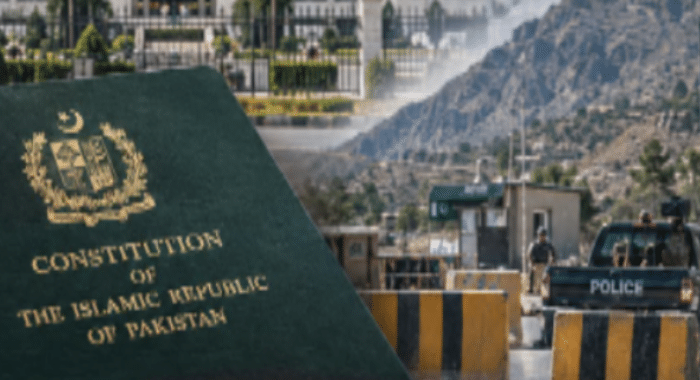
The reported imposition of emergency measures and Governor’s Rule in Khyber Pakhtunkhwa marks a potentially significant turning point in the province’s political and administrative landscape, following years of persistent security challenges, growing public concerns, and intense debate over the performance of successive provincial governments.
President Asif Ali Zardari has reportedly announced the imposition of an emergency under Articles 232(1) and 234(1) of the Constitution of Pakistan, following a deteriorating law and order situation and a reported increase in terrorist attacks across the province. The decision, according to the information provided, followed a detailed review by the federal cabinet, consultation with relevant stakeholders, and consideration of security reports concerning the province.
The reported constitutional intervention comes amid growing concerns over the safety of civilians, attacks on law enforcement personnel, threats to public infrastructure, and the disruption of economic and educational activities in several districts of Khyber Pakhtunkhwa.
For a province that has endured prolonged insecurity and political controversy, the central expectation is that the reported measures will lead to a more coordinated security response, stronger administrative oversight, improved public services, and tangible relief for citizens who have borne the consequences of years of instability.
The development also brings renewed scrutiny of the Pakistan Tehreek-e-Insaf’s prolonged period in provincial government, which began in 2013, apart from periods of caretaker administration. Supporters of federal intervention view the reported decision as an opportunity to address longstanding governance concerns and establish a more effective framework for restoring peace and stability.
Constitutional Intervention and the Reported End of the Existing Provincial Government
According to the information provided, the federal cabinet, chaired by Prime Minister Shehbaz Sharif on Sunday, October 11, reviewed the deteriorating security situation in Khyber Pakhtunkhwa and considered two reports relating to the province’s security environment.
Following the reported cabinet deliberations and consultations with political stakeholders, the federal government decided to proceed with emergency measures under Articles 232 and 234 of the Constitution of Pakistan.
The presidential announcement reportedly refers to the gravity of the terrorist threat, the risks facing citizens and public institutions, and concerns about the provincial government’s capacity to respond effectively to the deteriorating situation.
A report submitted by the Governor of Khyber Pakhtunkhwa is also said to have identified concerns regarding the functioning of the provincial constitutional and administrative system.
Under the reported arrangements, the federal government would be able to direct the Governor to assume responsibility for some or all provincial governmental functions, subject to the applicable constitutional framework. The information provided further states that the powers of the provincial assembly would be exercised by Parliament or under its authority, as specified in the relevant arrangements.
The reported announcement also indicates that the Chief Minister, provincial ministers, advisers, special assistants, and Advocate General would cease to hold their offices under the proposed emergency framework.
These measures, if formally confirmed and implemented as described, would represent a major restructuring of provincial administration and a significant development in the relationship between the federal government and Khyber Pakhtunkhwa.
The immediate challenge will be to ensure that any constitutional and administrative changes translate into effective governance, stronger security coordination, and visible improvements in the lives of ordinary citizens.
Thirteen Years of PTI Rule Under Renewed Scrutiny
Since 2013, the Pakistan Tehreek-e-Insaf has maintained a dominant position in the political administration of Khyber Pakhtunkhwa, with caretaker administrations serving during electoral transitions. Throughout this period, the province has remained at the centre of national debates concerning counterterrorism, governance, public service delivery, economic development, and relations between federal and provincial authorities.
Critics of the provincial government’s performance argue that the continuing deterioration of security, recurring administrative difficulties, and unresolved public concerns demonstrate the need for a fundamental reassessment of governance priorities.
Federal government representatives have reportedly maintained that available opportunities and resources were not used effectively enough to address the province’s growing challenges. Questions have also been raised about the coordination between the provincial administration and federal institutions responsible for national security.
The provincial leadership, meanwhile, has expressed concerns over federal policies, the conduct of counterterrorism operations, and the protection of provincial autonomy.
Against this backdrop, the reported imposition of Governor’s Rule has become a focal point of political debate. Those supporting the intervention regard it as an opportunity to strengthen administrative control, improve institutional coordination, and pursue a more decisive response to terrorism.
Nevertheless, the success of any change in government arrangements must ultimately be judged by its results rather than political claims. The decisive measures of progress will be a reduction in terrorist violence, improved public safety, more reliable public services, stronger economic activity, and greater public confidence in state institutions.
Security Statistics Highlight the Scale of the Challenge
The security figures reportedly presented to the federal cabinet underline the seriousness of the challenges confronting Khyber Pakhtunkhwa.
According to the information provided, the reports indicated an increase of approximately 195 percent in terrorist incidents between March 1, 2024, and September 23, 2026.
The figures further stated that approximately 6,200 security-related incidents occurred over a one-year period, resulting in the deaths of more than 1,200 people, including personnel of security institutions.
The information also indicated that police personnel and members of the security forces accounted for approximately 73 percent of those targeted in attacks during 2026.
These figures, as reported in the supplied material, point to the extensive pressure on the province’s security apparatus and the continuing risks faced by personnel responsible for maintaining public order.
They also highlight the wider consequences of sustained violence. Repeated attacks can disrupt commercial activity, restrict access to education, undermine investor confidence, place pressure on healthcare facilities, and leave communities uncertain about their future.
The statistics should be understood in the context of the reports presented to the federal cabinet, with the underlying data and methodology requiring confirmation through official records.
Regardless of the political debate surrounding the reported intervention, the security challenge demands sustained attention, effective intelligence coordination, professional policing, and a comprehensive strategy capable of protecting both the public and the institutions responsible for their safety.
Allegations of Governance Failure and the Need for Accountability
The reported federal decision has intensified criticism of the PTI-led provincial administration over its handling of terrorism and law and order.
Critics have alleged that the provincial government failed to demonstrate the level of political commitment, administrative capacity, and operational coordination necessary to confront the growing threat effectively.
The supplied reports also contain allegations concerning the provincial leadership’s political priorities and its approach towards elements accused of supporting or sympathising with militancy. Such allegations remain matters requiring evidence-based assessment and should not be treated as established findings without independent verification.
The provincial leadership’s position on security policy, federal intervention, and provincial autonomy has also remained a subject of political disagreement.



