(Shamim Shahid)
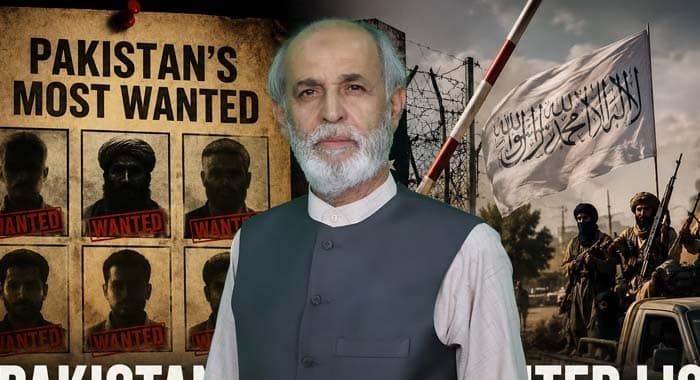
The latest decision by Khyber Pakhtunkhwa Police to release a list of the province’s 83 most wanted terrorists, accompanied by financial rewards for information leading to their capture, is far more than a routine law enforcement exercise. It serves as a powerful reminder that Pakistan’s battle against militancy remains far from over. At the same time, reports of renewed clashes between Taliban forces and armed resistance groups in Afghanistan’s northern provinces, particularly Badakhshan and Baghlan, indicate that Afghanistan may once again be entering a period of prolonged instability. These developments, although unfolding on opposite sides of the Durand Line, are closely connected. History has repeatedly demonstrated that insecurity in Afghanistan rarely remains confined within its borders, and Pakistan has often been the first country to experience the consequences.
The publication of the wanted list reflects an ongoing effort by Khyber Pakhtunkhwa Police and other security agencies to identify individuals involved in terrorist activities and encourage public cooperation through rewards for credible information. Security officials have periodically released such lists over the years, especially after militants escaped from prisons or re-established their operational networks. While these announcements highlight the determination of law enforcement agencies to pursue dangerous militants, they also underscore an uncomfortable reality: despite years of military operations, intelligence-led actions, and counterterrorism campaigns, militant groups continue to pose a serious threat in several parts of Pakistan. Terrorism has evolved rather than disappeared, forcing security institutions to constantly adapt to changing tactics employed by armed groups.
The security landscape in Khyber Pakhtunkhwa remains deeply concerning. Although some districts such as Swat have experienced relative improvements compared to the violence witnessed over a decade ago, other regions continue to face persistent threats. Reports suggest that Bannu, Bajaur, Kurram, Dera Ismail Khan, North Waziristan, and South Waziristan remain under considerable security pressure. In several of these districts, militant groups are believed to be attempting to consolidate their positions and expand their influence, creating widespread anxiety among local communities. Residents continue to fear targeted attacks, extortion, kidnappings, and disruptions to everyday life. Even in the Peshawar Valley, concerns regarding the overall security environment have grown in recent months. Police officials themselves have acknowledged that while they are making every effort to contain the situation, significant challenges remain in preventing militants from regrouping and carrying out attacks.
For ordinary citizens, security is measured not only by official statistics but by the confidence with which they can conduct their daily lives. When parents worry about sending their children to school, businesses hesitate to invest, and local communities fear traveling after sunset, the impact of militancy extends well beyond the battlefield. It undermines economic development, weakens public trust in institutions, and creates an atmosphere of uncertainty that hampers long-term stability. This is why the release of the list of wanted terrorists should not merely be viewed as a policing initiative but as part of a broader effort to reassure citizens that the state remains committed to protecting them.
Across the border, Afghanistan appears to be entering another uncertain chapter. Reports emerging from Badakhshan and Baghlan indicate that armed resistance against the Taliban has intensified in recent weeks. According to available information, Taliban authorities claim to have arrested more than twenty individuals, including several commanders associated with anti-Taliban groups, while also announcing successful operations against resistance fighters. At the same time, resistance groups claim to have launched attacks against Taliban positions in strategically important areas. Although independent verification of every battlefield claim remains difficult, the increasing frequency of such reports suggests that northern Afghanistan is becoming a significant theatre of confrontation once again.
The strategic significance of these developments cannot be overstated. The Salang region, which connects northern Afghanistan with Kabul through one of the country’s most important transportation corridors, occupies immense military and economic importance. Control over this route influences movement between northern provinces and the capital, affecting both military logistics and commercial trade. Provinces such as Balkh, Kunduz, Badakhshan, Samangan, Sar-e-Pul, Faryab, and Jowzjan rely heavily on these transportation networks. Any prolonged disruption could significantly complicate the Taliban administration’s ability to maintain administrative control and facilitate trade with neighboring Central Asian states, including Uzbekistan, Turkmenistan, and Tajikistan. The stability of northern Afghanistan is therefore not merely a domestic Afghan issue but one with broader regional implications.
Much of the current discussion revolves around the National Resistance Front, commonly associated with Ahmad Massoud, the son of the late Ahmad Shah Massoud. In some public discussions, this movement is also referred to as the Afghanistan Freedom Front, reflecting the different names used for anti-Taliban resistance. Analysts remain divided over the precise nature of the movement. Some view it primarily as an organized political and military opposition to Taliban rule, while others argue that ethnic and regional dynamics play a significant role in shaping the conflict. Afghanistan’s northern provinces are home to large Tajik, Uzbek, Hazara, and Turkmen communities, each possessing distinct historical and political identities. However, it would be inaccurate to portray the conflict solely through an ethnic lens, as Pashtun communities also reside in several northern provinces, including Kunduz, Balkh, Sar-e-Pul, and Samangan. The reality is considerably more complex, involving questions of governance, political representation, historical grievances, and regional influence.
Ahmad Massoud continues to serve as the most prominent face of organized resistance against Taliban rule. Reports also indicate political coordination with senior Hazara leader Mohammad Mohaqiq, fueling speculation about broader alliances among anti-Taliban groups. Discussions have also focused on the possible role of influential Uzbek leader Abdul Rashid Dostum, whose political and military influence has historically shaped northern Afghanistan. If Uzbek, Tajik, Hazara, and Turkmen political forces were to coordinate their activities more effectively, the Taliban could face significantly greater challenges in consolidating authority across northern Afghanistan. However, at present, publicly available information remains insufficient to confirm the extent of such alliances, making cautious analysis essential.
The renewed resistance has also prompted allegations from Taliban officials directed toward Pakistan. Taliban representatives have claimed that anti-Taliban groups receive financial and logistical support from Pakistan and that fighters allegedly cross from Pakistani territory. These accusations have attracted considerable attention, particularly given the already fragile relationship between Islamabad and Kabul. However, these remain allegations, and independent public evidence substantiating these claims has not been presented. In an environment characterized by mutual suspicion and competing narratives, such statements risk further complicating bilateral relations at a time when both countries face serious security challenges of their own.
Afghanistan’s recent history offers a sobering reminder of the destructive consequences of prolonged conflict. Over the past four decades, the country has experienced the Soviet invasion, the anti-Soviet resistance, civil war among competing Mujahideen factions, Taliban rule, conflict between the Taliban and the Northern Alliance, the United States-led military intervention, the Taliban insurgency, and finally the Taliban’s return to power in 2021. If Afghanistan once again descends into sustained armed conflict between the Taliban and organized resistance groups, the country risks entering yet another cycle of violence from which it has struggled to escape for generations. Every successive conflict has produced new grievances, displaced millions of people, weakened institutions, and created opportunities for extremist organizations to exploit instability.
Pakistan cannot afford to view these developments with indifference. Every major phase of conflict in Afghanistan has had direct consequences for Pakistan, including refugee flows, cross-border militancy, illicit arms trafficking, and increased pressure on security institutions. The interconnected nature of regional security means that instability in northern Afghanistan will inevitably influence the broader security environment across Pakistan’s western border. Effective border management, intelligence cooperation, and regional diplomacy will therefore become increasingly important in preventing the spillover of violence.
Equally important is the recognition that military operations alone cannot produce lasting peace. Pakistan’s own experience demonstrates that while security operations are essential for dismantling militant networks, sustainable stability ultimately depends on effective governance, economic development, judicial reforms, education, and public confidence in state institutions. Similarly, Afghanistan’s long history suggests that exclusionary political systems and unresolved ethnic and political grievances often fuel renewed resistance. Military victories that fail to address underlying political realities rarely produce durable peace.
The release of Khyber Pakhtunkhwa Police’s list of 83 most wanted terrorists is therefore both a warning and a call to action. It reminds policymakers that Pakistan’s fight against terrorism remains unfinished and that security gains achieved over the past decade must not be taken for granted. Simultaneously, developments in northern Afghanistan underscore the fragility of regional stability and the risks associated with another prolonged conflict across Pakistan’s western border.
Ultimately, the futures of Pakistan and Afghanistan remain inseparable. Geography, history, trade, migration, and shared security concerns bind the two countries together regardless of political disagreements. Neither can achieve lasting stability while the other remains trapped in conflict. As militancy once again threatens communities in Khyber Pakhtunkhwa and armed resistance intensifies in northern Afghanistan, policymakers on both sides of the border must recognize that sustainable peace cannot be achieved solely through military force or political rhetoric. It requires responsible governance, inclusive political dialogue, effective law enforcement, regional cooperation, and above all, a shared commitment to preventing another generation from inheriting the devastating consequences of endless war. The warning signs are already visible. Whether regional leaders act with foresight or allow events to dictate the future will determine whether South and Central Asia move toward greater stability or once again find themselves consumed by a cycle of violence that history has repeated far too many times.