
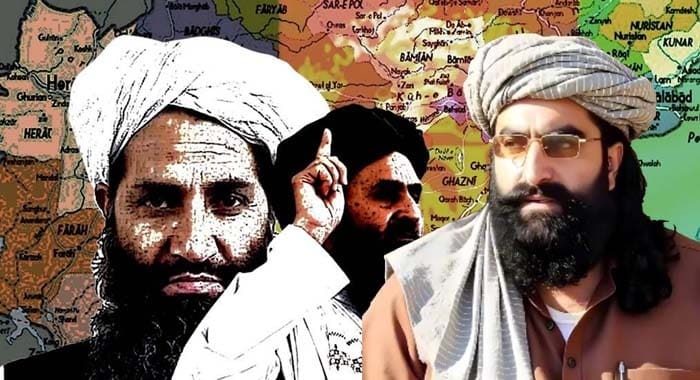
Over the past several days, a growing number of reports circulating through Afghan social-media networks and accounts broadly sympathetic to the Taliban regime have claimed that Taliban authorities have begun imposing restrictions on members of the Tehrik-e-Taliban Pakistan (TTP) operating from Afghanistan.
The reported measures allegedly include the detention of certain TTP members, restrictions on their movement and activities, increased surveillance of anti-Pakistan militant networks, and limitations affecting the families of Pakistani militants residing in Afghanistan.
However, the reports have not been independently verified, and their authenticity, scale and significance remain unclear. The emerging narrative has consequently raised an important question: do the reported measures represent a genuine change in Taliban policy towards the TTP, or are they part of an effort to create the appearance of action against the group while easing mounting political, economic and diplomatic pressure on Kabul?
Several Afghan journalists and social-media accounts, many of which are considered sympathetic to or supportive of the Taliban authorities, have recently reported that Taliban officials have detained a number of TTP members and imposed restrictions on their activities.
Some reports claim that TTP members have faced limitations on their movement and operational activities, while Taliban authorities have allegedly increased monitoring of militant networks accused of conducting attacks against Pakistan from Afghan territory.
Other accounts have gone further, claiming that certain TTP members and their families have begun leaving Afghanistan as a consequence of the reported restrictions and relocating to Pakistan.
These claims remain subject to verification. It is also unclear whether the alleged measures originate from a coordinated decision by the Taliban leadership or constitute isolated actions directed against specific individuals or groups.
The reports have emerged against the backdrop of increasingly strained relations between Afghanistan and Pakistan, with Islamabad repeatedly raising concerns over the presence of TTP sanctuaries and other anti-Pakistan militant networks on Afghan soil.
Pakistan has consistently maintained that Afghan territory must not be used as a launching pad for terrorism against Pakistan. The issue has become one of the most contentious aspects of relations between Islamabad and Kabul, contributing to diplomatic tensions as well as disruptions affecting trade, transit and cross-border movement.
The Taliban leadership therefore faces a difficult strategic dilemma: maintaining its relationship with the TTP while simultaneously managing the growing political, security and economic costs associated with continued tensions with Pakistan.
The relationship between the TTP and the Afghan Taliban remains particularly significant in assessing the credibility of the latest reports. The TTP has pledged allegiance to Taliban supreme leader Haibatullah Akhundzada, while Pakistan has repeatedly accused the Afghan Taliban of allowing TTP members to maintain safe havens and operational space inside Afghanistan.
Against this background, any sustained and meaningful restrictions imposed on the TTP would represent a potentially significant development. However, observers caution that isolated arrests, movement restrictions or administrative measures should not automatically be interpreted as evidence of a fundamental transformation in Taliban policy.
A genuine policy shift would likely require demonstrable and sustained action against the group’s leadership, operational infrastructure, recruitment networks and ability to conduct cross-border attacks.
International assessments have also continued to highlight the presence of terrorist organizations in Afghanistan. United Nations monitoring and assessment reports have repeatedly drawn attention to the continued activities of the TTP and other militant organizations operating from Afghan territory. These assessments have contributed to persistent international concerns that Afghanistan remains an important operating environment for a range of regional and transnational terrorist groups.
The latest reports concerning TTP restrictions must therefore be viewed against this broader security backdrop. If the Taliban have genuinely decided to constrain the TTP, the development could potentially have significant implications for regional security. If, however, the measures are temporary, selective or primarily designed to manage diplomatic pressure, their long-term impact may be considerably more limited.
Pakistani security officials and observers remain cautious about the reports. From Islamabad’s perspective, the key test is not whether individual TTP members have been temporarily detained or restricted, but whether the Taliban are prepared to take verifiable and sustained action against the group’s leadership and infrastructure.
Pakistani officials have previously argued that if TTP members are genuinely being detained because of their involvement in terrorism against Pakistan, they should be handed over to Pakistani authorities rather than merely relocated, restricted or dispersed within Afghanistan.
This distinction is critical because relocating militant personnel does not necessarily eliminate the underlying security threat. The emerging reports also contain claims regarding the treatment of families of Pakistani militants residing in Afghanistan.
Some accounts allege that Taliban authorities have stopped providing or facilitating certain services and facilities previously available to families associated with Pakistani militants. In recent days, a purported letter attributed to a Pakistani militant has also circulated, allegedly complaining to the Taliban leadership about the difficulties and hardships being faced by the families of Pakistani militants.
The authenticity of the letter and the circumstances surrounding the alleged complaints have not been independently established.
Nevertheless, the emergence of such narratives is notable because it suggests that the reported restrictions may extend beyond individual militants and could potentially affect the broader support environment surrounding Pakistani militant networks in Afghanistan.
The timing and manner in which the reports have emerged have prompted speculation that the Taliban leadership may be seeking to create diplomatic space with Islamabad without undertaking a fundamental break with the TTP.
Under this interpretation, limited restrictions could serve several purposes: demonstrating to Pakistan that Kabul is taking action, reducing international criticism, easing economic pressure and creating the perception of greater control over militant organizations operating from Afghan territory.
Such an approach could allow the Taliban to manage immediate diplomatic pressure while avoiding a direct confrontation with a group that has maintained longstanding ideological and organizational links with the Afghan Taliban.
This remains an assessment rather than an established fact, and there is currently insufficient independent evidence to determine whether the reported restrictions constitute a deliberate smokescreen.
At the same time, pro-Taliban social-media accounts have sought to portray the reported restrictions as generating dissatisfaction within the TTP. Some accounts claim that TTP figures and their supporters are increasingly concerned about restrictions allegedly imposed by Taliban authorities. If independently confirmed, sustained pressure from Kabul could create tensions within the relationship between the two sides.
However, it remains unclear whether such reports reflect genuine internal divisions within the TTP or are themselves part of competing information campaigns.
The significance of these claims will ultimately depend on whether there is evidence of a sustained change in the operational relationship between the Taliban and the TTP.
For Pakistan, the credibility of the latest reports will ultimately be measured through actions rather than narratives. A meaningful shift would require more than temporary restrictions or selective arrests. It would involve demonstrable steps against TTP leadership, training and logistical infrastructure, recruitment networks and the group’s ability to plan and execute attacks against Pakistan from Afghan territory.
It would also require transparency regarding the fate and location of detained militants and assurances that individuals responsible for attacks are not simply moved from one Afghan location to another. Until such measures are demonstrated and independently corroborated, considerable uncertainty will remain over the actual nature of the reported Taliban policy.
The latest reports arrive at a particularly sensitive moment in Afghanistan-Pakistan relations. The continued deterioration of bilateral ties has consequences extending beyond security. Trade, transit, border management and economic interaction between the two countries have all been affected by the broader dispute.
For the Taliban administration, prolonged confrontation with Pakistan carries significant economic and political costs. For Pakistan, continued militant attacks allegedly originating from Afghan territory represent a direct national-security concern. This convergence of security and economic pressures may explain why the Taliban have an increasing incentive to demonstrate that they are addressing concerns surrounding the TTP.
The reported restrictions on TTP members in Afghanistan represent a potentially significant development but the available claims remain unverified and should be treated with caution. Whether the Taliban have genuinely begun reassessing their relationship with the TTP, or whether the reports are intended primarily to ease pressure from Pakistan and create diplomatic space, can only be determined through sustained and independently verifiable action.
The coming weeks will therefore be critical. If Kabul follows the reported restrictions with concrete measures against TTP leadership, infrastructure and cross-border operations, the developments could signal a meaningful shift in Taliban policy. If, however, the measures prove temporary, selective or largely symbolic, questions will remain over whether the latest reports were intended principally to manage perceptions rather than address the underlying security threat.



