
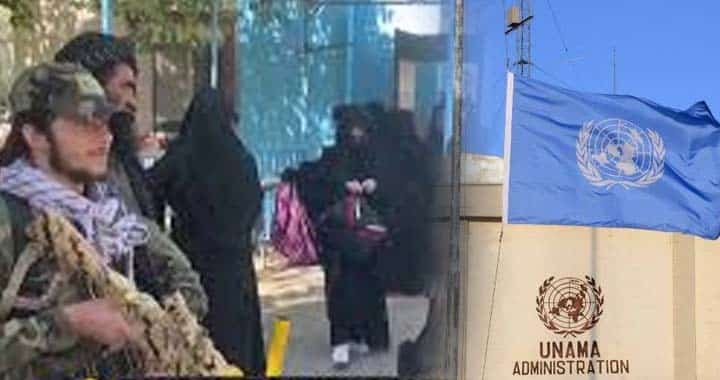
The United Nations Assistance Mission in Afghanistan (UNAMA) has raised serious concerns over a newly approved Taliban decree governing marital separation, warning that the policy further institutionalises discrimination against women and girls and opens pathways for child marriage under the Taliban’s interpretation of family law.
In a strongly worded statement, UNAMA said the so-called “Principles of Separation of Couples” represents another major erosion of women’s rights in Taliban-controlled Afghanistan and reflects a broader pattern of systematic restrictions imposed since the group’s return to power in 2021.
The 31-page decree reportedly outlines regulations concerning marriage annulment, custody matters, separation procedures, and issues related to girls who have reached puberty, prompting international concern over the legitimisation of underage marriages.
According to the UN mission, the decree creates a deeply unequal legal framework in which men retain broad unilateral authority to divorce, while women are forced into restrictive and complicated judicial procedures to seek separation from abusive or unwanted marriages.
UNAMA further warned that the decree undermines women’s autonomy, dignity, and access to justice while reinforcing structural discrimination across Afghan society.
Particularly alarming for international human rights observers is the decree’s treatment of consent in marriage.
According to the UN, the Taliban framework continues to allow a girl’s silence to be interpreted as consent once she reaches puberty, a provision critics say directly contradicts internationally recognised protections for children and violates the principle of free and full consent in marriage.
UN officials warned that such measures effectively normalise child marriage under religious and legal pretexts, despite widespread international condemnation and longstanding concerns regarding the exploitation of minors.
The acting head of UNAMA described the decree as part of a broader and deeply troubling trajectory in which Afghan women and girls are increasingly being stripped of freedom, opportunity, education, and participation in public life.
The UN mission noted that while early Taliban decrees issued after 2021 had nominally referenced certain protections, including inheritance rights and consent to marriage, subsequent regulations have steadily weakened those commitments and expanded restrictions on women’s lives.
The latest decree comes amid ongoing criticism of Taliban policies that have barred girls from secondary and higher education, restricted women’s employment opportunities, and severely limited female participation in public and economic life.
Human rights observers argue that these measures not only violate international norms but also contradict core Islamic principles regarding justice, dignity, consent, and protection of women and children.
Critics maintain that forced or underage marriage carried out under coercive social conditions cannot be justified through religious interpretation, particularly when consent is absent or manipulated.
UNAMA emphasised that Afghanistan remains bound by international human rights obligations, including commitments related to the protection of children, elimination of violence against women, and safeguarding equal access to justice.
The United Nations has called on the Taliban administration to revise its laws and policies in accordance with international legal standards and to ensure genuine protections for women and girls, including the elimination of child marriage and recognition of meaningful consent in marital arrangements.
The controversy surrounding the decree has once again intensified global scrutiny of Taliban governance, particularly as Afghanistan continues to face deepening humanitarian collapse, economic hardship, international isolation, and growing criticism over systematic restrictions imposed on half the country’s population.



