
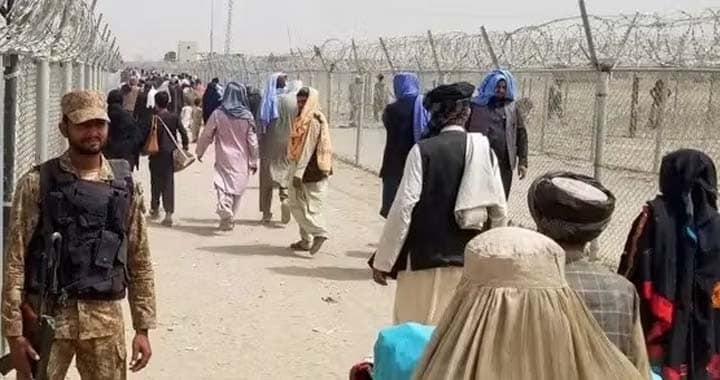
Pakistan has released 307 Afghan nationals from detention facilities this week, with the individuals subsequently returning to Afghanistan via the Torkham and Spin Boldak border crossings, according to Afghan authorities.
Afghan officials stated that 268 individuals crossed through Torkham while 39 entered via Spin Boldak. The group was reportedly detained in Pakistan for lacking valid residency documentation.
The development comes amid Pakistan’s continued policy of managing undocumented migration through detention and repatriation measures, a process that has remained active in recent months against the backdrop of evolving regional security concerns.
From Pakistan’s perspective, the broader context of these measures has consistently been linked to border management challenges, repeated allegations of cross-border militant activity originating from Afghan territory, and long-standing concerns regarding the presence and facilitation of anti-Pakistan terrorist networks operating across the frontier.
Despite repeatedly presenting what Pakistani security officials describe as extensive evidence of terrorist safe havens and facilitation networks inside Afghanistan, Islamabad’s concerns have been publicly rejected by the Afghan Taliban authorities, who have maintained a contrasting narrative while facing ongoing international scrutiny over governance and security conditions.
International actors, including the United Nations, have urged restraint in deportation and detention practices involving Afghan migrants, citing humanitarian considerations. Afghan authorities, meanwhile, have called for an accelerated return process, pointing to domestic capacity constraints in handling returning populations.
The issue continues to sit at the intersection of humanitarian migration management and sharply diverging security narratives between the two neighbours, with Pakistan maintaining that its approach remains defensive, regulatory, and rooted in state security priorities rather than escalation.
As border crossings remain active through key points such as Torkham and Spin Boldak, the wider diplomatic gap between Islamabad and Kabul remains defined by competing interpretations of responsibility, security, and regional stability.



