
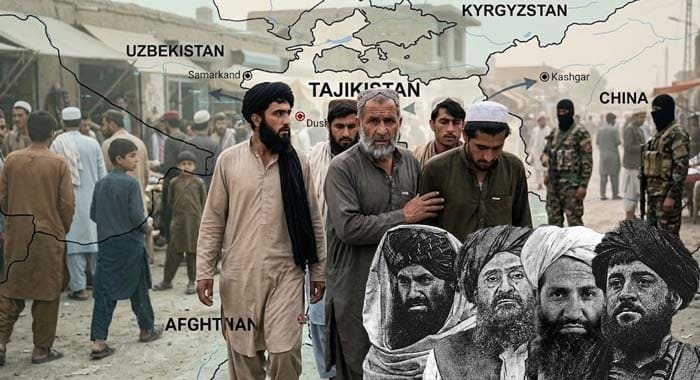
The consequences of Taliban rule cannot be measured solely by what happens inside Afghanistan. The restrictions imposed on Afghan society, the ideological model promoted by the authorities in Kabul and the continuing security concerns surrounding armed extremist organizations together raise a wider question: how far can the effects of Talibanization extend beyond Afghanistan’s borders?
The question matters because Talibanization describes more than the presence of a particular government. It also refers to the imposition or emulation of a restrictive social and political order associated with the Taliban, including coercive interpretations of religious authority, the exclusion of women from public life and the suppression of dissent. Its wider implications must be examined alongside, but not confused with, the activities of terrorist organizations that pursue their own armed campaigns.
The distinction is important. Ideological influence does not automatically establish operational control, and similarities in outlook do not prove that every extremist group acts at the direction of the Taliban authorities. Nevertheless, the interaction between restrictive governance, extremist networks and regional insecurity deserves serious scrutiny.
A Domestic Model with Wider Implications
Afghanistan under Taliban rule offers a stark example of how coercive social policies can reshape a society. The exclusion of girls from secondary and higher education, restrictions on women’s employment and limitations on public participation have affected millions of Afghans.
These policies do more than restrict individual freedoms. They normalize the idea that access to education, employment and public life can be determined through sweeping ideological prohibitions rather than equal rights and individual ability.
The consequences accumulate over time. Girls denied education lose opportunities to develop skills and become economically independent. Women excluded from professions cannot contribute fully to public services or household incomes. Families face fewer choices, while institutions risk losing qualified personnel.
The broader danger lies in the normalization of exclusion as a governing principle. When restrictions are enforced through authority and coercion, they can narrow the space for public debate, discourage dissent and weaken the institutions that allow societies to correct policy failures.
Talibanization, in this sense, is not simply a matter of dress codes or individual social restrictions. It concerns the relationship between political authority, personal freedoms and the ability of citizens to shape their own lives.
Ideological Influence and Armed Networks
The regional security dimension requires a separate examination. Afghanistan’s history of armed conflict and the continued presence of extremist organizations have left neighboring states concerned about the movement of fighters, the availability of sanctuaries and the ability of groups to organize cross-border attacks.
Pakistan has repeatedly accused the Afghan Taliban authorities of allowing the banned Tehreek-e-Taliban Pakistan (TTP) to operate from Afghan territory. The Taliban authorities dispute accusations that they provide safe havens to terrorist groups.
The TTP’s ideological affinity with the Afghan Taliban is relevant to understanding the relationship between the two, but affinity alone is not proof that every action is directed by Kabul. The practical questions concern the group’s presence, freedom of movement, logistical support and ability to prepare or facilitate attacks against Pakistan.
These questions matter because extremist organizations can exploit permissive environments, established personal networks and difficult border terrain. Where armed groups are able to operate across borders, their activities can undermine security even without formal territorial control.
The Islamic State Khorasan Province presents a different challenge. It is a rival of the Afghan Taliban and has carried out terrorist attacks in the region. Its presence demonstrates why Afghanistan’s extremist landscape cannot be reduced to a single organization or ideological chain of command.
A serious regional assessment must therefore distinguish between the Taliban’s governing policies, their relationships with other armed groups and the independent activities of terrorist organizations. That distinction makes it possible to examine the security consequences without overstating the evidence.
The Export of Talibanization
The spread of Talibanization should not be measured solely by whether another country adopts an identical political system. It can also involve the circulation of restrictive ideas, attempts to impose coercive social norms, the celebration of repression as a governing model and the legitimization of violence in pursuit of ideological objectives.
However, influence must be demonstrated rather than assumed. Similar policies in different countries may arise from different political, social or religious contexts. Establishing a direct connection requires evidence of organized advocacy, material assistance, recruitment, coordination or other identifiable links.
Where such connections exist, they deserve scrutiny because the combination of extremist ideology and organized violence can threaten both individual freedoms and national security. Where they do not, the argument should remain focused on ideological similarities rather than alleging operational direction without proof.
This distinction is especially important for Pakistan. The country faces security challenges from armed terrorist organizations, while also confronting the broader social consequences of extremist narratives that reject pluralism and seek to impose a rigid ideological order. Countering these threats requires more than military action. It also requires effective institutions, credible public communication, protection of citizens’ rights and opportunities for communities to resist coercive influence.
Why Governance and Security Cannot be Separated
The Taliban’s domestic policies and the regional threat posed by terrorist organizations are different problems, but they intersect in the broader question of how power and ideology are exercised.
A government that suppresses dissent and restricts public participation weakens the mechanisms through which grievances can be expressed peacefully. An environment in which extremist organizations retain operational space creates additional risks for neighboring countries. Neither condition automatically causes the other, but both can undermine stability and make accountability more difficult.
The response must therefore operate on several levels. Governments need to prevent terrorist organizations from organizing attacks, disrupt their financing and logistics, and strengthen cooperation against cross-border threats. At the same time, societies need institutions that protect education, equal participation, freedom of expression and the right to challenge arbitrary authority.
For Pakistan, this means maintaining a clear distinction between legitimate religious belief and coercive extremist ideology, as well as between Afghan civilians and armed organizations responsible for terrorism. Broad-brush suspicion of an entire population would be both unjust and counterproductive.
The Wider Test of Responsibility
The Taliban’s appeal to the United States to act responsibly raises a question that extends beyond the immediate dispute over Afghan asylum seekers. Responsibility also concerns the domestic consequences of governance, the protection of citizens’ freedoms and the prevention of terrorist activity that threatens neighboring countries.
The future of regional stability will depend partly on whether the authorities in Kabul reverse policies that exclude women and girls, provide meaningful space for political and social participation, and take effective action against terrorist networks operating from Afghan territory.
It will also depend on whether regional governments address extremist threats through evidence-based security measures while protecting the rights of ordinary citizens.
Talibanization is therefore not merely an Afghan domestic issue. Its significance lies in the potential interaction between coercive governance, ideological influence and transnational security threats. Understanding those connections requires careful distinctions and verifiable evidence, but it also requires recognizing the consequences when exclusion and extremism are allowed to become instruments of power.
Ultimately, the measure of any governing model is not the ideological justification offered on its behalf. It is whether people can live safely, exercise their rights, pursue education and livelihoods, and participate in society without coercion. Where those basic conditions are denied, the consequences can extend well beyond the country’s borders.



