
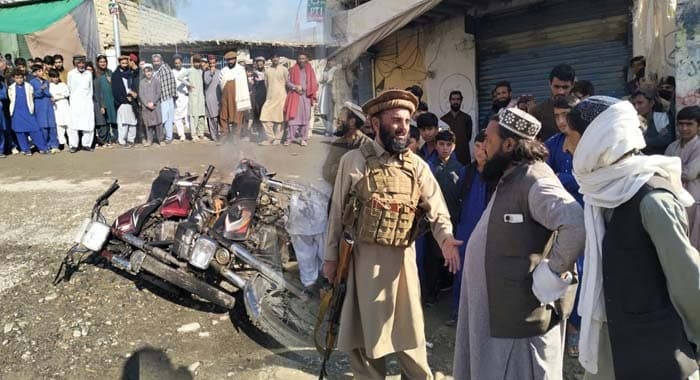
Residents of Kreakot area in Lower South Waziristan have taken up arms against terrorists, openly challenging their movement and activities in the area and demonstrating growing public resistance to attempts by armed groups to re-establish their influence.
According to local sources, residents moved against members of a banned organization and set their motorcycles on fire in response to their movement in the locality. The action reflects the determination of the local population not to allow terrorists to intimidate communities or undermine peace in the area.
The development comes amid similar demonstrations of civilian resistance in other parts of Khyber Pakhtunkhwa, particularly Tank district, where residents confronted armed men attempting to abduct a local shopkeeper.
During the confrontation, locals killed two terrorists and foiled the abduction attempt. Subsequently, another armed individual arrived to avenge the killing of the two men but was also shot dead by residents, according to local accounts.
The pattern has precedents in both Tirah Valley and Orakzai. In Tirah, the Bar Qambarkhel tribe had already demonstrated organized resistance against the banned Tehreek-e-Taliban Pakistan (TTP), refusing to shelter terrorists or pay them Ushr. The tribe announced the formation of an armed lashkar in May 2025, while subsequent protests and a tribal jirga in July demanded an end to terrorist extortion and intimidation.
A particularly significant example emerged in Darra Hassanzai, Central Orakzai, in September 2025, when residents armed themselves and confronted TTP members after the latter demanded Ushr from impoverished villagers. The resistance erupted after a resident publicly tore up an extortion notice and refused to pay. When terrorists surrounded his house, villagers opened fire, forcing the armed group to retreat. Residents also blocked escape routes to prevent the terrorists from finding shelter elsewhere.
These earlier incidents demonstrate that the resistance emerging in Lower South Waziristan is not an isolated expression of public anger but part of a broader pattern of communities challenging terrorist intimidation and coercion.
The willingness of residents to confront armed groups also carries considerable significance for Pakistan’s counterterrorism efforts, as public cooperation and support remain essential to preventing terrorist organizations from regaining influence in vulnerable areas.



