
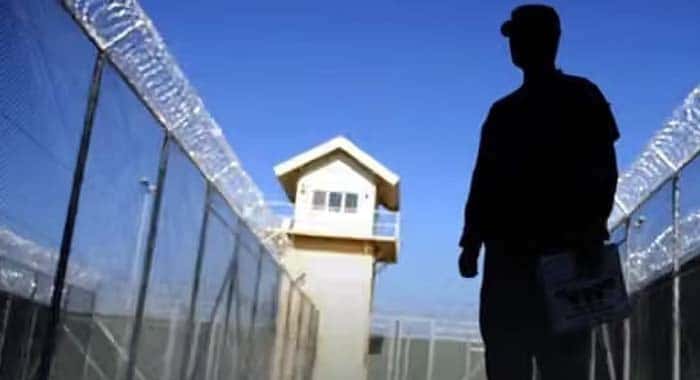
Families of prisoners held at Bagram prison say the Taliban have turned the basic act of visiting an imprisoned relative into a bureaucratic ordeal, with families required to obtain permission from the Taliban’s military court before they can even see their loved ones.
For some families, securing that permission reportedly takes months.
Many of the prisoners at Bagram are former military personnel. Their families say the prisoners are living under severe restrictions and difficult conditions, while those trying to visit them must endure long journeys from distant provinces, repeated trips between government offices and lengthy waits without even a proper place to sit and wait at the prison.
A family member of a Bagram prisoner said visiting a relative is far from straightforward, with families sometimes forced to wait for months because the military court is reportedly the only authority empowered to issue visitation permission.
Even after permission is finally granted, families face another round of humiliation at Bagram. They reportedly wait for hours before being allowed to meet prisoners and face what they describe as harsh treatment and severe restrictions by Taliban personnel.
A month in Kabul for one permit
The ordeal becomes particularly cruel for elderly and sick family members traveling from distant provinces.
Haji Sardar Mohammad, who traveled from Kandahar to Kabul to visit his imprisoned son, said he spent around a month moving from one office to another in search of permission.
He said his money had run out while he waited from morning until evening for an answer that never came clearly.
For elderly people, women, children and sick family members, such a system becomes even more punishing, particularly during Afghanistan’s extreme summer and winter weather.
But the Taliban’s treatment of visitors reportedly does not end with bureaucratic obstruction.
Families and prisoners say visitors are sometimes subjected to humiliating security procedures. According to their accounts, people are made to cover their heads with black bags and are escorted from the designated area to the visitation site without being able to see where they are being taken.
One prisoner, Briali, described being taken to meet his younger brother with a black bag over his head.
The treatment left him feeling as though he had been treated as a major criminal. He questioned why ordinary family members were being subjected to such humiliation merely to see an imprisoned relative.
The families further complain that Taliban personnel keep them under strict surveillance during visits, preventing them from speaking freely about prisoners’ health, legal cases, family difficulties and other personal matters.
Apparently, even visiting a loved one requires Taliban approval
The Taliban’s system offers a grim illustration of what their version of governance means in practice. Apparently, an Afghan does not merely need a relative in prison, he also needs the Taliban’s permission to look that relative in the eye.
A visit to an imprisoned father, son, brother or husband is transformed into a military-court matter. A family can travel hundreds of kilometres, spend money it can barely afford, spend weeks in Kabul and still be left waiting outside another office for an answer.
And when permission finally arrives, the reward is reportedly another queue, another interrogation and another layer of humiliation.
This is hardly the dignity, justice or public service that any government should claim to provide. It is an administrative machine seemingly designed to make ordinary Afghans feel powerless at every turn.
Families say they do not oppose legitimate security measures. Their demands are considerably more basic: a clear visitation procedure, shorter approval times, a suitable waiting area and transparent information about visiting hours, required documents and other conditions.
In other words, they are asking for a system that treats them as human beings.
The Taliban, however, appear to have made even that modest expectation an unreasonable luxury.
There are no recent official figures publicly available on the total number of prisoners held across Taliban-controlled Afghanistan. UN reporting indicated that more than 5,000 prisoners were being held at Pul-e-Charkhi prison by October 2024. A Taliban official had also stated in early 2023 that more than 29,000 people had been arrested on various charges over an approximately 18-month period.
For families of those behind bars, however, statistics offer little comfort. Their immediate reality is much simpler: the person they love is imprisoned, and even seeing him has become a privilege controlled by the very authorities holding him.



