
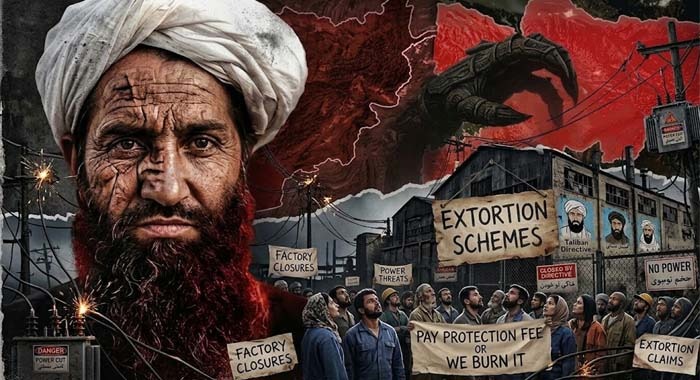
Industrialists in Afghanistan have accused Taliban officials at the local level of harassing factory owners, demanding extortion payments and threatening to shut down businesses despite orders from the Taliban leadership against arbitrary closures and power disconnections.
According to the Afghanistan Industrial Association, some Taliban officials are allegedly using claims of violations of industrial regulations as grounds to pressure industrialists for money. Factory owners have reportedly been threatened with closure, raising concerns about the business environment and the difficulties facing Afghanistan’s already struggling industrial sector.
The complaints have emerged despite directives from the office of the Taliban deputy prime minister for economic affairs aimed at preventing unnecessary disruption to industrial activity.
The office has instructed relevant departments operating in Kabul’s Pul-e-Charkhi Industrial Park to coordinate with the appropriate authorities before conducting inspections or taking enforcement action against factories. The directive is intended to prevent arbitrary interference with industrial operations and ensure that businesses are not unnecessarily forced to suspend production.
However, the allegations suggest a gap between instructions issued by the Taliban leadership and their implementation by officials on the ground. Industrialists’ complaints indicate that the threat of factory closures and demands for payments remain concerns even after the central authorities issued orders to curb such practices.
Unannounced inspections, threats of electricity disconnection and forced closures can disrupt production, increase operating costs and undermine business confidence. For manufacturers already dealing with economic uncertainty and operational constraints, such interference could further complicate efforts to sustain production and investment.
The situation also raises questions about the enforcement of directives within the Taliban administration, particularly whether central instructions are being effectively communicated and implemented or whether local officials continue to exercise discretionary powers that undermine those orders.
The Taliban authorities have yet to publicly address the specific allegations of extortion detailed by the industrial association. The effectiveness of the latest directive will depend on whether the authorities investigate the complaints, hold officials accountable where wrongdoing is established and ensure that inspections and regulatory enforcement follow consistent procedures.



