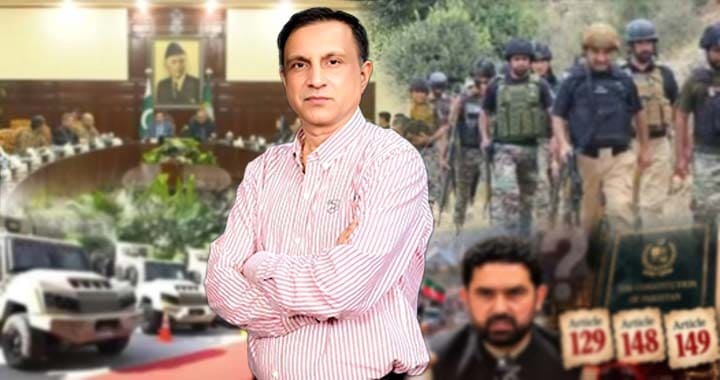
The security situation in Khyber Pakhtunkhwa has reached a point where police personnel are being asked to confront heavily equipped terrorists without having the basic protective equipment they need to survive. For years, the province has faced a persistent terrorist threat, yet essential resources, including armored vehicles, bulletproof cars, sniper rifles and anti-drone weapons, have remained inadequate.
The controversy over three bulletproof vehicles that were initially offered to the provincial police, but later returned following political objections, illustrates how security requirements have become entangled in political disputes. These vehicles were not ordinary cars. They were fully bulletproof vehicles imported from abroad, intended to provide protection to officers operating in dangerous areas.
The question is straightforward: when police officers are sent into areas where they may come under fire at any moment, how can they perform their duties effectively if they lack the equipment necessary to protect themselves?
If a soldier is sent on duty without a gun, it is unreasonable to expect him to defend his position. Similarly, giving an officer a weapon but sending him into a dangerous area without an adequately protected vehicle leaves him exposed to grave risks. These are basic requirements, not luxuries.
Khyber Pakhtunkhwa has been confronting terrorism for years. The authorities should therefore have ensured that police personnel received the necessary equipment long ago. Instead, the province has continued to struggle with shortages while terrorists have increasingly employed modern methods, including quadcopters and other drone technology, to carry out attacks.
The imbalance is particularly alarming. Terrorists have adapted their tactics and equipment, while the police have often been left without the resources required to counter these evolving threats.
When Police Protection Becomes a Political Dispute
The controversy over the bulletproof vehicles demonstrates how political considerations can overshadow operational needs.
During a meeting attended by the inspector general of police, the provincial police chief reportedly sought financial assistance to strengthen security arrangements in merged districts, including funding for weapons and vehicles. The government agreed to provide Rs14 billion under the Accelerated Implementation Programme.
During the same meeting, a minister offered three bulletproof vehicles for police use. The inspector general accepted the offer, recognizing that the vehicles could help protect officers working in high-risk areas.
However, the handover soon became a political controversy. The provincial minister objected to the vehicles, describing them as old and arguing that he would not compromise the lives of police officers by accepting unsuitable equipment. The issue was given a political colour instead of being resolved through a practical assessment of the vehicles’ condition and suitability.
If the vehicles were not fit for service, the relevant authorities should have explained the technical deficiencies and arranged suitable replacements. If they were usable, they should have been deployed where the threat was greatest. Either way, the priority should have been the protection of police personnel.
Instead, the vehicles were returned. Other provincial governments, including those in Balochistan and Sindh, reportedly expressed interest in obtaining them because of their considerable value.
The consequences of such decisions become clearer when an officer loses his life in an attack. After an incident in Bannu in which a police officer was martyred, the obvious question was whether adequate protection might have improved his chances of survival. No vehicle can guarantee safety, but denying personnel available protective equipment without a sound operational reason can expose them to avoidable risks.
The vehicles eventually reached Bannu after the federal government intervened. That development was welcome, but it should never have taken a public controversy and a political dispute to get them there.
One Vehicle Is Not Enough for an Entire Province
The delivery of bulletproof vehicles to Bannu is a positive step, but it cannot be treated as a comprehensive solution. Khyber Pakhtunkhwa has approximately 135,000 police personnel, many of whom operate in areas where attacks and armed encounters pose serious risks.
Protection must be planned across the police hierarchy. Regional police officers, district police officers, superintendents, deputy superintendents and frontline personnel all have responsibilities that may expose them to danger. Particular attention is needed for officers deployed in areas where terrorists can open fire on patrols, target police stations or attack reinforcements responding to an incident.
Past attacks in Bannu, Tank and Hangu have demonstrated another dangerous pattern: when an initial attack takes place, personnel rushing to assist their colleagues may also come under attack. This means security planning cannot stop at protecting the first responding team. It must also account for reinforcements, evacuation and rescue operations.
The police need appropriate vehicles, modern weapons, surveillance capabilities and equipment to counter drone attacks. These requirements should be determined by operational assessments, not political preferences.
The federal government’s decision to deliver the vehicles and the expectation of further assistance are encouraging developments. The prime minister’s planned visit should also provide an opportunity to announce a meaningful package for Khyber Pakhtunkhwa, especially for districts facing the most severe security challenges.
Another positive step has been the revision of compensation for police personnel martyred in the line of duty. The package was reportedly revised more than once, increasing the compensation from Rs10 million to Rs30 million. Supporting the families of fallen officers is a responsibility of the state, and improved compensation can provide some financial security to those left behind.
But compensation cannot replace a life. The objective must be to prevent avoidable losses by equipping officers adequately, improving intelligence and strengthening the capacity of the police to respond to attacks.
Nor should anyone expect an immediate transformation. Counterterrorism is not a problem that can be resolved by switching a button or announcing a package. It requires sustained investment, coherent policy and consistent implementation.
Winning Public Support Is Essential to Defeating Terrorism
Equipment alone will not win this war. Public attitudes and the narrative surrounding terrorism are equally important.
For years, a narrative has circulated in parts of the province that the fight against terrorism is not Pakistan’s own struggle, but a war being fought for the interests of the establishment or foreign powers. Such messaging can weaken public confidence in security institutions and create hostility toward the personnel who risk their lives to protect communities.
When an attack takes place, police officers and soldiers are among those who pay the price. Yet narratives that portray the security forces as outsiders or enemies can obscure the reality that these personnel are confronting a threat to the public itself.
The challenge is therefore not merely to counter terrorists on the ground, but also to challenge the ideas that normalize their presence, justify their actions or discourage communities from cooperating with the authorities.
The argument that dialogue should always be preferred and that operations should never be conducted has contributed to confusion about how the state should respond to terrorism. Dialogue may have a place in a broader policy, but it cannot become an excuse for allowing armed groups to operate with impunity or for refusing to protect citizens.
The public must understand that providing shelter, logistical assistance or other forms of support to terrorists carries consequences for the entire community. Investigations into attacks must identify facilitators and the local networks that help armed groups operate. Without disrupting those networks, security operations may eliminate immediate threats without addressing the systems that allow terrorism to persist.
Changing public attitudes requires more than speeches. The state must communicate clearly, act consistently and demonstrate that its policies are designed to protect ordinary people. It must also distinguish between peaceful political activity and actions that undermine national security.
Underdevelopment Leaves Communities Vulnerable
The security crisis in Khyber Pakhtunkhwa cannot be separated from the deprivation experienced by many of its communities.
In parts of the merged districts and the province’s southern belt, residents continue to face inadequate roads, limited access to clean drinking water, poor sanitation, insufficient healthcare facilities and a lack of employment opportunities. Some areas remain so underserved that access to essential services is itself a major challenge.
The shortage of quality hospitals is particularly troubling. Outside major urban centers such as Peshawar, Mardan, Swat and Abbottabad, as well as facilities in Bannu and Dera Ismail Khan, many communities struggle to access hospitals equipped to provide advanced treatment. The situation places additional pressure on families already living in difficult circumstances.
Unemployment and limited educational opportunities create another vulnerability. When young people cannot find work, support their families or see a credible path toward a better future, they become more susceptible to recruitment by groups offering money, influence or a sense of belonging.
A terrorist recruiter may offer a young person Rs35,000 or Rs50,000 a month. In a community where employment is scarce and household expenses are difficult to meet, that offer can become an effective tool of exploitation.
This does not mean poverty automatically produces terrorism, nor does it excuse anyone who joins a terrorist organization. It means that counterterrorism policy must account for the conditions that armed groups exploit.
Security operations must be accompanied by investment in schools, hospitals, roads, electricity, gas, water supply and employment. The state must make its presence visible not only through police posts and security checkpoints, but also through services that improve people’s lives.
People need opportunities to understand how terrorist groups manipulate their grievances and exploit their circumstances. Public awareness, education and economic development are therefore essential parts of a long-term strategy against terrorism.
Political Differences Must Not Override National Security
Political disagreements are normal in a democracy. Parties can criticize governments, organize demonstrations, demand accountability and campaign against their opponents. But national security cannot become a casualty of political competition.
The prolonged divide between the provincial PTI government and the federal government has complicated efforts to build a common response to terrorism. A coordinated policy is necessary because the threat does not respect administrative boundaries or party affiliations.
Political statements suggesting that security operations will not be allowed, or that the state has no authority to act against armed groups, can undermine the government’s ability to establish a clear policy. They can also deepen public confusion about the legitimacy of counterterrorism efforts.
The same applies to disputes over the repatriation of undocumented migrants, Pakistan’s relations with Afghanistan and responsibility for attacks involving drones or other weapons. These issues require evidence-based assessments and decisions by the relevant state institutions. Turning every security incident into an opportunity to blame institutions or dismiss their explanations can further weaken public confidence.
Foreign policy and relations with Afghanistan are matters of national interest that require coordination at the state level. Political parties can debate the government’s approach, but their positions should not create the impression that the state is an adversary while terrorist organizations are treated as legitimate stakeholders.
The issue becomes more serious when terrorist groups publicly welcome political developments or use political rhetoric to reinforce their own messaging. Such statements do not, by themselves, establish that a political party is facilitating terrorism. However, they demand careful scrutiny of the narratives and conditions that armed groups may seek to exploit.
The state must investigate allegations of facilitation through credible evidence, rather than political accusations. At the same time, political leaders have a responsibility to avoid rhetoric that can be used to undermine counterterrorism operations or turn young people against state institutions.
A country cannot effectively confront armed groups if competing political forces promote incompatible understandings of who the enemy is and whether the state has the authority to act.
A State Within a State Cannot Be Allowed to Emerge
The dangers become especially acute when armed groups establish their own rules and exercise control over areas where the state struggles to operate freely.
Reports and allegations that government officials cannot travel safely in parts of the southern districts, or that terrorists can move through these areas without being challenged, raise serious questions about the state’s writ. These claims must be assessed on the basis of verifiable evidence, but the underlying principle is clear: no armed organization can be allowed to establish a parallel system of authority.
There cannot be two competing systems of law, two centers of coercive power or separate rules for armed groups and ordinary citizens. When a terrorist organization can intimidate residents, restrict the movement of officials or dictate local conditions, the consequences extend beyond individual attacks. It challenges the state’s ability to protect its citizens and deliver basic services.
The response must be comprehensive. Police need the equipment and resources to confront threats. Intelligence agencies and law-enforcement bodies must identify terrorist networks and facilitators. Political leaders must maintain a clear position on the state’s authority to act. Communities must be protected from intimidation, while development programmes must address the deprivation that armed groups exploit.
The recent delivery of bulletproof vehicles to Bannu is a welcome development, but it is only one part of a much larger task. Khyber Pakhtunkhwa needs a sustained, coordinated counterterrorism strategy backed by resources, public trust and political responsibility.
The war against terrorism will not be won by equipment alone, nor by declarations of unity that are not translated into action. It will require the state to protect its personnel, regain public confidence, dismantle local support networks and provide communities with a realistic alternative to violence.
Above all, political disagreements must never be allowed to compromise the lives of police officers and citizens. National security demands that the state speak clearly, act consistently and ensure that no terrorist organization can operate as a state within the state.